Skip to Content

THE BIG GRAB Part 8: Scoring Own Goals

While most Canadians get serious about cutting climate pollution, our dirtiest province is cranking up pollution so fast that they're wiping out our gains.

Read More:

The vast majority of Canadians in recent polling -- across all provinces and across all political parties -- say there is “solid evidence of global warming”. Solid majorities label it “very serious” and say the federal government has “a great deal of responsibility” for addressing it. Majorities support paying up to $50/month in carbon taxes or cap & trade.

So Prime Minister Stephen Harper was right to commit our nation to finally cut our climate pollution by 17 per cent from our 2005 levels. It’s a task that will require all of us, “Team Canada”, to do our equal share to create low-carbon prosperity for all Canadians.

So far, however, one province has failed to act in the spirit of Harper’s pledge: Alberta.

Erasing progress by others

According to Canada’s latest greenhouse gas inventory, from 2005 to 2008, all the provinces outside Alberta combined cut CO2 pollution by 10 million tonnes (Mt) a year. Alberta, meanwhile increased their climate pollution by even more: 13 Mt. “Oops, sorry Canada.”

By 2020, the rest of the Canadian economy is on track to cut CO2 by 65 Mt. But Alberta’s oil sands alone are on track to increase their CO2 pollution by even more: 78 Mt1. “Oops” again.

Is Alberta skating for Team Canada or not?


Polluting faster than contributing

Alberta’s climate pollution has grown so fast that it now takes up a third of Canada’s total allotment. Yet Alberta creates just 14 per cent of our national GDP.

Alberta generates $760 per tonne of CO2 (tCO2) -- three times less -- than the $2,300 the rest of Canada’s economy produces2.


Like the oil sands, Alberta’s economy as a whole is grabbing more and more of our nation’s limited CO2 allotment -- without paying for it and while producing far less prosperity per tCO2 appropriated.

Adding six tonnes per Canadian

Per person, Albertans dump 68 tCO2 each year -- more than any nation on earth.

Compare that to Quebec (11 tCO2), Ontario (15) and B.C. (15), which combined contribute 73 per cent of Canada’s GDP. The average for all Canadians outside Alberta is 16 tCO2. When the 52-tonne-overweight Albertans are added in, however, our national average rises to 22 tCO23.

Albertans are wealthier than Canadians in any other province. If anyone can afford to clean up their high climate-pollution economy, it is Albertans. And yet they have refused to halt their CO2 growth. They have refused to cut their dirtier-than-any-nation personal climate stomp. They have refused to help the rest of Team Canada make the needed improvements. Instead, they have saddled the rest of Canadians with six extra tonnes of CO2 pollution that the rest of us have to try to extricate ourselves out from under.

It is a lot harder to skate well while lugging an extra six tonnes of flab.

Neighbours act, Alberta doesn't

Since 2005, Alberta’s climate pollution rose two per cent a year, as it has for decades now. Since 1990, over half of Canada’s rise in climate pollution has come from this one province with just 11 per cent of our population.

It’s a trend that, unchecked, will have Albertans gobbling half of Canada’s total CO2 allotment within 10 years4. It is like having your worst scoring line hogging ever more of the game’s playing time.

For decades, Albertans have refused either to stop their emissions growth or to adopt policies similar to those of their neighbours.

  • Neighbour taxes almost all climate pollution -- Neighbouring B.C. instituted an economy-wide carbon price years ago. All climate pollution from burning fossil fuels in B.C. is priced at $20/tCO2 today and will rise to $30/tonne in a little more than a year.
  • Neighbours cap climate pollution -- Their neighbours, (B.C., Saskatchewan, Manitoba, Ontario and Quebec) all joined North American regional cap & trade partnerships that will put a declining cap on emissions. Alberta refuses even to be an “observer”.

Alberta talks a good game, but their skating doesn't score either one of these essential goals.

Alberta's "Big Grab" enabling plan

Alberta says they “require large industrial emitters to report their emissions and take actions to make mandatory reductions.” Sounds like an effective “cap” -- until you read the fine print that says reductions are only needed in “emissions intensity,” not in total pollution levels.

Here’s the problem: Canada has cut “emissions intensity” -- by 22 per cent between 1990 and 2008. But that hasn't stopped our total emissions from skyrocketing  by 16 per cent over that same period.

The oil sands industry claims “emissions intensity” cuts of over 30 per cent since 1990. And yet their total climate emissions more than doubled.

A law like Alberta’s, which requires a 12 per cent cut in emissions intensity over 10 years, would have had almost zero impact if it had been applied to either Canada or the oil sands over the last couple decades.

It is most definitely not a “cap” on climate pollution. It does nothing meaningful to stop the Big Grab by the oil sands corporations.

Alberta also says they put “a price on carbon.” This sounds similar to actions taken by their neighbour, B.C., when it put a price on carbon pollution across their economy. But again, the fine print shows that the only carbon pollution that has any price applied to it in Alberta is the tiny fraction that exceeded an “emissions intensity” target. In 2008 that was about four per cent of Alberta’s emissions. For comparison, B.C. places a carbon price on 77 per cent of its emissions.

Businesses in Alberta can increase their climate pollution all they want without any limits or carbon pricing -- as along as they meet their “intensity targets.” 

Again, if Alberta’s “carbon price” rules were applied to either Canada or the oil sands industry over the last couple of decades, it is possible neither would have had to pay a single dime on any of their huge carbon pollution increases.

What would happen if Alberta tried skating with Team Canada on this for a change? According to Pembina Institute, which studies these things:

“Economic analysis published last year by the Pembina Institute shows that with a strong price or cap on emissions, Alberta could continue expanding oil sands production and its economy over the next decade while reducing the absolute level of greenhouse gas pollution.”

And what about Alberta’s oil sands? The Canadian government’s own National Round Table on the Environment and the Economy (NRTEE) says the results of its up-to-date economic modelling show the Alberta oil sands would continue to grow by about seven per cent per year through 2020 even if placed under a national cap-and-trade system that was strong enough to meet Canada’s climate pollution pledge.

Instead, if the Alberta oil sands continue with the Big Grab they aren’t paying for, the NTREE modelling shows that the industry will grow by about eight per cent per year. The difference between paying for their own pollution and making other Canadians pay for their Big Grab is the difference between seven per cent growth and eight per cent growth.  

Apparently,  Alberta and its oil sands can afford to do their part in meeting our national climate goals; they are just choosing not to. The one thing Albertans have been willing to do is to relentlessly crank up their CO2 pollution faster than the rest of Team Canada can cut it. Something has to give. So far Albertans are saying everyone else has to give … to them.

Provincial transfer scheme

What is unfolding so far is an Alberta-planned, federally-sanctioned, massive transfer of carbon pollution allocation from the rest of Team Canada into Alberta’s economy. The Big Grab.

After five years in power, the sum of all Harper government policy has been a hand-picked set of actions that will result in tens of millions of extra tonnes of CO2 being squeezed out of the other provincial economies, other Canadians, and then transferred into Alberta for one industry to under-perform with. It is already happening.

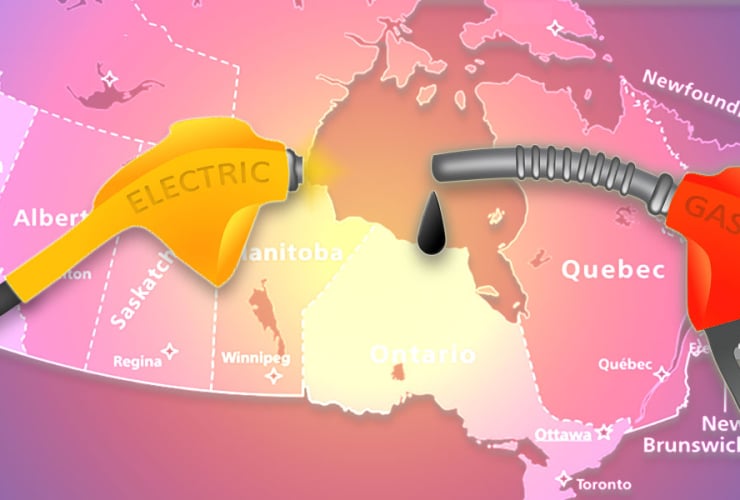

Alberta and its oil sands produce fewer jobs and dollars per transferred tCO2, yet Harper hasn't created a game plan to minimize this threat.

Alberta keeps 90 per cent of the benefits of this national carbon transfer scheme without paying any of the costs, yet the prime minister hasn't created a game plan to address this destabilizing provincial imbalance. Is he coaching for Team Canada, or not?

It’s a very sweet deal for Alberta. Not so much for the rest of Team Canada.

Does it seem like a fair and “comprehensive” game plan for all Canadians? Why are Albertans still grabbing ever more of other Canadians’ CO2 allotment while refusing to pay for it? How much will Alberta grab? And what will it take for Albertans to share the ice and to stop shooting at Team Canada’s net?

Ensuring prosperity for all Canadians

To ensure that all Canadians get a fair shot at thriving in the emerging lower-carbon economy, Canada needs and deserves the protection of a comprehensive national climate-pollution strategy that explains just who needs to cut CO2, who doesn't and who will pay for it.

As we find out in our next article, there are several made-in-Canada solutions -- ready to go -- that would solve this national crisis. What we don’t have is either a federal government or Alberta’s provincial government willing to do enough to protect the rest of Canada.

Until a comprehensive national climate pollution plan is in place, Alberta and its oil sands need to pull in their elbows and stop grabbing other Canadians’ fair share. They need to start paying their own way and stop scoring own goals against Team Canada.

NEXT UP:

Made-in-Canada Solutions ends our Big Grab series with a look at several roadmaps towards low carbon prosperity. Fortunately, we have a number of made-in-Canada solutions already under way that could be expanded to solve our crisis. These would re-unite Canadians in an overdue push to build a prosperous economy that can weather the coming low-carbon future.


NOTES AND LINKS


note 1: Government of Canada forecasts oil sands 108 MtCO2 by 2020. That is 77 MtCO2 above their 30.7MtCO2 level in 2005. This is also 82 MtCO2 above the oil sands' four per cent share of 2020 (based on 2005 levels). Either value more than erases the 65 MtCO2 in cuts by 2020 from all actions as defined by Environment Canada backgrounder. The EC backgrounder also says that 178 MtCO2 cuts by 2020 still need new plans and actions. The oil sands projected growth (77 or 82 MtCO2) equal 42 per cent to 46 per cent of remaining actions still to be created – nearly doubling the amount still to do.

note 2: Canada National GHG Inventory Report 1990-2008 part 3 data: Alberta GHG 244 MtCo2 / Canada GHG 734 MtCO2 = 33 per cent. Alberta GDP $186b / Canada GDP $1,322b = 14 per cent. Alberta tCO2/$1000GDP = 1.32 = $758/tCO2. Canada-Alberta: $1,136b/490 MtCO2 = $2,320.

note 3: All per-capita GHG stats and GDP stats are from Canada National GHG Inventory Report 1990-2008 part 3 provincial tables. The per-cap-ghg outside Alberta math: Canada GHG 734 MtCO2 - Alberta GHG 244 MtCO2 = 490 MtCO2 / 29.7m Canadians outside Alberta = 16tCO2. List of all nations by per-cap GHG (http://en.wikipedia.org/wiki/List_of_countries_by_greenhouse_gas_emissions_per_capita ) shows Qatar highest at 55 MtCO2.

note 4: Canada National GHG Inventory Report 1990-2008 part 3 data: Shows Alberta average GHG two per cent growth rate from 1990-2005 and 2005-2008. From 1990-2008 Canada increased GHG 142 MtCO2 while Alberta alone increased GHG 73 MtCO2 = 52%. If Alberta GHG rises two per cent/year from 2008 levels, it will be 307 MtCO2 in 2020, which is more than half of Canada target of 607 for 2020.

Comments