Published on The Vancouver Observer (http://www.vancouverobserver.com)


Chinese companies can sue BC for changing course on Northern Gateway, says policy expert

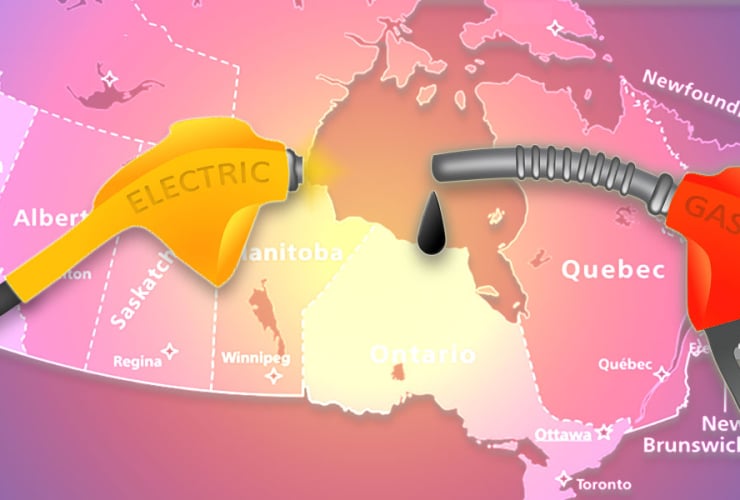
The Canada-China Foreign Investment Promotion and Protection Act (FIPPA), which will come into effect at the end of October, is Canada's biggest foreign trade treaty since NAFTA. What are its implications for BC?

Beth Hong
Posted: Oct 12th, 2012
  • Facebook
  • Twitter
  • del.icio.us
  • Buzz Up!
  • Google
  • Digg
  • Reddit
  • StumbleUpon
Share on Tumblr
Send Article Print Article
Read More:
  • Environment
  • canada china FDI treaty
  • Don Davies FIPPA
  • Ed Fast FIPPA
  • enbridge northern gateway fippa
  • Gus Van Harten FIPPA
  • how FIPPA affects BC
  • how FIPPA affects Canada
  • Wayne Easter FIPPA
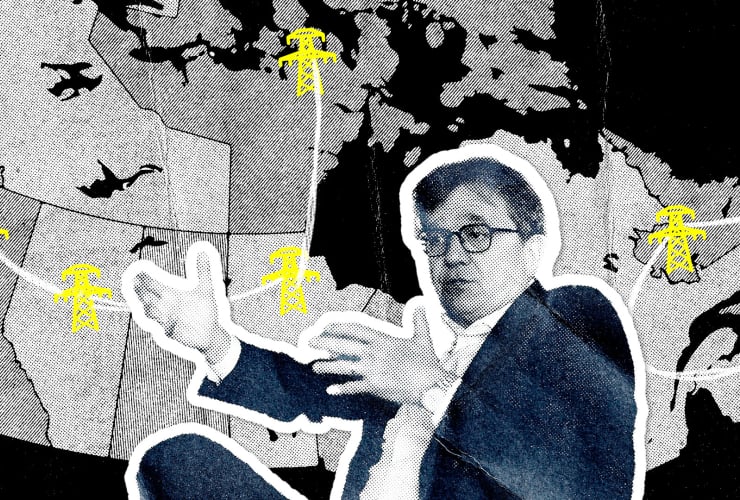
image/jpeg iconVO_China_Graphic.jpg
Graphic by Craig Fleisch (craigfleisch.ca) for The Vancouver Observer

A Canada-China investment treaty, known as FIPPA, will hamstring BC from negotiating a greater share of profits and creating regulations related to the proposed Enbridge Northern Gateway pipeline for the next 31 years once it comes into effect at the end of October, an international investment law expert warns. 

"This treaty, in effect, will pre-empt important elements of the debate of the Northern Gateway pipeline and may frustrate in a very significant way the ability of the current BC government or any future government—if the NDP were to win in spring—from stopping that pipeline or bargaining a better deal for BC," said Gus Van Harten, an Osgoode Law professor who specializes in international investment law.

Van Harten noted that arbitrators in foreign investment agreement disputes will most likely judge in favour of Chinese investors in cases where the host country attempts to impose new or updated regulations that may interfere with the investor's bottom line.

"If this treaty comes into effect, and there's any Chinese ownership whatsoever in assets related to this pipeline—minority ownership, ownership we generally don't know about—then Canada will be exposed to lawsuits under this treaty, because the BC government will be discriminating against a Chinese investor, which is prohibited by the treaty." 

The treaty will protect investors' rights for 31 years as of November 1.

  • Canada-China FIPPA agreement may be unconstitutional, treaty law expert says

  • 14 reasons why Canada-China investment deal needs more time, debate

The Northern Gateway is a controversial pipeline project proposed to run from the Athabasca oil sands in Alberta to the north coast of BC. It would build a twin pipeline running from Bruderheim, Alberta, to Kitimat, BC. 

The eastbound pipeline would import natural gas condensate and the westbound pipeline would export bitumen from the oil sands diluted with the condensate to the new marine terminal in Kitimat, where it would be transported to Asian markets by oil tankers. The project is currently under review from the National Energy Board, which is set to make a decision on whether or not the project will go ahead by the end of 2013.

The proposed pipeline has polarized BC politics. BC Liberal Premier Christy Clark has demanded a "fair share" of its profits for the environmental risks the pipeline could pose to BC's northern coast. Meanwhile, the BC NDP has taken a firm stance against Northern Gateway, asserting a "Made in BC" environmental assessment that would involve consideration for First Nations rights and environmental concerns. 

Disputes can be decided in secret tribunals under FIPPA

Van Harten wrote in another op-ed for The Toronto Star about the unprecedented secrecy around the three-person tribunals which judge the disputes between a foreign investor and the host country. Harten called this an "about face" from previous Canadian government policy.

"The turn to secrecy is an about-face for the government. Canada was until now a champion of openness in investor-state arbitration," Van Harten wrote.

"The Canada-China deal undermines basic Canadian principles of public accountability and open courts. It raises dramatically the stakes of Chinese takeovers in the resource sector. If ratified, it will tie the hands of future elected governments for at least 31 years."

Canada paid out $160 million in investor-state compensation since 2001 under NAFTA, Canada's last major international trade-related agreement, with another payout pending in a case involving research and development rules in Newfoundland.

"We have lost about half of the decided cases against the government, all by U.S. companies under NAFTA," Van Harten wrote, as a warning against the investor-state clause in FIPPA. 

Liberal MP and Committee on International Trade co-chair Wayne Easter, who has been a Member of Parliament representing Prince Edward Island since 1993, recalled the case of Ethyl Corporation vs. the Government of Canada in 1997. The Canadian government paid the Corporation $13 million after its ban on the import and inter provincial trade of the gasoline additive MMT—a suspected neurotoxin-- was found to violate the investor corporation's rights under NAFTA. 

"Even though we were doing it for an environmental reason, under the investment rules it affected their future profit, and so the Government of Canada had to cut a check to Ethyl," Easter said.

"And that's what can happen when a government makes a decision in the public interest that affects a company's future profits of something they're selling into the marketplace. It really takes your ability of public policy out of public interest hands, being the government, and puts into private investor hands." 

Harper government muffling debate: opposition MPs

The majority Harper government is continuing a trend of muffling democratic debate in the House of Commons by ignoring calls to study, debate and clarify a major foreign investment agreement between Canada and China, say opposition MPs.

"There is no mechanism that the Conservatives have permitted in this case to allow stakeholder input and full discussion about FIPPA," said International Trade critic for the official opposition Don Davies.

Davies proposed a motion on October 2 in the Standing Committee for International Trade to gather expert opinions, clarify ambiguities, and debate contentious clauses in the wide-ranging agreement.

After the majority Conservative committee voted for a confidential, in-camera meeting, the motion was removed from the Committee's agenda.

Easter said that this was "typical" for the Conservatives when they don't want to engage in a critical debate.

"The problem is with this particular government is they typically go in-camera to defeat a motion," he said.

"We should be doing what Parliament is supposed to do and hold a consultation so that we know just exactly what is happening under the investment agreement, and so that we can look at the implications." 

One of the implications that Easter says he worries about is the investor-state arbitration clause, a controversial clause (Article 28) in the FIPPA that allows for a three-person tribunal to judge cases of investor-host country disputes in confidential hearings.

Policy watchers and opposition MPs have raised alarms about this clause, raising examples in the past where multinational corporate investors sued government of Canada in secretive tribunals ratified under NAFTA.

Harper government's consultation with House "unprecedented": Minister of International Trade spokesperson

A spokesperson for the Minister of International Trade Ed Fast responded to questions directed at the Minister about consultation about FIPPA with the House through written responses to The Vancouver Observer.

"In the name of transparency, our government introduced an unprecedented process for putting international treaties before Parliamentarians in the House of Commons. The NDP have already had two opportunities to debate the FIPPA with China and have chosen not to."
 
However, critics of the government's handling of FIPPA say that this is not enough, calling for consultation from provinces and territories and committee hearings at the very least.
 

Scott Sinclair, a senior researcher and director of the Trade and Investment Research Project at the Centre for Policy Alternatives, said that the federal government should be consulting provinces and territories about such a wide-ranging agreement.

"There isn't nearly enough consultation, and the intenton of Parliament to not even going to have a vote raises some very important issues about right to regulate and the rule of law," he told The Vancouver Observer.

"I think there's a strong case that the federal government consult each and every territorial government before this treaty is ratified. At the very least, there should be Parliamentary committee hearings to look at this agreement from every angle."
 
LeadNow, a non-profit for progressive politics in Canada, has launched a
petition to stop FIPPA.  
 
_____

This article can now be found in  Extract: The Pipeline Wars Vol. 1 Enbridge. 

Extract contains a year of the Vancouver Observer's powerful reporting on the proposed Enbridge pipeline.  Get your copy here 

Praise for Extract: The Pipeline Wars Vol. 1 Enbridge

"This is one of the greatest stories underway on the planet—the effort to wrest vast quantities of the dirtiest energy on earth from beneath Canada's boreal forests, and the even greater and far more beautiful effort to stop them. The stakes—the health of the planet's climate—simply couldn't be higher.

Read this book. Extract does a great job of giving voice to some of the people on the front lines and giving you the information you need to engage in the debate."

— Bill McKibben, climate activist and 350.org founder

Extract: The Pipeline Wars is a terrifying tour-de-force that opens a grim window on the future: this is not just about British Columbia, but about the world. As the fossil fuel industry taps dirtier and dirtier sources of energy to maintain their supremacy, as more regions of the world are despoiled in the process, the downhill run to ultimate destruction lies plainly before us...unless it can be stopped. Extract: The Pipeline Wars tells us why, and how, this must happen. Excellent, important work.

 — William Pitt, Truthout editor and New York Times bestselling author.

 We need information and hard facts to make thoughtful, forward-thinking decisions that reverberate long into the future. Here’s a book that cuts through the self-interested rhetoric of climate deniers and the fossil fuel industry.

 -- David Suzuki, environmentalist and David Suzuki Foundation founder

  • Share on Facebook
  • Share on Twitter
  • Comment on article
  • Print article
  • Send article
  • Subscribe to Environment

More in Environment

The Gitga’at First Nation asks Enbridge to leave territory following botched consultation
Harper promotes oil sands and Keystone XL in New York
Mulcair slams Enbridge's proposed 9B pipeline reversal
Tar Sands Solutions Network launches oil sands news aggregation site
Academics' letter to Joe Oliver warns against promoting oil sands development

Related Content on the Vancouver Observer

Canada-China FIPPA agreement may be unconstitutional, treaty law expert says
Politics
Beth Hong
Giving China the right to sue BC if it changes course on Enbridge Northern Gateway could be unconstitutional, warns international investment law expert Gus Van Harten.
14 reasons why Canada-China investment deal needs more time, debate
Commentary
Gus Van Harten
An open letter to Prime Minister Stephen Harper and Minister of International Trade Ed Fast from an international investment law expert about his concerns with FIPPA.
Concerned BC citizens opposing Enbridge oilsands pipeline infuriated by "radical" label
Environment
Alexis Stoymenoff
Many of the groups opposing Northern Gateway aren’t led by stereotypical environmentalists—but some say the polarized debate is leading to “infuriating” assumptions and labeling.
Enbridge oilsands pipeline's economic damage could exceed $100 billion
Climate Snapshot
Barry Saxifrage
Enbridge’s proposed BC pipeline would unleash billion of tonnes of CO2 into our destabilizing climate. Resulting economic damages from the climate pollution could be hundreds of billions of dollars.
BC "not for sale" to Enbridge Northern Gateway, say aboriginal and former government leaders
Politics
Beth Hong
The head of the Union of BC Indian Chiefs said that selling BC's coast and rivers is not the way Premier Clark should be fighting against Alberta's oil agenda. Grand Chief Stewart Phillip of the...
China and Canada: where do we stand?
Canada
Alexis Stoymenoff
Prime Minister Stephen Harper’s visit to China has put the spotlight on trade and foreign affairs. Here’s an explainer on where we stand with the powerful Asian nation.
"On the Line" screening in Vancouver to raise awareness of Enbridge oilsands pipeline
BeeVancity
Jenny Uechi
Festival Cinemas president Leonard Schein talks about his decision to screen environmental documentary "On the Line" to raise awareness of the Enbridge pipeline issue.
FOLLOW US on TwitterBECOME A FAN on FacebookSIGN UP for weekly news alerts

(29) Comments

Add New Comment

Source URL: http://www.vancouverobserver.com/sustainability/chinese-companies-can-sue-bc-changing-course-northern-gateway-says-policy-expert