Raymond Louie: Detailed, Hardworking, Part of the Solution
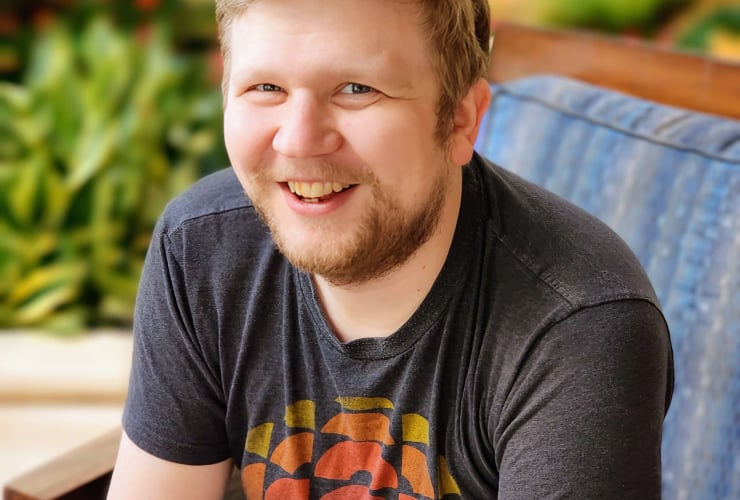
“When I was growing up, my father would say to me, you must work hard,” Vision Vancouver City Councilor Raymond Louie said over coffee at his favourite café, Laughing Bean Coffee, on Hastings and Slocan. At 8:45 AM. Louie looked handsome and poised, even after his usual hectic morning schedule of dropping his three children, aged 13, 10 and 3, off at their different schools. Known for a dry, detail-oriented approach to city government and lauded by fans as the most hard-working member of city council, the native Vancouverite talked about his career as a union leader, his achievements as a city councilor and his goals for improving city policy, if re-elected.
“I’ve been watching council for nine years and I know how the city runs. I have the benefit of history," Louie said.
Not that long ago, one may recall, Raymond Louie was running for mayor against Al De Genova and Gregor Robertson in the Vision Vancouver nomination race. He was, in the minds of some, the most experienced candidate and the most qualified. During the first debate, Louie distinguished himself when he moved from the dry exchange of barely nuanced policy differences the candidates had been stressing to the dramatic when he told a story from his youth as the son of struggling Chinese immigrants.
As he recalled that moment at the debate, Louie said he felt frustrated that he hadn’t made the points he’d really wanted to that night about what the story meant to him.
“This cookie we baked represents a penny,” Louie’s father had told him. “Alone, breaking that cookie and not having that penny is insignificant. But it’s the combination of all the cookies that gives us the opportunity for a better life. Don’t break the cookies. This is what gives us the opportunities.”
Louie paused and then made the point he felt he had missed during the debate: “You as individuals may not think that you can do a lot. But collectively we can. We represent a collective opportunity.”
“Collective opportunity” describes how he said he sees the Vision Vancouver party and its future, a future that Louie will be central to, if Gregor Robertson becomes mayor.
“We have a great leader in Gregor Robertson and a team that has been nominated by 16,000 people. It’s a positive step for Vancouver that democracy is coming to the forefront,” Louie said.
Louie was born at Vancouver General Hospital and grew up on the eastside of Vancouver near Twenty-fourth and Renfrew. His parents owned the Dell Bakery on Commercial between Gravelly and First. Louie grew up around the bakery, seeking freedom when he could. “Whenever I could escape from my chores, I’d roam around the neighbourhood and do odd jobs, photocopying at the library, or getting change from the Imperial Bank of Commerce for my dad.”
The youngest of three siblings, Louie was five when his parents bought the bakery, which remained the family business for the next twenty-five years. “It seems I forever did chores,” Louie said, “but I think I really started to pull my weight at seven or eight-years-old. I knew the neighborhood and I knew almost all of the shop owners.”
His mother was a seamstress when she immigrated from Zhongshan in Mainland China at the age of 30. Educated in Hong Kong, she had a “good core of English,” Louie said, but his father’s English wasn’t as good and he relied on him to translate. “He would pull me along with him as he did his work and tell me to tell people what he was saying.”
“I had to at some point become a little more extroverted than I naturally was. I tended to hang back and listen, even now. Unless there’s something solid to say, I don’t speak for the sake of speaking. So, being my father’s translator was a good growing experience for me. I learned how to do banking and make deposits and we were sending money back to support my aunts, uncles and grandparents in China.”
He attended Nootka elementary school and Windermere High School. While taking courses at BCIT after high school, he went to work for Mail-o-matic, mailing, inserting, managing machinery and preparing mail for the post office. “I got a car and a girlfriend. It was a good time. But I recognized I needed to do more than just work.”
He never completed college, but transferred to Pacific Press and joined the Communications Workers of America union, quickly moving up the ranks. It was the beginning his trajectory into public office. He became a national representative and went on to the position of Western Region organizer. After a heated discussion and debate at the annual convention of the union, Bill Saunders, who was Vancouver and District Labour Council President, approached him, and suggested he consider public service, Louie said. “I didn’t like the way my union was being run. I thought he was going to give me heck for the heated debates that he and I were having at the convention."
Louie was surprised when that didn’t happen. “He respected my positions, though disagreeing with some, and asked me to run for politics.” He ran unsuccessfully for city council in 1999. Three years later, he tried again, and was elected.
“The last term, under Larry Campbell, we accomplished a lot of positive initiatives, like the Southeast False Creek project with its one-third low income housing, one third middle income housing, and one third market housing. Sadly, when Sam Sullivan’s administration came in they reverted back to 80% market and 20% non market housing. They reverted back to the standing policy. I’m proud we took the challenge and took the step to look outside the box, to look at alternate methods of housing opportunities, ones that would enable people to afford to live in our city and create a healthier social dynamic in our city. I don’t want to create a city of elites.”

He was co-chair of the False Creek project and the chair of city’s Ethical Purchasing Policy initiative. “It was implemented,” he said. “It saved the city money by looking carefully at where we’re purchasing, not purchasing firefighters jackets from Burma which are produced using slave labour or indentured labour, for instance. These are things that we as a city should be trying to influence by always looking at the financial bottom line, but there’s value to look at other measurements and we’re pushing Vancouver to the forefront.”
As a councillor, he has struggled with the homeless issue in many ways, he said. “We knew that there was a housing problem in our city and that people could no longer afford to buy and live in our city, hence the reduction of school age children in our system. Seniors were telling us they could no longer afford to live in our city. We knew there was an affordability issue. We knew we had problems. A combination of our Homeless Action Plan, our Woodwards project, and our Southeast False Creek plan represented for me a significant step forward in moving to address the homeless problems in our city. These are things the city did. What we’re seeing now is a lot of credit being taken by this administration for provincial initiatives that rightly should be given credit to the province, like buying hotels.”
If re-elected, Louie said his top priority will be to continue to try to create more housing for the homeless.
“There’s been a thirty percent increase in homeless people on the streets of Vancouver since Sam Sullivan took office,” Louie said. “We need to provide more initiatives for the range of housing available, look to that model. In the meantime, we have to take action.
“That has been the most frustrating thing about this term for me. There’s been a lot of talk and no action. The term before we actually took action versus we’re seeing re-packaging happening this term in EcoDensity and Civil City. These are large packages, but its nothing new. We could have moved forward. They created a catch phrase to be used during the election. Anything to do with crime and safety is related to “Project Civil City.” Anything to do with the environment is linked to “EcoDensity.” That’s not what government is supposed to do. You don’t need to stand on the street corner and promote a product. In the end the product will speak for itself. If you work hard for the citizens, in the end the work will speak for itself.”
The council failed to work properly for the citizenry during the civic strike last summer, Louie said.
“The strike remains in the psyche of many citizens. It was mismanaged. Better leadership could have been instrumental.”
Louie said he was vocal about getting management back to the bargaining table with the unions and “providing services to the city at a reasonable cost,” he said.
“Our task as elected officials is to safeguard city services, like the libraries, community centres, and playing fields. People pay their taxes and it is our job to manage services well. Sam Sullivan and the majority of the NPA voted against my motion to return to the tax savings from the strike to the taxpayers, but I fought for it. It was my initiative and it was one of the few things (in the last term) that I was able to pass due to partisanship on the council.”
The NPA has shown extreme partisanship in City Hall and that this spilled over to the party’s nomination process, in which less than 500 voters participated.
“There’s been a lack of democratic process on the NPA side. A lot of their nominees were screened. Vision is inclusive. Sixteen thousand people participated in the nomination process. “
Louie drank another sip of coffee and prepared to head off for his next appointment, before reflecting on his chances of re-election. “I’m cautiously optimistic and I hope that my record of six years will convince people to vote for me again,” he said. “I want to be part of the solution.”
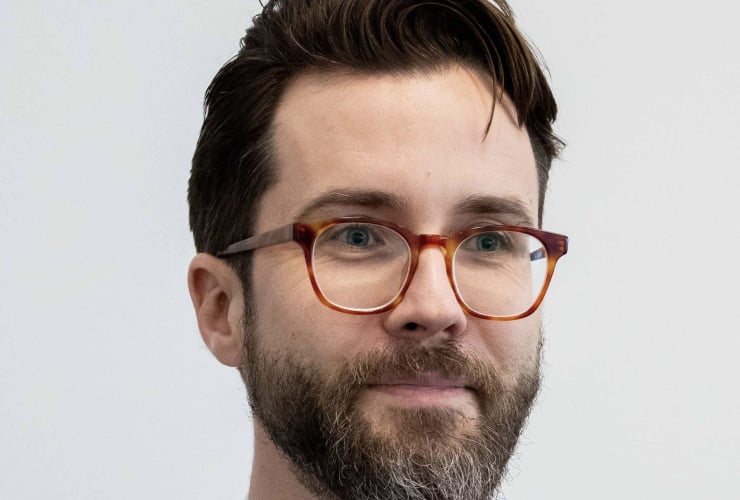
Photo above of Councilor Raymond Louie with the Vancouver Bike Brigade