Skip to Content

Real Estate

realestate_600.gif

How to own an affordable house in Vancouver

Kim Little
Jan 25th, 2012

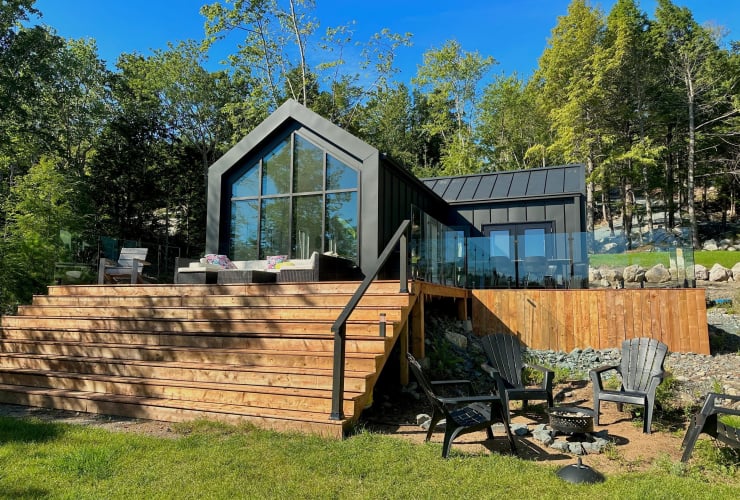
Photo from SMALLWORKS Studios/Laneway Housing Inc. featuring split home with double enterance

The City of Vancouver lead the way in premiering the laneway housing bylaw. It's taken a while for this to really catch on, but the possibilities the bylaw presents are no- brainers. The laneway home can house your parents, it can house your adult kids, it can provide positive cash flow as a rental, or you can move in the newly renovated space and rent the old house. So many incredible options.

 At under $300,000 all in, for many one and two bedroom models, it provides way more flexibility than an investment condo. But how does this help someone that doesn't have a property to put it on? How can this help you get noticed in the housing market?

Three words for you.

Tenants in common.

More commonly referred to as “shared equity.”

Investing in shared equity is a great option

Vancouver condo market still going strong, despite slump forecast

Kim Little
Jan 11th, 2012

The Prescott by Wesgroup in North Vancouver is just one example of a strong local market despite warnings.

With yesterday's announcement that the heads of some of Canada's biggest banks are warning that Toronto and Vancouver's condo markets might be heading for a slump it's a good time to take a look at Vancouver's still-hot market from a ground-level perspective.

We certainly know there is a slowdown in some condo markets -- Olympic Village is desperately trying to sell its first round of 200 units. But on the street, what I see is that each neighbourhood is its own market. In fact, each building can be its own market. It's becoming harder to lump all of Vancouver into one category and make a comment on "average".

Speculating on Vancouver's flippin' real estate market

Kim Little
Jan 9th, 2012

Speculation in real estate is a big topic in Vancouver. For those not familiar with the term, it's the notion that you buy property for the purpose of reselling later at a profit. The problem lately in the Vancouver real estate market is that we are seeing this happen at an unreasonable pace.

Unintentional speculators

We bought our first house for sale by owner in the late 80's for $97,000 and a Chinatown parking pass for five years. Now that’s a story in itself, but it was the start of my interest in real estate and my awakening to what is now the last tax exempt bonus we have -- The Principal Residence.

Lower Mainland home owners willing to compromise for livability, but not much

Jenny Uechi
Jan 5th, 2012

Give me this, or something close, say future home owners.

A new survey sponsored by REW.ca and conducted by Mustel Research Group has revealed what future home buyers and sellers in the Lower Mainland find most important -- and what they are willing to compromise on -- when making buying decisions. 

As expected, the survey found liveability factors and location are still the most important in selecting a property in the Lower Mainland, with most willing to budge on size and style of home if pressed to make a choice.

Close to everything

 "Close" is the key word that sums up what respondents want in a location, according to a REW.ca press release. Forty-one per cent of home buyers and sellers selecting “close to amenities” and 33 per cent saying "close to family/friends."  "Close to work/lessened commute time" came third, with acceptable commute times averaging 30 minutes.

New-housing starts drop dramatically

Christina Montgomery
Dec 8th, 2011

Photo courtesy of Wikimedia Commons.

There were a whole lot of messages in the latest report out of CMHC on housing starts.

Among them? The seasonally adjusted rate of housing starts was way down in November over October, especially in Toronto.

Most of that decrease came in condo starts.

Still, prices remain high. So what it all likely means is that the market is simmering down, people are nervous and some are opting to continue renting rather than jump into home ownership in a troubled economy. And maybe that places like Toronto are just slightly overbuilt for now.


The Canadian Press has the details:

TORONTO -- New home building across Canada dropped by a sharp 13 per cent in November, but there was still no sign the red-hot Canadian housing market is poised for a tumble, analysts said.

Low interest isn't helping home sales much

Christina Montgomery
Dec 6th, 2011

Photo courtesy of Wikimedia Commons.

Interesting news from the local housing front: Never mind the low interest rates, home sales in and around Vancouver have fallen signficantly during the past year.

Or maybe they'd just be much worse without the low rates.

According to a new Real Estate Board of Greater Vancouver figures, residential property sales were up 1.9 per cent in November over October.

But those , 2,360 sales were still down 5.9 per cent over sales from the same month in 2010.

New listings were also down last month over those a year ago, but were about two per cent higher than the 10-year average.

And there were nine per cent fewer homes listed in November than in October, but still 13 per cent more that at this time last year.

Sales of detached properties on the MLS listings in November hit 916, a drop of 12.8 per cent from November 2010. But the benchmark price for detached properties increased 11.4 per cent from November 2010, to $890,204.

Doing the math on laneway housing

Christina Montgomery
Dec 5th, 2011

It's one of the things you never hear anyone ask when they're talking about laneway housing in Vancouver.

They're green and they're groovy. They let you house your kids and your aging parents and they provide a rental income. Or, in the case of one of my friends, they allow two young couples to split the price of land in a great neighbourhood and each have their own house.

They don't even seem that small to the people who live in them.

But do laneway homes really make economic sense, once all the math is done?

It's a great question, and BC Business has provided an interesting answer in its December edition.

Vancouver home prices flatten. Finally.

Christina Montgomery
Dec 1st, 2011

Photo courtesy of Wikimedia Commons.

It's the kind of news that's a mixed blessing for anyone home shopping in Vancouver.

We're a little less house-poor than last year

Christina Montgomery
Nov 29th, 2011

Photo courtesy of Wikimedia Commons.

It turns out that one of Canada's big real-estate worries has begun to correct itself: Canadians are taking on less mortgage debt these days.

And that's put the brakes on a trend that had top government officials worried about the state of consumers' household finances.

The growth of mortgage loans has slowed to an average of just under $160,000, according to the latest report of the Canadian Mortgage and Housing Corp.

That reflects both tougher lending rules imposed by Ottawa and a slowing economy, which has put downward pressure on house prices.

Mortgage insurance bought by homeowners facing high-ratio debts fell by about 10 per cent.

What's likely behind the trend? A weaker economy has left consumers cautious and less likely to take on higher personal loans, lines of credit, car loans and credit card debt.

A slowdown in mortgage debt also suggests Canadians are putting more money down on their homes and avoiding high-risk mortgages.

Vancouver housing market expected to slow down during winter

Patricia Houlihan
Oct 24th, 2011

2011 has been the tale of two real estate markets, as mainland Chinese buyers influence some areas and asset classes while ignoring others altogether. The biggest beneficiaries of the influx of Chinese immigrants have been Vancouver and Richmond, and to a lesser extent, Burnaby, White Rock, and West Vancouver. Many areas of these cities have seen their single family home prices increase 20+ per cent over the past 12 months, with some areas approaching a 50 per cent increase.

Syndicate content