Skip to Content

Protests, Black Bloc, and the Future of Anti-Olympic and Other Activist Organizing in Vancouver: View from the Street

Read More:

 VO sat down with two street medics, well-known anti-Olympics activist Chris Shaw, and a relative newcomer to the Olympic resistance, Danika Surm, to get their impressions of the first week of the 2010 Olympics.

 VO: It's been a busy week for you two with the protests and your role as medics. How do you feel it went?

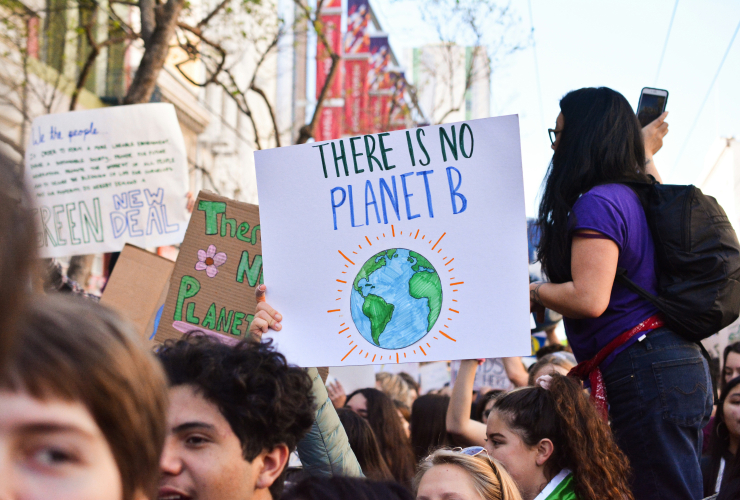
 CS: I have mixed feelings about the week. Seeing thousands of people in the streets to oppose the Olympic circus last Friday was amazing. I'd been waiting for years for this and it seemed for that evening that all of the anti-Olympic organizing by so many people had finally paid off. All the issues we wanted to bring forward were out there: poverty, the impact on the environment, the incredible costs...

It was tough to separate my views as activist from my role as medic coordinator at times, but I came out of that evening happy in both roles: a successful protest had happened and no one got hurt. Then came the events of Saturday...

 DS: I’m also fairly conflicted. As a relatively new “activist” I was blown away by the turnout Friday night. It was truly incredible to see such an eclectic mix of people coming together to make their concerns heard and to express the dissent that has been slowly festering in many of us as the true colours of the Olympic circus have become more and more tangibly apparent.

For those who have been opposing the games for a long time, I imagine it was a relief and a victory to see that their voices had not been overlooked and that those of us who have come along side the battle in much later years are now eager to shed the rainbow glasses that tinted our previous understandings or, more precisely, misunderstandings of the Olympic industry.

That being said, I feel strongly that the events of Saturday morning overshadowed a lot of Friday’s successes...

 VO: So let's discuss what happened on Saturday.

 CS: The medics had organized around the notion that the day's protests, Heart Attack, would combine conventional protests - speeches and marches- with some sort of 'direct action'. We hadn't been in the loop that some property damage was also on the agenda. Don't get me wrong: breaking windows is not violence since one can't, in my view, do violence to inanimate objects but only to people, and property damage as a tactic of resistance may be very valid in various circumstances.

However, for this to be true, several things would have to be in place. First, it would need, in a true anarchist sense (if this is what the Bloc was promoting at all), some sort of buy-in or consensus from the larger group of protesters that property damage was OK. Next, it would be defensive in nature, in response to a police attack, for example.

Finally, it would serve some "educational" purpose. In other words, smashing a window would be accompanied by a clear message of why. None of this happened. So overall, in my view it was a tactical, and theoretical, failure. It also alienated a lot of people who might have been sympathetic to the Resistance. I hasten to add that a number of those I've worked with in the past on Olympic issues will clearly disagree with this.

 DS: In my opinion, and this is purely my take, Saturday represented a step backwards, rather than a forward one, for the anti-Olympic movement.

To me, what happened Saturday was a series of random acts of property damage that were not linked to something bigger, not symbolic of the very valid points that I was under the impression Heart Attack was trying to communicate (i.e. corporate greed, mass consumerism, colonial repression, etc.) To clarify, I do not disagree with civil disobedience; in fact, I think it can be tactically very useful.

Furthermore, I don’t even necessarily disagree with property damage, but there is a caveat to that statement, the property damage (civil disobedience, whatever) needs to carry a message. Meaning is everything. If you are going to build a movement, and if movement building means accessing people previously uninvolved in such issues, then actions must educate people to your cause.


Comments