Waste Land, Vision and a Festival of new films from Europe
Waste Land takes us to the world’s largest garbage dump to make art
Four big films came out on Wednesday this week. You can find my reviews by clicking on CULTURE and scrolling down. I gave them these ratings:
TANGLED (Disney’s Rapunzel): 4 out of 5
LOVE AND OTHER DRUGS (Viagra salesman Jake Gyllenhall falls in love with Anne Hathaway): 3 ½ out of 5
BURLESQUE (Christina Aguilera starsd in Cher’s nightclub): 3 out of 5
FASTER (The Rock drives fast and kills for revenge): 2 1/2 out of 5
And these are Friday’s new movies ….
WASTE LAND: This documentary was voted the popular film at this year’s Vancouver International Film Festival. It’s now also on the official short list for an Academy Award nomination and no wonder. It takes us into a world we’ve never seen before and asks the question filmmakers love to ponder: can art change people? I don’t see as much evidence on the yes side as some people do, but the trip is fascinating, and often eye-opening.
We’re taken to the world’s largest garbage dump, just outside Rio de Janeiro, where as many as 3,000 people pick through the refuse for recyclable materials they can sell. Vik Muniz, the Brazilian artist now based in Brooklyn, N.Y., has an idea for an art project. He photographs some of the pickers, recreates the images in a warehouse using garbage, photographs the result and sells the prints at auction in London. One of them brings in 28,000 pounds. The film’s heart though is not in exploiting but meeting the pickers, discovering their dignity and as Muniz says “their appetite for life”. They’re poor but not beaten down. An organizer has started a medical clinic and a day care. Another runs a lending library with salvaged books. Three women say they’re proud to be pickers and not selling their bodies. Art didn’t create that. It just spread the word. (5th Avenue) 3 ½ out of 5


VISION: Hildegard von Bingen was rediscovered back in the 1970s by feminists looking for women who made history. She was a German nun who back in the 12th century helped advance science and medicine, wrote poetry and plays, composed music and stood up to church leaders to gain a separate cloister for women. She was also a mystic who claimed to be getting messages from God. Surprisingly, the church let her publish her accounts of those visions.

In this beautifully rendered film by Germany’s Margaretha von Trotta, Barbara Sukowa plays the head-strong nun with a fierce intelligence inside a congenial exterior. She gets what she wants by asking nicely, then insisting and then appealing up the levels of power within the church. She lectures against envy, bans suffering in the name of Jesus through self-flagellation or wearing a spiked belt and explains the psychology of “male potency.” She’s confident in her ideas and in that respect comes across as very modern. As if church politics aren’t drama enough, the film adds an almost love story with an acolyte who clings to Hildegard. It’s emotional but feels at odds with the historical story. The acting from everybody is strong and the actual convents and churches used as locations add a rich texture to the film.(VanCity Theatre) 3 out of 5
EUROPEAN FILM FESTIVAL (EUFF): For 13 years now, the Pacific Cinémathèque on Howe Street has organized a late-year showcase of interesting new films from Europe. This year they come from 23 countries and include several that played earlier at the Vancouver International Film Festival, including EDEN (an elderly couple tries to rekindle their romance), OF GODS AND MEN (the film that’s become a runaway hit in France) and KAWASAKI’S ROSE (collaboration in Communist Czechoslovakia).
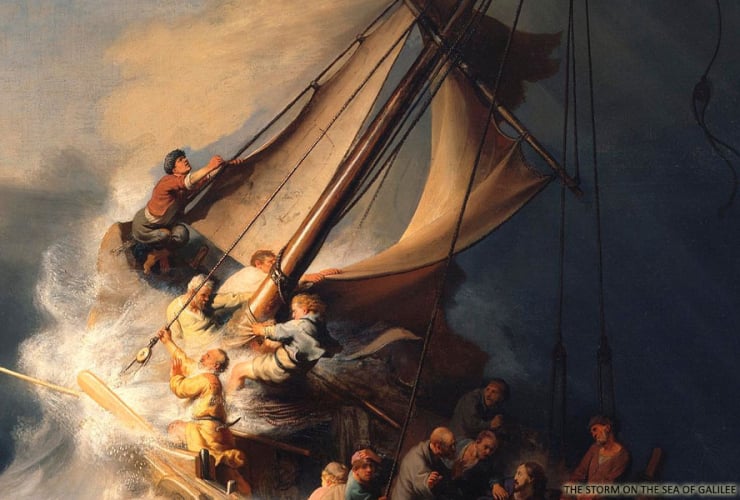
THE STORM, getting a Vancouver premiere, was a huge hit in Holland because it’s an exciting and at times edge-of-your-seat film about a disaster. It’s the first major film depicting a 1953 flood in which 1,800 people died. The early scenes re-create it with a stunning impact. You can’t avoid comparing them to what you saw from New Orleans.

Then it becomes a personal story. A single mother and her baby are separated when the house she’s in literally breaks in two. She’s shunned by her family and neighbors. Now, all alone, except for the help of a sympathetic military man, she travels washed out roads, wades and rows in deep waters and searches among hostile patrons at a cut-off hotel. There’s a devastating emotional aftermath years later. The film features a wonderful performance by Sylvia Hoeks. In flashbacks she’s sunny. In the main part she’s very good at portraying shock, then anger, determination and obsession. Some people familiar with Holland have complained the actors’ accents are all over the place. Even they praise the power of the special effects though. (The film plays Thurs. Dec 2). 3 ½ out of 5
For the full schedule and film notes go to www.eufilmfestival.com.
NUTCRACKER 3D: Let me list the things wrong with this movie. First, and foremost, with a title like that, parents are going to expect the popular Christmas ballet with Tchaikovsky’s music and E.T.A. Hoffman’s story about the wooden nutcracker that comes to life in a little girl’s dream.
It starts that way, alright. Elle Fanning is the Viennese girl given the toy by her ever-smiling uncle (Nathan Lane, putting on an Albert Einstein accent). When she’s transported up the Christmas tree there’s a magical glitter for a brief while, and then the world of the rat king which is beyond colorless. It seems to be inspired by images of the Warsaw Ghetto. The rat soldiers wear German helmets from World War II and when the slaves revolt, it looks like Fritz Lang’s Metropolis. The king is played by John Turturro channeling a bit of Andy Warhol and a lot of Phil Spector.
Instead of ballet, we get a few modern dance numbers and just one classical piece that’s meant to be a nod to a legendary choreographer. We also get eight dull songs. The lyrics are by Sir Tim Rice set to well-known themes from two symphonies and a piano concerto by Tchaikovsky. None of these antecedents do much to spark this leaden production, a joint British-Hungarian project, which cost $90 million to make. A lot of talented people fussed over details (like the Gustav Klimt print in the family home) but the overall result went astray. So did the 3D. It’s shoddy. The worst thing wrong though: bringing this film out the same week as the far superior Tangled. (Only playing the Colossus in Langley). 1 out of 5
NOTE: The photos were supplied by the movie studios and are thefore the exclusive property of their copyright owners.