Skip to Content

Earth Matters

EarthMatters_600.jpg

Port of Metro Vancouver breaks promise to youth

Carrie Saxifrage
May 24th, 2013

In the end, Kids for Climate Action were doubly disappointed: they didn't get a commitment for public consultation on the Surrey-Fraser coal terminal proposal and the Port broke its promise to hold a forum for debate because the industry refused to attend. "The Port cancelled because they couldn't find anyone to come defend the thing," Sam Harris said. 

In February, about sixty youth from Kids for Climate Action stormed the Port of Metro Vancouver offices at Canada Place with hand-made signs, some great speeches and a bit of song and dance to oppose coal export expansion projects out of Vancouver.

The Port PR staff eventually agreed to allow seven kids (no adults) the opportunity to speak with the Vice President for Social Responsibility. After nearly an hour, high school student Sam Harris reported back to the kids who waited outside. The Port had proposed “an event or something where they would like have people from both sides come, scientists and the public and Members of Parliament.”

Kids for Climate Action discussed whether they should be positive and appreciate the invitation to talk more, or whether the Port was manipulating their good intentions with a public relations ploy to distract them.

They decided to believe that the Port would do the right thing.

Did it?

Who counts the emissions when you export them?

Amy Huva
May 22nd, 2013

British Columbia - the most beautiful place on Earth (photo: Amy Huva 2011)

British Columbia is a green province. The natural splendour of the province is world famous; Tourism BC proclaims ‘Super, Natural, British Columbia’ the mountains are overrun by Australian skiers and even the licence plates on the cars will tell you (with somewhat un-Canadian brashness) that ‘Beautiful British Columbia’ is ‘the Best Place on Earth’.

Vancouver is aiming to be the greenest city in the world by 2020, and the Provincial Government aims to reduce their carbon emissions by 33 per cent from 2007 levels by 2020. All this greenness is wonderful; Canada! Environmental leaders!

We don’t need to care about the environment

Amy Huva
May 16th, 2013

What if you prefer this? What if you don't care about the trees and the fishes? Doesn't mean you don't need them to survive. Photo: Amy Huva 2008

I’ve been hearing a lot of rhetoric about the choice between the economy and the environment. Most environmentalists will talk about their emotional connection with nature and how we should care about preserving it, attempting to move people emotionally to care about the environment. The idea behind this is sound – people are more likely to look after things they have an emotional connection to, so if you can create an emotional tie to the environment, people are more likely to care about looking after it.

These environmentalists are then dismissed by the ‘realist’ and ‘rational’ economists who talk about how it’s much more important to have jobs, jobs, jobs, which will generally get linked to natural resource extraction and expansion. The ‘realists’ would love to have time to care for the environment like all the emotional hippies, but they’re too busy doing the ‘real work’ of building the economy.

And thus the stalemate continues and it all looks like a zero sum game. Except it isn’t.

BC Election: BC's most valuable resources on the line

Jim Hoggan
May 13th, 2013

The Beautiful British Columbian coast.

This is my personal opinion. I am not writing on behalf of any of the charities I am associated with.

Risks of resource extraction must be considered

Dallas LaPorta
May 9th, 2013

Photo from EMS-TECH.

While I am not taking one particular political party's side on this, I was disappointed to see such strong backlash against Adrian Dix for coming out against Kinder Morgan’s proposed new Trans Mountain pipeline. British Columbians have some tough conversations on the horizon about the costs and benefits of new resource development, and emotional arguments that polarize the issue aren’t helpful.

As a Vancouver-based business owner and a proud member of the real estate sector, I want to make sure that any new resource extraction proposal doesn’t risk our already thriving local economy. Take, for example, my industry. People might poke fun at Vancouver’s expensive coffee shops and condos but these, along with other similar building projects, are huge job creators. The property development sector is directly and indirectly responsible for over 220,000 jobs in BC and there are over 14,000 people working in real estate in the Lower Mainland alone. Compare that to the 50 permanent jobs that a new Trans Mountain pipeline would create in BC and things come into perspective a little.

If at first you don’t succeed, buy the opposition

Amy Huva
May 9th, 2013

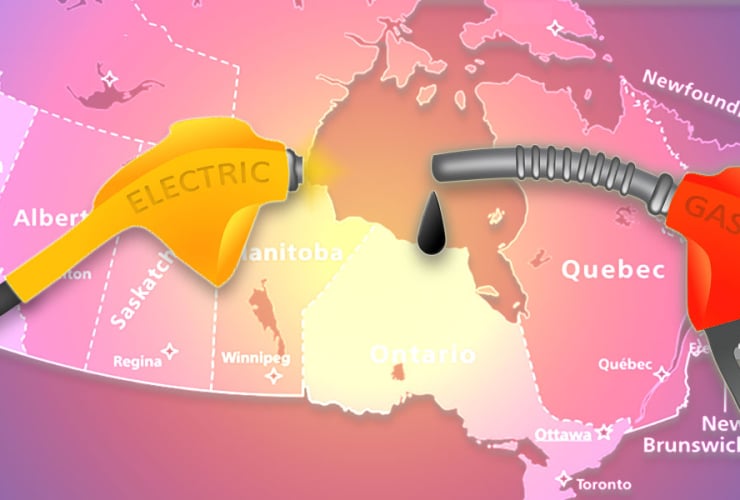
Campaign poster by Australian advocacy group GetUp! objecting to Gina Rinehart's purchase of a controlling share in Fairfax media. (image: GetUp! Australia)

Australia is a country that takes pride in not taking itself too seriously.

Lessons from Deepwater Horizon: how oil spills could impact BC tourism

Liz McDowell
May 5th, 2013

Photo courtesy of U.S. Coast Guard 

In April 2010, the largest accidental marine oil spill in history occurred in the Gulf of Mexico, when the Deepwater Horizon oil rig exploded and approximately 4.9 billion barrels of oil poured into the Gulf of Mexico over the three months that followed.

Although this is certainly a worst-case scenario, the experience of the Gulf states can be instructive when trying to get a picture of the costs and benefits of expanded tanker traffic in BC’s coastal waters. Both the Gulf states and southern BC have highly populated coastal areas and a thriving tourism industry that is a significant regional job creator (127,000 people are employed in tourism in BC, the vast majority in and around Vancouver).

Divestment may protect from 40-60% overvaluation of fossil fuel stock

Carrie Saxifrage
May 3rd, 2013

A growing number of municipalities have resolved to shift out of oil company investments. Meanwhile, research on the “carbon bubble” builds the case that such divestment reflects financial prudence as well as ethical leadership. 

A growing number of municipalities have resolved to shift out of oil company investments. Meanwhile, research on the “carbon bubble” builds the case that such divestment reflects financial prudence as well as ethical leadership.

Wild salmon, the real economy

Alexandra Morton
May 2nd, 2013

Alexandra Morton, Chief Bob Chamberlin, Vice-President of the BC Union of BC Indian Chiefs and Twyla Roscovich, filmmaker of the controversial Salmon Confidential, along with thousands of other people want to know which candidates can see the real economy.

On the eve of the provincial election, it’s a good time to review the election issues including salmon farming in BC. Is this industry good for the province, or is it a threat to the BC's coastal economy?

The Norwegian salmon feedlot industry using BC waters to grow their Atlantic salmon only exists because this impact largely occurs underwater, out of sight from everyone, except the very few scientists studying it.

For over 20 years, a stream of unfavourable headlines has chronicled the development of salmon feedlots in BC with thousands of people in protest telling the industry to stop.  And what is this fuss all about?  Why hasn’t the controversy died out?

So what was the plan?

Mark Zuckerberg’s new political group spending big on ads supporting Keystone XL and oil drilling

Staff Reporter
Apr 27th, 2013

Mark Zuckerberg’s new political group, which bills itself as a bipartisan entity dedicated to passing immigration reform, has spent what Think Progress reporters Josh Israel and Judd Legum call


"considerable resources on ads advocating a host of anti-environmental causes — including driling in the Arctic National Wildlife Refuge (ANWR) and constructing the Keystone XL tar sands pipeline."

The umbrella group, the reporters say, was co-founded by Facebook’s Zuckerberg, NationBuilder’s co-founder Joe Green, LinkedIn’s Reid Hoffman, Dropbox’s Drew Houston, and others in the tech industry, is called FWD.US.

Its initial priority is the passage of a comprehensive immigration reform bill, including enhanced border security, more visas for workers with special skills, and a pathway to citizenship for those living in the U.S. without legal status. Other long-term priorities for the group include education reform and expanded scientific research.

Syndicate content