Skip to Content

Climate Snapshot

vo-banner.jpg

Up to $500 billion in damages from Keystone XL oil

Barry Saxifrage
Jun 13th, 2013

The climate pollution from the oil flowing through the controversial Keystone XL pipeline -- if approved by US President Obama -- could inflict half a trillion dollars in damages to society.

Earlier this week I wrote about the new "social cost of carbon" (CSS) calculations from the United States government. They estimate that each tonne of CO2 released this year will cause $36 in "monetized damages" to society from changes to the climate and oceans.

In addition, this social cost per tonne is estimated to rise about a dollar per year as the "physical and economic systems become more stressed in response to greater climatic change." The mathematical result of increasing social costs is accelerating accumulated damages.

These damage estimates are dollar costs to human society. They aren't about dying polar bears or pikas.

US increases estimates for CO2 damage and data reveals hidden risks for oilsands and Canadian economy

Barry Saxifrage
Jun 11th, 2013

The United States federal government has increased its estimates for the “social cost of carbon” (SCC) by more than 50 per cent.

It sounds geeky, but packs a wallop. Its main use is to decide whether a particular climate policy will benefit society. But it can also be an invaluable tool to identify hidden carbon risks in the economy.

Below I'll show how applying this new data to Canada's economy and the Alberta oilsands industry reveals some unsettling risks. But first, a Q&A will help set the stage.

Q: What exactly is the "social cost of carbon"?

A: The SCC estimates the "monetized damages" to society caused by the release of one tonne of CO2 (tCO2).

Q: Who determined these new SCC values?

A: Eleven US federal agencies -- only two of which are "environmental" -- shared their expertise and worked together to make these estimates:

Climate change delivers U.S. another deadly, record-smashing tornado

Barry Saxifrage
Jun 5th, 2013

Last week I wrote about the string of freak tornado records being broken down south. Two days later, on May 31st, the atmosphere over Oklahoma unleashed yet another record breaking monster. The "El Reno" tornado was the largest tornado ever recorded -- an amazing 4.2 kilometers wide at one point.

Tuesday the US National Weather Service (NWS) put out this message:

"THE WIDTH OF TORNADO WAS MEASURED BY THE MOBILE RADAR DATA TO BE 2.6 MILES AFTER THE TORNADO PASSED EAST OF US HIGHWAY 81 SOUTH OF EL RENO. THIS WIDTH IS THE WIDTH OF THE TORNADO ITSELF AND DOES NOT INCLUDE THE DAMAGING STRAIGHT-LINE WINDS NEAR THE TORNADO AS DETERMINED BY THE HIGH-RESOLUTION MOBILE RADAR DATA. THE 2.6 MILE TORNADO PATH WIDTH IS BELIEVED TO BE THE WIDEST TORNADO ON RECORD IN THE UNITED STATES."

Climate change is wild card as tornado seasons smash records

Barry Saxifrage
May 29th, 2013

No place on earth creates as many tornadoes as the southern and central United States.  And here in the global heartland of tornadoes the last few years have whip lashed between record breaking extremes. Along the way the three most damaging  tornadoes in world history plowed multi-billion dollar swaths of death and destruction through the American cities of Joplin, Tuscaloosa and Moore.

Record breaking tornado years

The best source on climate change and tornadoes that I've found is the writings of  meteorologist Dr. Jeff Masters. He tells the tale of the recent remarkable whiplash between extremes:

"In May 2011, the Joplin, Missouri tornado did $3 billion in damage--the most expensive tornado in world history--and killed 158 people, the largest death toll from a U.S. tornado since 1947.

Do the oilsands threaten our safe climate? Hansen's "game over" vs Oliver's "minuscule amount"

Barry Saxifrage
May 15th, 2013

Famed climate scientist James Hansen wrote an editorial called "Game Over for the Climate" in the New York Times:

Canada’s tar sands … contain twice the amount of carbon dioxide emitted by global oil use in our entire history. If we were to fully exploit this new oil source, and continue to burn our conventional oil, gas and coal supplies … it will be game over for the climate.

Sea levels would rise and destroy coastal cities. Global temperatures would become intolerable. Twenty to 50 percent of the planet’s species would be driven to extinction. Civilization would be at risk … If this sounds apocalyptic, it is … we can’t wait any longer to avoid the worst and be judged immoral by coming generations.

Leading climate activist Bill McKibben explained how Hansen's reasoning plays into the battle to stop the Keystone XL pipeline:

Is jet-setting compatible with a safe climate?

Barry Saxifrage
May 7th, 2013

I joined the "slow travel" movement about six years ago when I quit flying.

Jet travel lost its appeal for me when I realized the oversized climate damage caused by jet travel coupled with the industry's refusal to do anything meaningful about it. Jet travel gave me a burden of complicity in our climate crisis that I didn't enjoy. Below I present the charts and facts that led me to take action. Hopefully these will enable you to decide for yourself how big a problem it is and what should be done about it.

One of the most persistent myths I hear when I talk to people about jet pollution is the notion that the airline industry would have to cut flights to reduce their total climate damage. But that isn't true.

The industry has identified many efficiencies that would allow them to reduce their total climate damage while still increasing flights. A UK government study I cover below shows this to be the case. But the industry insists on increasing flights much faster, regardless of the climate damage this causes.

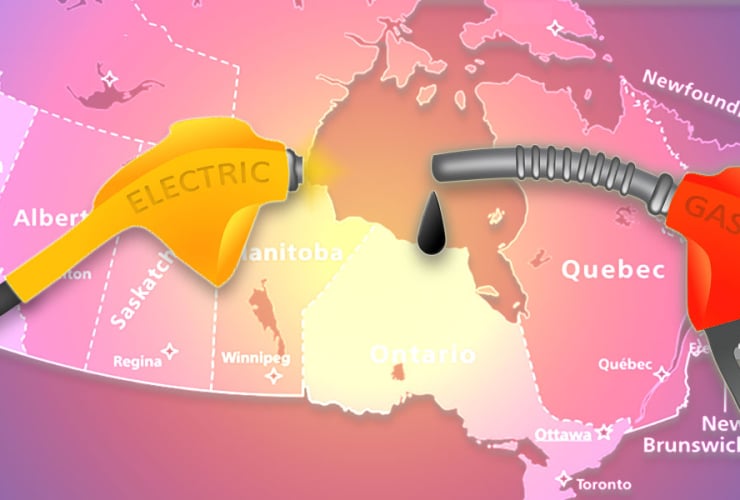
Do electric cars cause more or less climate pollution than gasoline cars? Take a look.

Barry Saxifrage
Apr 17th, 2013

Electricity has arrived as a fuel source for an increasing number of vehicles. Will this increase or decrease climate pollution compared to using gasoline?

I've heard so much confusion about this that I decided to make one of my Visual Carbon charts to allow informed comparisons at a glance. Turns out this was easier imagined than done. Determining the climate pollution from electric-fuelled vehicles requires compiling data on three new variables:

Keystone XL will "lock in" more climate pollution than Canada now emits in a decade

Barry Saxifrage
Apr 8th, 2013

Graphic by Barry Saxifrage

I've read at least a hundred major media reports and politicians' speeches on the Keystone XL pipeline. Very few mention what is at the heart of this bitter pipeline battle: "lock in".

Big oil demands it. The International Energy Agency (IEA) warns against it. Climate hawks are fighting tooth and nail to prevent it.

Here is the "lock in" battle in a nutshell:

Alberta to cause three-quarters of Canada's climate failure

Barry Saxifrage
Apr 1st, 2013

When it comes to fighting climate change, Alberta is "all hat, no cattle". They talk a good story but their weak climate policies allow their climate pollution to surge out of control, forcing climate failure on our nation.

The Alberta Government repeatedly highlights what it claims is its cutting edge carbon tax of $15 per tonne of carbon dioxide (tCO2). Just last week they paid $30,000 to run a half page ad in the New York Times lobbying for the Keystone XL pipeline, proclaiming:

"Alberta already has a $15 price on carbon."

Oddly, they left out the fact that only about 2% of Alberta's emissions pay their carbon tax.

I wonder if they sell oil the same way in Alberta? "We charge $60 per barrel but you can have 98% of the barrels for free."

WTF? We just experienced 4,000 years of global warming in two decades

Barry Saxifrage
Mar 27th, 2013

Graphic by Barry Saxifrage

A new study published in the journal Science shows how freakishly extreme global warming has become in the last few decades.

The scientists from Oregon State University and Harvard University used dozens of sources of ice cores and sediment cores from around the world to reconstruct the Earth’s temperature record for the last 1,100 decades. This detailed record stretches back much farther than previous studies.

Here is my chart of the temperature data they uncovered:


Global temperatures rose slowly for thousands of years after the end of the last ice age. Temperatures peaked around 5,000 BC, at a level close to where we are today. Then temperatures declined slowly for thousands of more years.

Syndicate content