Skip to Content

Simmi Dixit talks about empowering minorities through Me in Media

On Tuesday, September 13, a free public dialogue on how to challenge stereotypes and create a more inclusive city through media takes place at the Vancouver Public Library. To learn more, I interviewed Simmi Dixit, the National Coordinator of Multimedia & Multiculturalism (M&M) at the United Nations Association in Canada (UNA-Canada) which is co-sponsoring the event with Schema Magazine.

Read More:
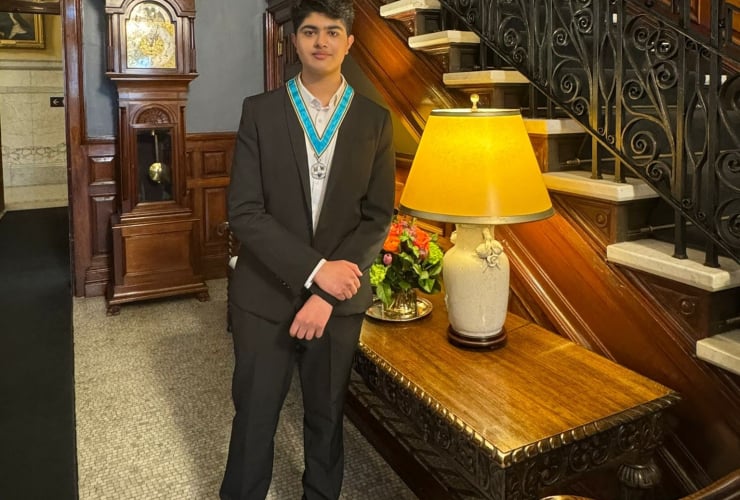
Simmi Dixit, the National Coordinator of Multimedia & Multiculturalism (M&M) at the United Nations Association in Canada (UNA-Canada).

Dixit completed her B.A. in Human Rights and Political Philosophy at Carleton University. After graduating, she moved to the Philippines on a CIDA internship to become a Research and Advocacy worker with Migrant Forum in Asia. Her exposure to human rights and labor migration issues led Dixit to complete her Masters in Migration Studies at the University of Sussex in 2009. Eventually, she moved to India to work at the Aajeevika Bureau, a non-governmental organization advocating for migrant workers.

Currently, Dixit lives in Ottawa where she is a member of the Venus Envy Bursary Fund Board of Directors and operates her own desert catering business.

Tracy Bains: What is Me in Media and who should attend the event?

Simmi Dixit: We’ve invited four panelists to speak briefly at Me in Media about their experiences working in, critiquing and even challenging how ethnicity is portrayed in Vancouver. After their presentations, CBC Radio producer Jennifer Chen will moderate an open discussion about how we can use media to move forward, becoming more inclusive and representative. 

The event is free and open to everyone—we hope that a broad range of folks from the community comes out to hear and participate in a lively, candid discussion.

TB: This event is part of UNA-Canada’s drive to foster inclusion in media through its  Multimedia Multicultural Initiative (M&M). Why did UNA-Canada feel it was necessary to launch M&M?

SD: We conducted a large-scale study, surveying youth across the country about their sense of belonging in Canada. Overwhelmingly, we heard that youth felt that their voices and multicultural communities were inadequately represented in the media. Content is still filtered, negating and marginalizing many in the process.

While we definitely see a lot of great milestones to celebrate like the rise of ethnic media outlets in Vancouver, there’s still more room to grow and new directions for that growth to occur. Even with the explosive growth of ethnic media here, there seems to be little dialogue among different ethnic groups—resulting in the creation of silos. 

As a result, UNA-Canada decided to implement M&M, a national programme that links ethno-cultural communities with media organizations in seven regions across the country. The programme is supported by Regional Coordinators placed on the ground in each of these areas. 

We aren’t the experts so we rely on each local community to tell us about what is important to them and to build projects and activities that create meaningful dialogue. For example, Vancouver’s Me in Media event is a public town hall created by and for the community at large.

TB: Besides our event in Vancouver, what are other communities choosing to do? 

SD: We’re active in Ottawa, Montreal, Toronto, Halifax, Calgary, Regina and—of course—Vancouver. Since each of the communities is different, we’ve seen a broad range of programming from public panels in Ottawa and a series of film workshops for youth in Montreal to activities with immigrant support groups in Halifax and workshops for at-risk Aboriginal youth in Regina.

In addition, M&M manages an internship programme, placing 21 youth from across Canada with mainstream and community media organizations. In fact, we just finished our first cycle of internships.

TB: How is the internship related to the events that are being organized across the country?

SD: The internship is the most important and, I believe, unifying element of the M&M programme. We select interns from each of our seven participating regions as well as a media outlet in the same city. It’s six weeks of hands-on experience for these youth, giving them a chance to participate in the industry as more than consumers and to understand the process involved in creating media content.

Before the internship, we bring all of the interns together for a briefing and workshops. After they complete their internships, we organize a debrief to provide a space for the interns to process their experiences and look at their next steps.

The interns also represent the organization in all activities in that region. For example, Shima Ghailan will be speaking at Me in Media about the discussion she’s had with youth and their reactions to media coverage, as well as how each of us can become a hub for change through different forms of media—from grassroots to mainstream outlets.

Register to attend Me in Media or follow our live blog.

(2) Comments

Dan September 10th 2011 | 4:16 PM

The growth of ethnic media only serves to divide ethnic communities from the mainstream.  We should all be working to reduce divisions among us Canadians, instead of grouping people together along ethnic lines.

I suspect that by reducing exposure to our common language, the ethnic media also negatively impact the communication skills of new Canadians.  This reduces their chances of success in the job market.

Please stop supporting ethnic media - stop dividing Canadians and making ethnic communities poor!


tbains September 10th 2011 | 6:18 PM

Thanks for your feedback, Dan.

However, I don’t agree that the existence of ethnic media is dividing Canadians or imperiling livelihoods.

You’re assuming that readers/viewers who consume content from ethnic media are doing so to the exclusion of all other media outlets, which seems highly implausible.

Besides, no one is ghettoizing ethnic communities and forcing them to create their own outlets. These platforms are created by and for the communities they serve because mainstream media is not/cannot cover every story that interests these niches. There’s appetite for more coverage and so demand leads to new content supply chains, i.e. ethnic media outlets. 

Canada is not a unilingual society—not today, not ever. English and French are both Canada’s official languages. And we’re becoming more multicultural than ever. It’s only natural that the shift in demographics would lead to new, multilingual media.

We should be celebrating our differences and building bridges among these media outlets to increase understanding—not seeking sameness.

Plus, immigrants and ethnic communities are adopting communication technologies like social media at higher rates than your much-lauded mainstream.

I’m sure that there are ways in which we should be helping newcomers adapt to Canadian society, but I absolutely do not believe that includes phasing out ethnic media.