Skip to Content

City Councillor George Chow: Chinatown/DTES Native Son

George Chow, Vision Vancouver City Council incumbent, said he might even be able to do more for the downtown eastside, if not re-elected, but if re-elected, he'd also be effective, he indicated, because he grew up on the downtown eastside and knows it from the inside out, and because it was his home of many years, he cares about it deeply, and not just in the stand-off-ish way that people might if they had no real roots there.
"My parents immigrated from China because the condition was such there that they needed another place to earn a living. They were peasants,” Chow, a Vision Vancouver city council incumbent said, during a recent interview. "We lived at 634 Main Street, on the second floor of a rooming house. Before that we lived in another rooming house near the viaduct at Union and Main, where the first London Drugs was."

His father, a cook, and his mother, a farm-worker, didn't speak English when they arrived in Canada from Hong Kong and enrolled the then fourteen-year-old in a class at William Dawson School (now the Wall Centre), which was full of immigrants from all over the world. "There were kids from Japan, Korea, Portugal. They ranged in age from eight-years-old to sixteen-years-old,” Chow said. Chow's father's restaurant "was a greasy spoon with thirty seats. There were no other employees other than my dad, his business partner, part-time help, and me."
His mother was " herded into a truck" every morning and taken out to Richmond or Ladner, where she worked on farms. "Of course she had no idea where she was anyway,” Chow said. “She just worked with the women she was with. Most of the farm workers back then were Chinese. That was before the influx of Indo-Canadians."

At his school teacher's suggestion, he changed his name from King-Wah to George. "The teacher said, 'Look, you should pick yourself a name so people can call you easier.' My younger brother was with me. His name was Koon-Wah. I thought, ‘what name do I use?’ I thought of King Richard, but he wasn't a good king, so I picked King George. I knew about Robin Hood and King John. I picked John for my brother. Basically, we were then stuck with those names. My parents didn't have any knowledge of this. It didn't matter to them. They called me what they called me at home. Eventually they realized, 'Hey, people call you Georgie.'"

After the first year of studying English, Chow was “booted" into a regular program at Britannia, where the kids called the new immigrants "imports."

"We were outcasts. Even the Chinese kids were either born here, or, second generation. I remember when we went to school, we (new immigrants) wore a sports jacket, we were clean cut, we didn't wear jeans and just by looking at you the other kids would know you're an import."

"We had to study poetry and my god we were just learning English and you had to read about Dylan Thomas. We just looked at those poems and said how come these things they aren't complete sentences, how come they're just chopped off and moved to the next line," he recalled with a laugh. "I got a D in that English. English was hard, but Math and Science were no problem." He succeeded in those subjects and went to study engineering at UBC.

"In those days going to UBC was not much of a barrier," he said. "Engineering school cost only $500 a year. I remember we spent a hundred dollars for books and that was a big deal. Even if you were a dishwasher, you were able to buy a house. The houses down there were maybe $5,000 in the Strathcona area, back in those days. The opportunities were just there. There was low tuition and academically we could make it and there was not so much competition."

While at university, Chow became involved in helping establish the Chinese Cultural Centre (CCC) to bring together different parts of the Chinese community, from second generation families to new immigrants. The group fought for the right of Chinatown merchants to sell barbecue pork in the traditional manner. "For some reason the health department wanted to prosecute the barbecue pork merchants because they weren't keeping the meat under refrigeration,” Chow said. “The merchants were arguing that they'd had this method of handling Chinese barbecue pork for thousands of years, that it was a special way of handling meat and not a problem. We fought that issue in order to pull the community together and give the centre a profile. The Chinese Cultural Centre was only a concept at that time. There was no physical building."

After winning on the pork issue, Chow applied his skills to organizing special events in Chinatown to further raise the profile of the CCC. He helped with fundraising and organized the first Chinatown New Year parade in 1973. He remained on the board for eight years and became known on the streets of Chinatown. He ran for city council in 2002 as an independent candidate to help the community address the issues around a drug injection facility that was being proposed for the area, he said, but he lost. "The Chinatown community had really encouraged me to run. They said we need a voice at City Hall and you're the person to run."

He was not thinking of running for politics again.

Jim Green , meanwhile, formed the Vision Vancouver party. Green got a message to Chow, asking him if he would join the party ticket in 2005. "I thought about it because I really didn't know Jim very well in person. But I knew of him, because he had been an activist in the downtown eastside. We had never really crossed paths. I thought that Jim would be a good person for Vancouver, because of the problems we had on the downtown eastside. He had credibility and personal accomplishments. I thought if I run with him, we could do something for the area. So, I joined Vision."

A revelatory moment came for Chow on a street corner outside the Carnegie Community Centre around that time. "During the campaign, I was having an interview outside the Carnegie Institute on drug issues and some aboriginal guy said, 'Hey, you guys go back to China.' He was really mad and I thought, 'Gee, there's a lot of mistrust and lack of understanding between the two communities, the urban aboriginal community and the Chinatown community. After I listened to that person, I went to an all-candidates meeting at the Aboriginal Centre on Hastings and I basically said I was very upset by that comment. I didn't think it was really meant to be hurtful, but I thought it showed how much we needed to do in terms of reaching the community."

"Since I've come to council, I have seen that there are two other communities we should really be bringing together to build a sustainable downtown eastside: the Strathcona community as well as the artist community. I hope to be able to work on bringing them together during my next term.”

"City Hall should be the facilitator to bring long-lasting policy to help this community to sustain itself. That’s certainly something that I would like to do, whether I am re-elected or not. We really need to build some bridges. The chaos you see on the street is a reflection of the chaos inside the groups and the people. There really is not a road map for the groups to follow. We are always being pulled one way or another. We need to find our bearings down there."

"Helping people find their bearings is my priority. Its like I told the arts group I spoke with today: I don't think you need someone from the outside to rescue the community. I think we have to come together, put our brains together, and work towards our goals."

Go to People to read other in-depth profiles of Vancouver City Council candidates.

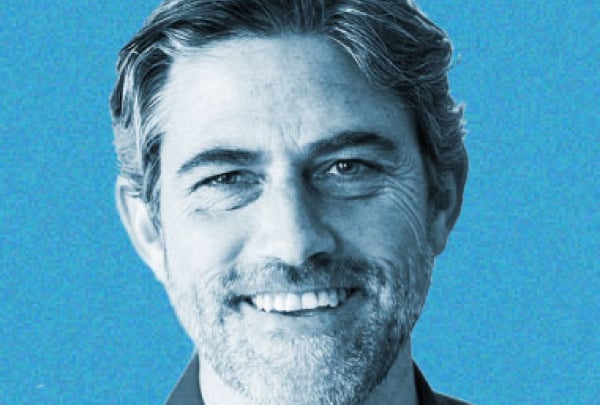
Photo of Vision Vancouver City Councillor George Chow in his office at City Hall by Linda Solomon

Comments

Login / Register to post new comment.