Guatemala Guide: What to Do, Where to Go, How Much it Costs
Posted: Jul 23rd, 2007
I'll confess, Guatemala was not the first on my list of travel destinations. But the visa for an Indian national to Costa Rica was two hundred along with a twenty thousand dollar "deposit", and to Belize it was a closely inflated one hundred and fifty, so Guatemala with its mysterious Mayan ruins, verdant rain forests and twenty five dollar visa fee beckoned.


I traveled at the end of June and my trip overlapped the 4th of July break.
I chose well. As the rainy season runs from May through October, it was not peak tourist season. The weather was nice, staying between the low seventies and mid eighties, with the occasional late afternoon thunder storm. Humidity, especially in the El Petén province, is very high.
With Mexico to its north and west, Belize to its east and El Salvador and Honduras to its south east, Guatemala has some of the richest biodiversity on the planet. It's a region rich in volcanic mountains, wetlands and lush rainforests.
With ten days to travel the country, I ended up hitting only a few of its popular destinations, like Guatemala City, Antigua, the Lake Atitlán region and Tikal.
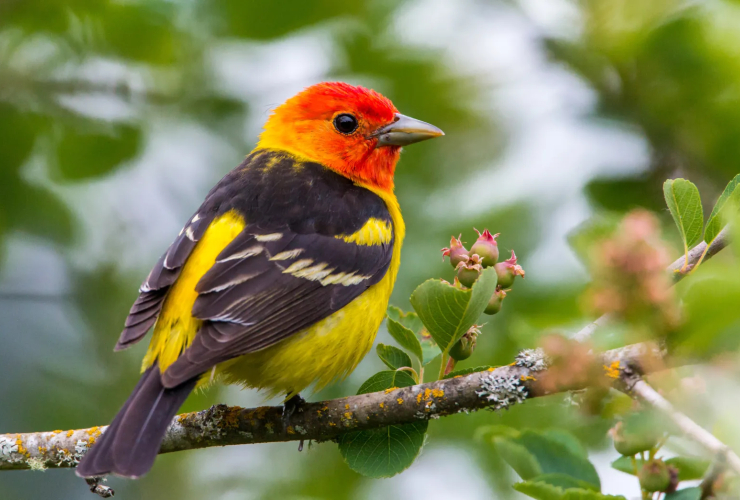
Guatemala City like many developing world capitals is an eyesore and can quite easily be missed. I did not take my own advice however, and spent part of a day visiting the capital. The city is divided into many zones with the La Aurora International Airport in Zone 13 and the city centre with most prominent sights in Zone 1. To get to Zone 1 from the airport, you can take a taxi which will set you back about twenty five to thirty dollars (depending on your desperation and Spanish language skills) or take the # 83 bus outside the airport, at 1/500th the taxi cost at 0.35 Quetzales (the local currency, Quetzal, is named after Guatemala's national bird and 1 Canadian dollar yields around 7.7 Quetzales).
The bus is a nice option because it does a long tour of the city and you can see parts that you might have otherwise missed on an antiseptic taxi ride. In the city centre, as is the architectural set up with most Central and South American cities, there's a large park called Parque Central framed by a couple of official buildings on two sides and a Spanish-era church on the third. Of course, it was teeming with human and animal life, and there were many there who encouraged me to part with my money in one way or another.
Single women travellers like myself will do well not to take offence at lewd remarks and/or gestures that might be made in the universal human language. The city's other main attractions are two museums, Museo Ixchel and Museo Popl Vuh, which can be found in Zone 10. Both museums are renowned for their collection of Guatemalan textiles and pre-Hispanic art among other objects. I failed to visit the museum, choosing instead to wander the streets around Parque Central and watch the procession of jeeps and cars fitted with blaring loudspeakers for the Presidential elections' campaign. One of the contestants is the former dictator Rios Montt, who was responsible for brutal killings of mostly indigenous people in the 80s. Another successful and flourishing democracy.
After less than a day in Guatemala City, I beat a hasty retreat westwards to Antigua, the old capital; it is about 40 miles from Guate and is accessible from the airport by shuttles, private taxis or for the more stout of heart, local buses also known as chicken buses (so called because one may ride with humans and livestock alike).
Popular with tourists and students of Spanish alike, this old town with its charming cobbled streets, brightly coloured homes and views of imposing volcanoes is attractive by any world standard.
Moreover, if the chaos of Guatemala City weighs on your mind, as it did on mine, stop by the Deluka spa on 6a Av. Norte where one can get a facial, 60-minute massage and a pedicure for sixty dollars.
Being as popular as it is, there is no shortage of decent accommodation in Antigua. If you don't make reservations in advance, all you have to do is walk on 6a Av. Norte and 5a Av. Norte near the city's centre and you will find accommodations from basic to more luxurious.
Be sure to ask to see the room and ask if the quoted rate includes hot water as this amenity is sometimes extra (I learned this under the trickle of a cold shower stream).
I stayed at a budget hotel called Posada de Don Diego owned and run by a young Guatemalan couple and their very handsome golden retriever. My private room with a private bath with hot water was fifteen dollars a night.
If you for the more budget conscious, there are plenty of hostels that offer dorm accommodations for four to ten dollars a night. Nicer hotels like Hotel Posado los Búcaros, Hotel San Jorge charge around fifty to sixty a night, or for two hundred a night you can stay at the posh Posado del Angel, which counts Bill Clinton as of its illustrious (or not-so-illustrious depending on your political leaning) guests.
Antigua is surrounded by three volcanoes, Agua, Acatenango and Fuego, and there are several tour agencies that organise half day treks or longer to these volcanoes. Travel agencies abound on every Antigua street in the city centre and one can use them for day trips to the nearby volcanoes or for trips further away like Lake Atitlán or Chichicastenango (famous for its Thursday and Sunday local markets).
Antigua is also known for its Spanish-language schools, several of which offer homestay programmes where one can learn Spanish while staying with a Guatemalan family.
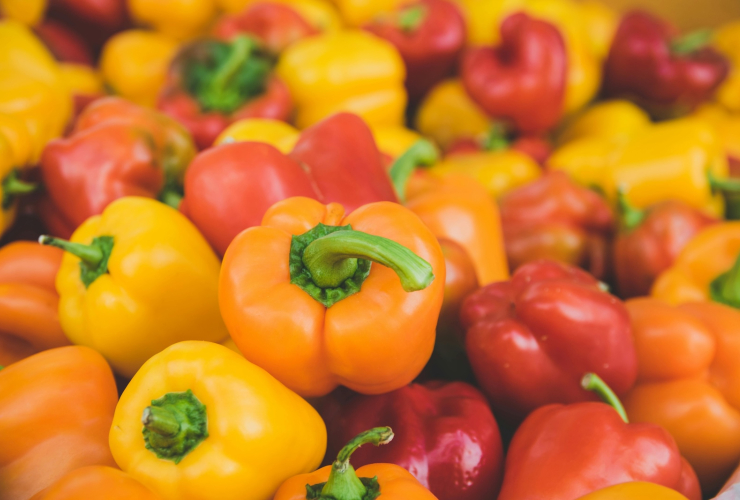
Food in Guatemala is inexpensive and easy to find. Most markets have a rich spread of fresh fruits and vegetables (don’t buy cut fruit unless you're looking for a quick and easy way to shed twenty pounds on the typhoid-diet) and several street corners have women selling fresh hot corn tortillas.
For the common man, meat is a bit of a luxury and it's easy to find rice, beans and tortillas in small towns too, a boon for vegetarians like myself. In larger towns like Guate and Antigua there is no shortage of international cuisine and Chinese, Italian and Thai places are easy to spot in the tourist hotspots.
For me, finding vegetarian food was not as hard as I had imagined, although being vegan was difficult because of hidden ingredients like butter lurking about in everything.
In larger towns like Antigua, several restaurants offer plato vegetariano or comida vegetariano and there are a few restaurants like La Fuente in Antigua, which even have vegan options. There are plenty of watering holes in Antigua's centre and if coffee is your drug of choice, you must try several cups of cortaditos at Café Condesa.
From Antigua, I went to the breathtaking region of Lake Atitlán. Like most tourists, I took a shuttle which cost about five dollars (six dollars because I got cheated, but that's another story) and took about four hours.
Shuttles are a safe, convenient and boring way to travel, and you can be sure they will be filled with strong American accents.
If you want a more local experience, take a chicken bus. There is one direct bus to the town of Panajachel (or Pana as it's fondly called) in Lake Atitlán or you can take a bus to Chimaltenango and change there for another one to Pana.
Lake Atitlán is dotted with some picturesque and some ugly towns along its shores. Pana is one of the ugly towns used mostly as a base to explore the region. Instead of staying overnight at Pana, take a lancha, a local fibreglass boats across to a more peaceful town like San Marcos or Jaibalito.
I made the mistake of spending a night in Pana, and it was made more tolerable by my first Guatemalan hummingbird sighting.
My second night in the region was spent at the idyllic village of San Marcos. A short lancha ride away from Pana, San Marcos is famed for its spiritual energy and meditation retreats.
The most famous of these is Las Piramides, which offers month long residential spiritual programmes. Interestingly, all buildings in this centre are pyramidal, from the welcome centre to the restaurant to the accommodations to the large meditation halls. The sight of all these triangular structures looming in the midst of pretty gardens is very unique.
Even if you are not enrolling in a longer-term programme, you can still take pay and participate in daily Hatha yoga and meditation sessions. The Hatha yoga session I took was a slightly surreal experience; held at dusk, in total silence, by a very austere ascetic-type, in this giant wooden pyramid, I was tingling with powerful spiritual energy.
However, as I discovered, an ill-timed fart in a sealed pyramid can, in an instant, bring one's consciousness down from the sublime to the coarse. Obviously, I'm no yogi.
There are some excellent places to stay on San Marcos. Some like Posada Schumann and Hotel Jinava have rooms on the waterfront. I stayed at the lovely Posada Schumann and enjoyed a marvelous room overlooking the lake.
Rates at the Schumann range between ten and twenty a night and include breakfast and a kayak rental. Hotel La Paz also has decent rooms, only it's further away from the water; however, they have a good vegetarian café and offer massage and meditation classes as well.
Most hotels have their own restaurants and a few like La Paz and Las Piramides have vegetarian-only restaurants.
From San Marcos I took another lancha to San Pedro, an old hippie hangout. It offers some of the cheapest places to stay in Lake Atitlán and thanks to its laid-back feel and scenic views, several tourists have ended up as residents of the town.
You can do day treks to the Volcan San Pedro with various outfitters in town. It's risky to do the trek alone as armed robbers are said to lay in wait for tourists. From San Pedro I moved on to Santiago, another crowded town along the lake. This town is most famous for its god Maximon who is appeased by gifts of alcohol, cigars and cigarettes. After seeing him, I did wonder if he was any kin of my Hindu Tirupathi god Ventakeshwara who enjoys gifts of human hair and money.
There are other places close to Lake Atitlán which are worth seeing. There's the famous bi-weekly market in Chichicastenango but having had my fill of local markets in Ecuador and Peru, I headed back to Antigua and Guate. If you are interested in shopping for textiles, rugs, and bags, try to visit Chichicastenango on market day. You can buy very similar products in Antigua albeit at a higher price.
I don't like to use the word awesome. It is unoriginal and limp, especially after you've been subjected to it in many conversations in America… But truly, Tikal was awesome. It was the most memorable part of my trip.
Tikal is home to some of the most impressive Mayan ruins and it is situated in the northern El Petén province of Guatemala. To get to Tikal, I caught a TACA airlines-operated flight to Flores. TACA flies to Tikal twice a day and is almost always on time. In fact, so committed were they to an on-time departure that we left in the middle of a huge rain storm leading me to think that their motto was Depart on time or Perish. As I flew north and saw more and more unbroken stretches of green, bejewelled tortuous rivers nestled in the soft mountains, I felt lighter and that feeling only intensified after reaching Flores and Tikal.
El Petén has Mayan sites other than Tikal. Some like El Mirador are very remote and accessible only via a four-day trek through thick forests, swampy lands and knee high mud, but others like Tikal, El Peru and Uaxactún are more easily accessible from Flores. Tikal is about sixty km from Flores; closer and more convenient places to stay are found midway between Tikal and Flores in the town of El Remate. I stayed at the Casa de Don David (recommended by Responsible Travel for their commitment to ecotourism and by yours truly) in El Remate.
At twenty one dollars a night, the accommodations were very good -- right on Lago Itza Petén with gardens home to all kinds of noisy wild birds, so much so that I forwent my morning alarm and awoke every day to a cacophony of bird song and shriek.
The only fault I could find with Casa de Don David was their low currency conversion rate. There are other good accommodations in the El Remate area, cheap and comfortable ones like Gringo Perdido and others like the Francis Ford Coppola-owned La Lancha.
There are frequent public collectivos to Tikal from El Remate for Q. 20 and private taxis are available too for twenty five dollars. Entry to Tikal costs Q.50 (Q.15 for locals) and payment for maps and guides is extra. Bilingual guides charge around twenty five dollars with five dollars extra for every additional person. Get to Tikal very early (6 AM) so that you can explore the grounds before swarms of tourists and strong sun get in the way of enjoyment.
Tikal was settled by Mayan in 700 BC and the present day ruins, some of which are still buried under large hillocks and gnarled tree roots, are magnificent. There are different sections and areas in Tikal. The oldest one is in the Acropolis Norte although the most impressive one is the Gran Plaza.
The Gran Plaza holds Templo I or the Temple of the Grand Jaguar built at a height of 44 metres. Under it, the powerful Mayan king Moon Double Comb (he also had the delectable name of Ah Cacua or Lord Chocolate!) was buried. After the death of a few tourists, climbing this pyramid's steep frontal stairs is not allowed (apparently in Mayan times there was some falling down these steep stairs too, but those events were intentional).
Templo II, which faces Templo I is known as the Temple of the Masks and there is a wooden staircase that allows one to ascend to the top. For the most majestic views of Tikal be sure to climb Templo IV, parts of which are still being reconstructed.
It's at a dizzying 64 metres and from that height, you can see the tops of Templos I, II and III poking through the trees. Templo III which is to the left of the Gran Plaza is still buried under a hill and gives you an idea of what the early white explorers saw when they first entered Tikal.
At the entrance to the ruins, there are two museums called Museo Litico and Museo Tikal. These hold an impressive display of burial goods of Moon Double Comb and other burial artefacts recovered during excavation. Other artefacts, stolen by tomb raiders have been sold on the black market and can be found in many of our fine Western museums. A leisurely exploration of Tikal can take around six hours.
There are some restaurants near the entrance but they serve barely edible food. I recommend taking water and energy bars along. That way, I could explore and rest at my own pace without running back and forth for nourishment to the comedores. Plus, by the end of my trip I got pretty tired saying "Soy no como carne ni pesco ni pollo ni heuvos" and it was just easier to down an energy bar.
It's possible to stay right outside Parque Nacional Tikal at three overpriced places, The Tikal Inn, The Jaguar Inn and the Jungle Lodge (prices ranges from seventy to one hundred and eighty dollars a night). The advantage of staying at one of these places is, undoubtedly, the proximity to the ruins, the ability to enter right at 6 am and the joy of hearing the morning ruckus created by howler monkeys.
Other than the ruins there is exciting wildlife to be spotted in Tikal. It is part of the Maya Biosphere Reserve and on a slow day one can see howlers, squirrel monkeys, toucans, hummingbirds, ocellated turkeys and coatis. Sadly, all I got to see of a coati was a road sign alerting travellers to their potential presence.
One can even mimic the squirrel monkey in a Jane-esq (or Tarzan-esq) manner by taking an exciting twenty-five dollar canopy tour through the jungle in Tikal or at another near by forest in Ruta del Mona. The latter location will be something sacred for the Survivor fan in you as some episodes were supposedly shot there.
If you've had your fill of Mayan splendour, there are other things to do in El Remate. There's a bioreserve called Biotopo Cerro Cahui which is worth exploring.
I took a solitary three hour trek through the reserve. The park wardens show you a trail map and point on places where howler and squirrel monkeys can be spotted. Jaguars are said to roam this reserve but they are wary of paparazzi.
I consoled myself saying that a jaguar had most certainly seen me even if I had not spotted it.
In any case, I did get a picture of a stoic toad and he, I'm sure, had seen a jaguar first hand. The wharves close to the Biotopo Cerro Cahui offer some of the best areas for swimming and after a long sweaty trek filled with toad and toucan sightings, the cool waters were very welcome.
Oh, yes. There's shopping to be done in El Remate, the province is known for exquisite handmade wood carvings and these can be purchased from local artisans on the road from El Remate to Tikal.
A small trip I particularly enjoyed was to a maya nut factory. Maya nut is the fruit of a tree that was planted in the jungles by the Mayans some 2000 years ago. Maya nut, also called Ramon, among other names is harvested by locals and is reportedly a rich source of Vitamin E, protein and tryptophan.
This nut is not very well known and there is an initiative underway by the Equilibrium Fund to make indigenous women self sufficient and educate them on improving their own nutrition through harvesting the nut in eco-friendly ways and selling its flour and tea (check them out at www.equilibriumfund.org).
Lest you think Guatemala is all howler monkeys, trees ripe with avocados ready for the picking and lost Mayan glory, there is the harsher side to Guatemala. Like all poor countries, the ability to travel cheaply and enjoy these somewhat unprotected ancient sights comes at a price.
A little outside the ruins of Tikal you see poor families, people washing in the lake, horses with haunches jutting out through lacerated skin, thin stray dogs with hopeful wagging tails. It is still a country that shows effects of the ravages of a long and brutal civil war. Amnesty International estimates that over 100,000 people have been killed since unrest in the 1960’s.
There is still a social, economic and political hierarchy with the ladinos on top and the indigenous Maya at the bottom. Crimes against women are especially high and very few perpetrators ever get prosecuted.
As I look back on my trip, I remember the beauty of Tikal, the mesmerising Milky Way in the night sky, the shrieks of parakeets, the territorial calls of howler monkey but I also recall other sights, like kids with worm-filled bellies, women trying to eke out a living by selling trinkets to tourists, that horse with a bloody injured eye the size a tennis ball, all impassive as my tourist shuttle whisked me back to the airport.
Photos by Sandhya Rao
Above
Volcanos
Below
Guatemalan Fruit
Rearview Templo I
Posada Schumann
Gorgeous View From Templo IV


I traveled at the end of June and my trip overlapped the 4th of July break.
I chose well. As the rainy season runs from May through October, it was not peak tourist season. The weather was nice, staying between the low seventies and mid eighties, with the occasional late afternoon thunder storm. Humidity, especially in the El Petén province, is very high.
With Mexico to its north and west, Belize to its east and El Salvador and Honduras to its south east, Guatemala has some of the richest biodiversity on the planet. It's a region rich in volcanic mountains, wetlands and lush rainforests.
With ten days to travel the country, I ended up hitting only a few of its popular destinations, like Guatemala City, Antigua, the Lake Atitlán region and Tikal.
Guatemala City like many developing world capitals is an eyesore and can quite easily be missed. I did not take my own advice however, and spent part of a day visiting the capital. The city is divided into many zones with the La Aurora International Airport in Zone 13 and the city centre with most prominent sights in Zone 1. To get to Zone 1 from the airport, you can take a taxi which will set you back about twenty five to thirty dollars (depending on your desperation and Spanish language skills) or take the # 83 bus outside the airport, at 1/500th the taxi cost at 0.35 Quetzales (the local currency, Quetzal, is named after Guatemala's national bird and 1 Canadian dollar yields around 7.7 Quetzales).
The bus is a nice option because it does a long tour of the city and you can see parts that you might have otherwise missed on an antiseptic taxi ride. In the city centre, as is the architectural set up with most Central and South American cities, there's a large park called Parque Central framed by a couple of official buildings on two sides and a Spanish-era church on the third. Of course, it was teeming with human and animal life, and there were many there who encouraged me to part with my money in one way or another.
Single women travellers like myself will do well not to take offence at lewd remarks and/or gestures that might be made in the universal human language. The city's other main attractions are two museums, Museo Ixchel and Museo Popl Vuh, which can be found in Zone 10. Both museums are renowned for their collection of Guatemalan textiles and pre-Hispanic art among other objects. I failed to visit the museum, choosing instead to wander the streets around Parque Central and watch the procession of jeeps and cars fitted with blaring loudspeakers for the Presidential elections' campaign. One of the contestants is the former dictator Rios Montt, who was responsible for brutal killings of mostly indigenous people in the 80s. Another successful and flourishing democracy.
After less than a day in Guatemala City, I beat a hasty retreat westwards to Antigua, the old capital; it is about 40 miles from Guate and is accessible from the airport by shuttles, private taxis or for the more stout of heart, local buses also known as chicken buses (so called because one may ride with humans and livestock alike).
Popular with tourists and students of Spanish alike, this old town with its charming cobbled streets, brightly coloured homes and views of imposing volcanoes is attractive by any world standard.
Moreover, if the chaos of Guatemala City weighs on your mind, as it did on mine, stop by the Deluka spa on 6a Av. Norte where one can get a facial, 60-minute massage and a pedicure for sixty dollars.
Being as popular as it is, there is no shortage of decent accommodation in Antigua. If you don't make reservations in advance, all you have to do is walk on 6a Av. Norte and 5a Av. Norte near the city's centre and you will find accommodations from basic to more luxurious.
Be sure to ask to see the room and ask if the quoted rate includes hot water as this amenity is sometimes extra (I learned this under the trickle of a cold shower stream).
I stayed at a budget hotel called Posada de Don Diego owned and run by a young Guatemalan couple and their very handsome golden retriever. My private room with a private bath with hot water was fifteen dollars a night.
If you for the more budget conscious, there are plenty of hostels that offer dorm accommodations for four to ten dollars a night. Nicer hotels like Hotel Posado los Búcaros, Hotel San Jorge charge around fifty to sixty a night, or for two hundred a night you can stay at the posh Posado del Angel, which counts Bill Clinton as of its illustrious (or not-so-illustrious depending on your political leaning) guests.
Antigua is surrounded by three volcanoes, Agua, Acatenango and Fuego, and there are several tour agencies that organise half day treks or longer to these volcanoes. Travel agencies abound on every Antigua street in the city centre and one can use them for day trips to the nearby volcanoes or for trips further away like Lake Atitlán or Chichicastenango (famous for its Thursday and Sunday local markets).
Antigua is also known for its Spanish-language schools, several of which offer homestay programmes where one can learn Spanish while staying with a Guatemalan family.
Food in Guatemala is inexpensive and easy to find. Most markets have a rich spread of fresh fruits and vegetables (don’t buy cut fruit unless you're looking for a quick and easy way to shed twenty pounds on the typhoid-diet) and several street corners have women selling fresh hot corn tortillas.
For the common man, meat is a bit of a luxury and it's easy to find rice, beans and tortillas in small towns too, a boon for vegetarians like myself. In larger towns like Guate and Antigua there is no shortage of international cuisine and Chinese, Italian and Thai places are easy to spot in the tourist hotspots.
For me, finding vegetarian food was not as hard as I had imagined, although being vegan was difficult because of hidden ingredients like butter lurking about in everything.
In larger towns like Antigua, several restaurants offer plato vegetariano or comida vegetariano and there are a few restaurants like La Fuente in Antigua, which even have vegan options. There are plenty of watering holes in Antigua's centre and if coffee is your drug of choice, you must try several cups of cortaditos at Café Condesa.
From Antigua, I went to the breathtaking region of Lake Atitlán. Like most tourists, I took a shuttle which cost about five dollars (six dollars because I got cheated, but that's another story) and took about four hours.
Shuttles are a safe, convenient and boring way to travel, and you can be sure they will be filled with strong American accents.
If you want a more local experience, take a chicken bus. There is one direct bus to the town of Panajachel (or Pana as it's fondly called) in Lake Atitlán or you can take a bus to Chimaltenango and change there for another one to Pana.
Lake Atitlán is dotted with some picturesque and some ugly towns along its shores. Pana is one of the ugly towns used mostly as a base to explore the region. Instead of staying overnight at Pana, take a lancha, a local fibreglass boats across to a more peaceful town like San Marcos or Jaibalito.
I made the mistake of spending a night in Pana, and it was made more tolerable by my first Guatemalan hummingbird sighting.
My second night in the region was spent at the idyllic village of San Marcos. A short lancha ride away from Pana, San Marcos is famed for its spiritual energy and meditation retreats.
The most famous of these is Las Piramides, which offers month long residential spiritual programmes. Interestingly, all buildings in this centre are pyramidal, from the welcome centre to the restaurant to the accommodations to the large meditation halls. The sight of all these triangular structures looming in the midst of pretty gardens is very unique.
Even if you are not enrolling in a longer-term programme, you can still take pay and participate in daily Hatha yoga and meditation sessions. The Hatha yoga session I took was a slightly surreal experience; held at dusk, in total silence, by a very austere ascetic-type, in this giant wooden pyramid, I was tingling with powerful spiritual energy.
However, as I discovered, an ill-timed fart in a sealed pyramid can, in an instant, bring one's consciousness down from the sublime to the coarse. Obviously, I'm no yogi.
There are some excellent places to stay on San Marcos. Some like Posada Schumann and Hotel Jinava have rooms on the waterfront. I stayed at the lovely Posada Schumann and enjoyed a marvelous room overlooking the lake.
Rates at the Schumann range between ten and twenty a night and include breakfast and a kayak rental. Hotel La Paz also has decent rooms, only it's further away from the water; however, they have a good vegetarian café and offer massage and meditation classes as well.
Most hotels have their own restaurants and a few like La Paz and Las Piramides have vegetarian-only restaurants.
From San Marcos I took another lancha to San Pedro, an old hippie hangout. It offers some of the cheapest places to stay in Lake Atitlán and thanks to its laid-back feel and scenic views, several tourists have ended up as residents of the town.
You can do day treks to the Volcan San Pedro with various outfitters in town. It's risky to do the trek alone as armed robbers are said to lay in wait for tourists. From San Pedro I moved on to Santiago, another crowded town along the lake. This town is most famous for its god Maximon who is appeased by gifts of alcohol, cigars and cigarettes. After seeing him, I did wonder if he was any kin of my Hindu Tirupathi god Ventakeshwara who enjoys gifts of human hair and money.
There are other places close to Lake Atitlán which are worth seeing. There's the famous bi-weekly market in Chichicastenango but having had my fill of local markets in Ecuador and Peru, I headed back to Antigua and Guate. If you are interested in shopping for textiles, rugs, and bags, try to visit Chichicastenango on market day. You can buy very similar products in Antigua albeit at a higher price.
I don't like to use the word awesome. It is unoriginal and limp, especially after you've been subjected to it in many conversations in America… But truly, Tikal was awesome. It was the most memorable part of my trip.
Tikal is home to some of the most impressive Mayan ruins and it is situated in the northern El Petén province of Guatemala. To get to Tikal, I caught a TACA airlines-operated flight to Flores. TACA flies to Tikal twice a day and is almost always on time. In fact, so committed were they to an on-time departure that we left in the middle of a huge rain storm leading me to think that their motto was Depart on time or Perish. As I flew north and saw more and more unbroken stretches of green, bejewelled tortuous rivers nestled in the soft mountains, I felt lighter and that feeling only intensified after reaching Flores and Tikal.
El Petén has Mayan sites other than Tikal. Some like El Mirador are very remote and accessible only via a four-day trek through thick forests, swampy lands and knee high mud, but others like Tikal, El Peru and Uaxactún are more easily accessible from Flores. Tikal is about sixty km from Flores; closer and more convenient places to stay are found midway between Tikal and Flores in the town of El Remate. I stayed at the Casa de Don David (recommended by Responsible Travel for their commitment to ecotourism and by yours truly) in El Remate.
At twenty one dollars a night, the accommodations were very good -- right on Lago Itza Petén with gardens home to all kinds of noisy wild birds, so much so that I forwent my morning alarm and awoke every day to a cacophony of bird song and shriek.
The only fault I could find with Casa de Don David was their low currency conversion rate. There are other good accommodations in the El Remate area, cheap and comfortable ones like Gringo Perdido and others like the Francis Ford Coppola-owned La Lancha.
There are frequent public collectivos to Tikal from El Remate for Q. 20 and private taxis are available too for twenty five dollars. Entry to Tikal costs Q.50 (Q.15 for locals) and payment for maps and guides is extra. Bilingual guides charge around twenty five dollars with five dollars extra for every additional person. Get to Tikal very early (6 AM) so that you can explore the grounds before swarms of tourists and strong sun get in the way of enjoyment.
Tikal was settled by Mayan in 700 BC and the present day ruins, some of which are still buried under large hillocks and gnarled tree roots, are magnificent. There are different sections and areas in Tikal. The oldest one is in the Acropolis Norte although the most impressive one is the Gran Plaza.
The Gran Plaza holds Templo I or the Temple of the Grand Jaguar built at a height of 44 metres. Under it, the powerful Mayan king Moon Double Comb (he also had the delectable name of Ah Cacua or Lord Chocolate!) was buried. After the death of a few tourists, climbing this pyramid's steep frontal stairs is not allowed (apparently in Mayan times there was some falling down these steep stairs too, but those events were intentional).
Templo II, which faces Templo I is known as the Temple of the Masks and there is a wooden staircase that allows one to ascend to the top. For the most majestic views of Tikal be sure to climb Templo IV, parts of which are still being reconstructed.
It's at a dizzying 64 metres and from that height, you can see the tops of Templos I, II and III poking through the trees. Templo III which is to the left of the Gran Plaza is still buried under a hill and gives you an idea of what the early white explorers saw when they first entered Tikal.
At the entrance to the ruins, there are two museums called Museo Litico and Museo Tikal. These hold an impressive display of burial goods of Moon Double Comb and other burial artefacts recovered during excavation. Other artefacts, stolen by tomb raiders have been sold on the black market and can be found in many of our fine Western museums. A leisurely exploration of Tikal can take around six hours.
There are some restaurants near the entrance but they serve barely edible food. I recommend taking water and energy bars along. That way, I could explore and rest at my own pace without running back and forth for nourishment to the comedores. Plus, by the end of my trip I got pretty tired saying "Soy no como carne ni pesco ni pollo ni heuvos" and it was just easier to down an energy bar.
It's possible to stay right outside Parque Nacional Tikal at three overpriced places, The Tikal Inn, The Jaguar Inn and the Jungle Lodge (prices ranges from seventy to one hundred and eighty dollars a night). The advantage of staying at one of these places is, undoubtedly, the proximity to the ruins, the ability to enter right at 6 am and the joy of hearing the morning ruckus created by howler monkeys.
Other than the ruins there is exciting wildlife to be spotted in Tikal. It is part of the Maya Biosphere Reserve and on a slow day one can see howlers, squirrel monkeys, toucans, hummingbirds, ocellated turkeys and coatis. Sadly, all I got to see of a coati was a road sign alerting travellers to their potential presence.
One can even mimic the squirrel monkey in a Jane-esq (or Tarzan-esq) manner by taking an exciting twenty-five dollar canopy tour through the jungle in Tikal or at another near by forest in Ruta del Mona. The latter location will be something sacred for the Survivor fan in you as some episodes were supposedly shot there.
If you've had your fill of Mayan splendour, there are other things to do in El Remate. There's a bioreserve called Biotopo Cerro Cahui which is worth exploring.
I took a solitary three hour trek through the reserve. The park wardens show you a trail map and point on places where howler and squirrel monkeys can be spotted. Jaguars are said to roam this reserve but they are wary of paparazzi.
I consoled myself saying that a jaguar had most certainly seen me even if I had not spotted it.
In any case, I did get a picture of a stoic toad and he, I'm sure, had seen a jaguar first hand. The wharves close to the Biotopo Cerro Cahui offer some of the best areas for swimming and after a long sweaty trek filled with toad and toucan sightings, the cool waters were very welcome.
Oh, yes. There's shopping to be done in El Remate, the province is known for exquisite handmade wood carvings and these can be purchased from local artisans on the road from El Remate to Tikal.
A small trip I particularly enjoyed was to a maya nut factory. Maya nut is the fruit of a tree that was planted in the jungles by the Mayans some 2000 years ago. Maya nut, also called Ramon, among other names is harvested by locals and is reportedly a rich source of Vitamin E, protein and tryptophan.
This nut is not very well known and there is an initiative underway by the Equilibrium Fund to make indigenous women self sufficient and educate them on improving their own nutrition through harvesting the nut in eco-friendly ways and selling its flour and tea (check them out at www.equilibriumfund.org).
Lest you think Guatemala is all howler monkeys, trees ripe with avocados ready for the picking and lost Mayan glory, there is the harsher side to Guatemala. Like all poor countries, the ability to travel cheaply and enjoy these somewhat unprotected ancient sights comes at a price.
A little outside the ruins of Tikal you see poor families, people washing in the lake, horses with haunches jutting out through lacerated skin, thin stray dogs with hopeful wagging tails. It is still a country that shows effects of the ravages of a long and brutal civil war. Amnesty International estimates that over 100,000 people have been killed since unrest in the 1960’s.
There is still a social, economic and political hierarchy with the ladinos on top and the indigenous Maya at the bottom. Crimes against women are especially high and very few perpetrators ever get prosecuted.
As I look back on my trip, I remember the beauty of Tikal, the mesmerising Milky Way in the night sky, the shrieks of parakeets, the territorial calls of howler monkey but I also recall other sights, like kids with worm-filled bellies, women trying to eke out a living by selling trinkets to tourists, that horse with a bloody injured eye the size a tennis ball, all impassive as my tourist shuttle whisked me back to the airport.
Photos by Sandhya Rao
Above
Volcanos
Below
Guatemalan Fruit
Rearview Templo I
Posada Schumann
Gorgeous View From Templo IV


Comments
Post new comment