Occupy Wall Street is a rapidly growing global movement described by organizers as an attempt “to end the monied corruption of our democracy”. It officially began on September 17, 2011, when a group of dedicated activists started camping out in the financial district of New York City.
The core of the movement is located at Manhattan’s Zuccotti Park, where nightly meetings – General Assemblies – are held at 7 p.m. to reinforce group ideologies and decide on practical matters. Labour unions, politicians and celebrities are continuously joining in support, with no planned end to the occupation.
Satellite occupations have now popped up in hundreds of cities worldwide, with new protests set to begin in up to 15 Canadian cities including Vancouver, Toronto, Calgary and Montreal. Supporters of #OccupyVancouver plan to set up camp at the Vancouver Art Gallery, with a General Assembly to begin at 10 a.m. on Saturday October 15.
How did it start?
It’s difficult to pinpoint one specific catalyst that brought the Occupy Wall Street movement to where it is today. In essence, the current protests are the culmination of months – or even years – of work done by a number of dedicated activists and organizations.
Many have traced the movement’s roots to a message put out by the Vancouver-based magazine, Adbusters, which stated simply "Occupy Wall Street. Sept 17. Bring tent." Adbusters founder and editor-in-chief, Kalle Lasn, has voiced his excitement about the overwhelming response, but he also gives credit to others who helped get it off the ground.
In an interview with The Tyee, Lasn explains, "We always thought of ourselves as the catalyzers, the people who set that meme, as we like to call it, in motion. And right from the start we decided that we're not going to play a part on the street...”
So if Adbusters initiated the protest in words and via social media, who were the initiators on the ground? The answer is not as simple as a single group or individual.
Most descriptions of Occupy Wall Street – published by organizers, supporters and by media – characterize it as a largely decentralized and leaderless movement. However, there are a few key players that helped to publicize and essentially define the Occupy protests.
First, there were the online “hacktivist” groups like Anonymous and AmpedStatus.com, who were organizing themselves against corruption and corporate America long before the “official” occupation began. There’s also the NYC General Assembly, an ad-hoc group that holds meetings (without leaders) and comes to decisions based on a purely democratic process.
When Adbusters put out the call to converge on Wall Street, it struck a chord with these groups and many more. Websites, Facebook groups and blogs such as We Are The 99% jumped on board and soon enough, the online community had organized enough to ensure the real event had a powerful turnout.
The Issue(s)
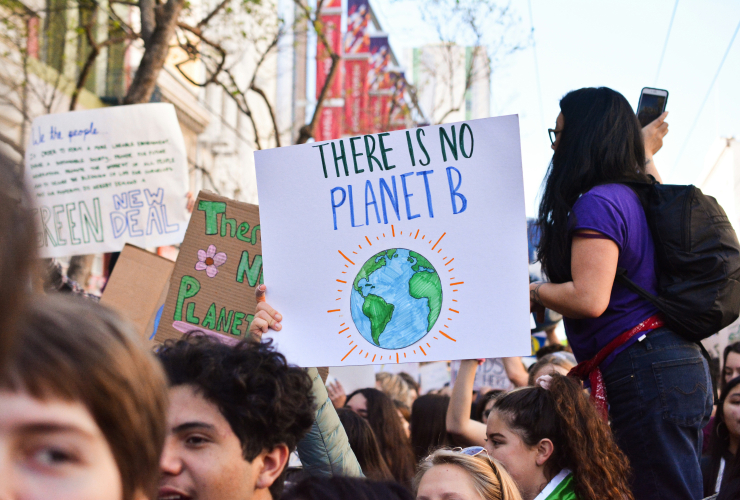
Depending on who you ask, the movement can encompass a relatively wide range of causes including demands to end income disparity, government corruption and even global warming. It all comes down to the 99% - the masses who feel they have suffered in the poor economy, who resent the wealthiest 1% for their gains and their increasing political power.
Politicians, pundits and media all over the world have tried to whittle it down to a comprehensive explanation, but it’s not an easy job. Here is one example, from HBO’s Real Time with Bill Maher, featuring former Democratic Representative Alan Grayson and his take on the meaning of the Wall Street protests.
As representatives of #OccupyTogether have stated, “no one group, person, or website could ever speak for this diverse gathering of individuals.” And while this broad agenda may be the reason for their strength in numbers, it is also the main source of criticism. Many critics believe the movement lacks a cohesive message, and even originators like Kalle Lasn have urged supporters “to get some of their demands together”.
The original Adbusters campaign poster – featuring a ballerina dancing atop the Wall Street bull statue – originally came with the slogan “What is our one demand?” While the NYC General Assembly has come up with a long list of injustices, there is yet to be a clear, agreed-upon demand.
Lasn and his colleagues say they believe that the “one demand” could be for a Robin Hood Tax – a one percent tax on all financial transactions that could essentially help redistribute the wealth.
Commentators have also pointed out ties between the current Wall Street movement and the Tea Party, despite very public criticism from the latter about Occupy Wall Street and its tactics. Most comparisons hinge on another important cause on which both movements agree – opposition to financial sector bailouts funded by taxpayer’s money.
Opinions on #OccupyWallStreet
Everyone seems to have something to say about the Occupy Wall Street movement. Here are just a few of their comments:
President Obama
"I think it expresses the frustrations that the American people feel…These days, a lot of folks doing the right thing are not rewarded. A lot of folks who are not doing the right thing are rewarded. That will express itself until 2012 and beyond until people feel they are getting back to old-fashioned American values."
http://www.cbsnews.com/8301-503544_162-20116707-503544.html
Nancy Pelosi
US House Democratic Leader
"I support the message to the establishment, whether it's Wall Street or the political establishment, that change has to happen,"
http://abcnews.go.com/ThisWeek/video/interview-nancy-pelosi-14699337
Glenn Beck
Conservative Broadcaster/Author
"Capitalists, if you think that you can play footsies with these people, you're wrong. They will come for you and drag you into the streets and kill you...they're Marxist radicals...these guys are worse than Robespierre from the French Revolution...they'll kill everybody."
http://www.huffingtonpost.com/2011/10/10/glenn-beck-occupy-wall-street-kill-everybody_n_1004016.html
Bill Clinton
Former President of the United States
“On balance, this can be a positive thing, but they’re going to have to kind of transfer their energies at some point to making some specific suggestions…They need to be for something specific and not just against something, because if you’re just against something, somebody else will fill the vacuum you create.”
Kevin O’Leary
CBC Commentator/Investor
“Nobody knows what they want. Can't even name the names of the firms that they're protesting against. Very weak. Low budget.”
http://www.cbc.ca/news/canada/story/2011/10/08/f-vp-bambury-wall-street.html
Susan Sarandon
Actress
“I'm just here to be educated and offer my support. There’s a lot of different kinds of people here who want to shift the paradigm to something that’s addressing the huge gap between the rich and the poor.”
Michael Moore
Filmmaker/Author
“The first victory has already been won. It's been an apathy killer. If nothing else happened beyond this -- and there will be much more that will happen beyond this -- but if nothing did, it's already accomplished something very, very important. It's ended people's apathy and their inability to feel like they can stand up against Wall Street.”
http://www.reuters.com/article/2011/10/12/idUS287810253820111012
Deepak Chopra
Bestselling Author/Pundit, during a meditation he led at the site of the protests
“Simple anger will only perpetuate what already is out there. It was created by greed and fear. We have to go beyond that and come from a place of compassion, and turn equanimity into creativity”
Timeline of the Occupation
February 15, 2010
AmpedStatus.com issues the first in a series of reports detailing the collapse of the United States economy, which some claim marks the birth of the 99% Movement. The report begins, “It’s time for 99% of Americans to mobilize and aggressively move on common sense political reforms.”
February 2, 2011
Vancouver-based Adbusters magazine runs an editorial by Kono Matsu, suggesting “a million man march on Wall Street”. Taking cues from revolutionary action in the Middle East, he calls on supporters: “Let's get organized, let's strategize, let's think things through.”
March 2011
Hacktivist group Anonymous joins AmpedStatus in a collaborative effort called A99, releasing a video introducing themselves as a “decentralized non-violent resistance movement, which seeks to restore the rule of law and fight back against the organized criminal class.”
June 14, 2011
A small group of protesters attempt to occupy Zuccotti Park in Manhattan, but many considered it a failure due to the lack of support.
July 13, 2011
The #OccupyWallStreet meme (and hashtag) is born – Adbusters publishes a call to action on their blog and via social media, accompanied by campaign materials available in Issue #97 of the magazine.
August 2011
Independent activist groups get behind Adbusters’ #OccupyWallStreet movement, urging supporters to adopt nonviolent tactics in the upcoming protest. Anonymous releases a new video to spread the word.
September 17, 2011
The first #OccupyWallStreet supporters converge on the financial district for an “indefinite” protest. Approximately 1,000 protesters marched through the area, with 100-200 settling in for the night. Small numbers of arrests are made in the following days.
September 24, 2011
Wall Street activists march out of the park and through the financial district, resulting in confrontations with NYPD. Violence ensues as police break out the pepper spray, using force and making more arrests.
October 1, 2011
The movement spreads to Seattle, Los Angeles and Maine. They join protests that have already started in other US cities including Chicago, Boston and San Francisco.
October 5, 2011
Major labour unions endorse Occupy Wall Street protests. Canadian groups like the BC Federation of Labour later announce their support for local Occupy events.
October 6, 2011
More cities join the fight – starting Occupy protests in Philadelphia, Tampa, New Orleans, Houston, Dallas, Cleveland, Portland, Salt Lake City and Las Vegas.
October 12, 2011
New York’s Mayor Bloomberg and the NYPD notify Occupy Wall Street participants that Zuccotti Park will close for a scheduled “cleaning”, beginning at 7 a.m. on October 14. They are told that after the cleaning, new rules will take effect in the park prohibiting tents, camping gear and “lying down”. Protesters respond by arranging their own clean-up crews, and by calling on additional supporters to help “defend the occupation from eviction”.
October 14, 2011
Confrontations are averted and supporters celebrate a “major victory” as authorities announce that the scheduled Zuccotti Park cleaning has been postponed. Police take 14 protesters into custody, including some who sat or stood in the street. Meanwhile, participants in Denver and New Jersey are ordered to vacate encampments or risk arrest.
October 15, 2011
Publicized on social networks as “Global Revolution Day”, an even greater number of new occupations around the world are set to begin. Cities joining the movement to stand in solidarity with Wall Street protesters include Toronto, Montreal, Vancouver, Tokyo, Frankfurt, Sydney, and many more. It is also the date listed on posters and Facebook groups for broader, country-wide movements like OccupySweden, OccupyNewZealand, OccupyTaipei, and OccupyFrance.
For additional coverage of #OccupyVancouver protests, see these other Vancouver Observer reports:
Mayor Gregor Robertson’s statement regarding #OccupyVancouver
Occupy Wall Street, and then what?
Can Occupy Wall Street cross the chasm?
Adbusters' "Occupy Wall Street" modeled on Egypt protests
Adbusters' Kalle Lasn: the brilliant flawed genius behind Occupy Wall Street