Skip to Content

Canada needs more democratic debate about future of China relations, experts say

Canada is entering a brave new front in its relations with China, starting with a Canada-China foreign investment agreement pending domestic approval. Experts call for more democratic debate on the agreement, and the future of Chinese investment in Canada's natural resources.

Read More:
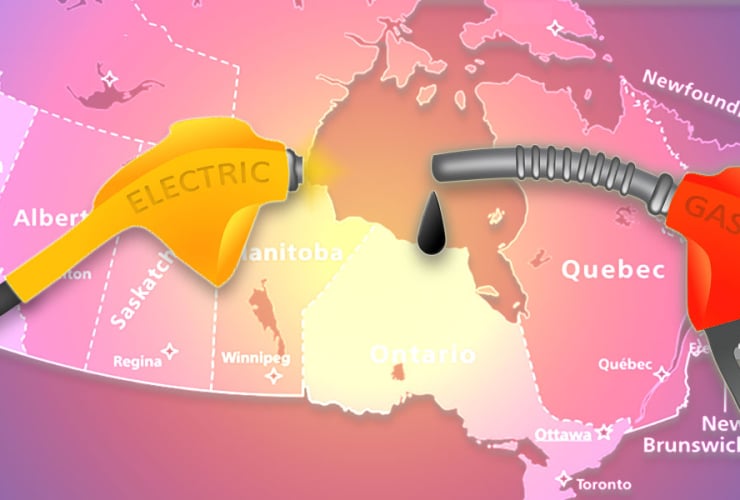
What will be the future of Canada-China trade relations? Graphic by Beth Hong.

Expert opinions on whether or not the Canada-China investor protection and promotion agreement was a good deal for Canada range from alarm to moderate apprehension. But the one point on which almost all can agree upon is the need for the federal government to acknowledge and discuss Canadians' growing anxiety about Chinese ownership of Canada's natural resources.

Paul Evans, Director of the Institute of Asian Research at UBC and author of an upcoming book on Canada-China relations, said that developments in the last three months -- namely, the Canada-China FIPPA and the Chinese state-owned enterprise China National Offshore Oil Corporation (CNOOC)'s bid to take over Canadian energy giant Nexen -- has put Canada at a historical crossroads.

The CNOOC $15.1-billion U.S. bid will be the largest Chinese state-owned enterprise (SOE) takeover of a Canadian natural resource firm in history, and will have implications for both countries' foreign and domestic policies.

Evans said Canadians need to question what the scope and direction of its economic and trade relationship with China will be.

"This is as important a question to Canada as it was at the end of the Second World War when we basically integrated our economy with the Americans through automobile agreements and the St.Lawrence Seaway," Evans told The Vancouver Observer.  

Evans, who takes a cautiously optimistic stance on FIPPA, said Canada needs a vigorous public debate moving forward with further deepening of Canada-China relations on multiple fronts.

"We need debate, we need public discussion, we need our universities to weigh in on issues including pipelines and public infrastructure," he said.

Charles Burton, a political scientist at Brock University who specializes in China-Canada relations, agreed with Evans that the recent developments called for a substantive discussion -- particularly about Chinese ownership of Canadian natural resources.
 
"Given the scale of potential Chinese investment in Canada's natural resources, a major question that should be on many Canadians' minds is what percentage of ownership by the Chinese state is acceptable to Canadians in natural resources? Canadians are not happy about profits of their natural resources going out the state," Burton said.
 
Burton, who was a cultural amabassdor at the Canadian embassy in Beijing in the 1990s, added that looking forward to the next several years, many delicate and contentious issues remain to be worked out between Ottawa and Beijing, including the current trade imbalance where China will make a bigger profit off its investments in imports into Canada.
 
"The Chinese government doesn't think there's any trade imbalance between Canada and China and it wants to stay the course on current trade relations," Burton said. 
 
Some argue that this trade imbalance should be one of the glaring red lights to stop the Canada-China FIPPA deal until the implications can be discussed further in Parliament, across the provinces, and the Canadian public.
 
Dissenting opinions on whether Chinese companies would sue Canadian government under FIPPA

International investment and treaty law expert Gus Van Harten, the most outspoken expert critic of FIPPA, has argued that the Agreement may be unconstitutional because of its unprecedented clause (Article 28) that allows Chinese companies to sue Canadian governments for enacting regulations that compromise its investments in secret.
 
Van Harten argued this would be most likely to happen in major natural resource projects such as the proposed Enbridge Northern Gateway pipeline, or any major natural resource where the provincial or federal government enacts regulations directly affecting the investment.
 
However, not everyone shares Van Harten's view. David T. Fung, vice-chair of the Canada China Business Council and observer of Canada-China business and trade relations since the late 1990s, said that fears of Chinese companies suing the Canadian government in potential multi-billion dollar lawsuits were "completely without merit."
 
"I think Canadian negotiators are not stupid. There's always give and take, but I think there are always people who would want to raise alarm about how every deal is a bad deal," Fung said.
 
Fung, a Hong Kong born Canadian citizen who studied engineering and business in Quebec and Ontario, has business partnerships across North America, Asia, and Europe. His closest ties, he said, are to Canada.
 
"Canada is prosperous today because we have a very smart civil service and we have a democratic form of government which would not allow our Ministers to act out of form without being called to account in the next election."
 
Opposition Party MPs don't share Fung's faith in Conservative Ministers' accountability to the public in handling Canada-China relations. Green Party MP Elizabeth May has been raising alarm about FIPPA since it was first unveiled in the House of Commons on September 26, and requested an emergency debate on October 1 about various contentious points about the agreement. The debate motion was turned down by the Speaker of the House.
 

“Given the pending takeover of Nexen by the Chinese National Offshore Oil Company and the subsequent flood of investment by Chinese State-Owned Enterprises, I am amazed that Stephen Harper is willing to thrust Canada into such a vulnerable position with FIPA,” May stated in a release. “I know I’m not the only Canadian who feels our prime minister is giving away the store. We need to debate FIPA before it’s too late."

The Canada-China FIPPA is scheduled to pass Canada's "domestic approval process" at the end of October. Technically, the domestic approval process in Canada is that the agreement is made publicly available to all MPs in the House of Commons for 21 sitting days in Parliament.

With a majority Conservative government and strong support for FIPPA from Prime Minister Stephen Harper, motions to debate the Agreement in the Standing Committee on International Trade and on the floor have been defeated.

Fung conceded that it was up to Canadians to decide which of the "alarms" about FIPPA and Canada-China trade relations were legitimate.
 
"As citizens, we need to always evaluate. Some of these alarms are very valid, and other ones are false."

Comments