Each proposed tar sands pipeline, like Enbridge's Northern Gateway, requires a massive new climate pollution spill to go with it. The size of any one of these new CO2 spills far exceeds all of BC's current emissions. These pipelines literally can't function without these CO2 spills starting and continuing for decades. They are part of the deal. And those deals are starting to lock Canadians into a lose-lose future.
Corporations like Enbridge, Kinder Morgan and TransCanada know that they are proposing projects that demand massive CO2 spills -- that can't be stopped -- for them to make their money back and to profit from it. The scale of the CO2 pollution required for these projects dwarfs anything else in Canada's economy. Yet despite locking us in to huge risks, neither our governments nor the corporations are even talking about it.
For example, the required CO2 spill for either Northern Gateway or Keystone XL pipelines runs up to 175 million tonnes of CO2 (MtCO2) per pipeline per year. Either pipeline would require a new on-going spill larger than the combined emissions from:
- Saskatchewan (45 MtCO2)
- British Columbia (44)
- Nova Scotia (19)
- New Brunswick (17)
- Manitoba (11)
- Newfoundland & Labrador (8)
- PEI (1)
- Northwest Territories (1)
- Nunavut (0.5)
- and Yukon (0.5)
Kinder Morgan's proposed new Transmountain tar sands pipeline to Vancouver's harbour will require a continuous multi-decade commitment to spill up to 75 MtCO2 per year. That is more than either the provinces of BC or Quebec (63 MtCO2) emit. Both provinces have pledged to cut emissions dramatically. But this one pipeline would wipe out any possible CO2 savings the people of BC or Quebec could ever make in their efforts to prevent dangerous climate change.
Building a lose-lose future
Agreeing to build these pipelines will paint Canadians into a lose-lose corner -- both morally and economically -- as the climate crisis grows more extreme. Once built we are left with a choice to either continue these gigantic CO2 spills unabated for decades or to strand billions of dollars in capital assets.
Each pipeline is effectively inflating a multi-billion dollar carbon bubble directly in the path of Canadians ability to slow or halt global warming. It places the economic interests of powerful multi-national corporations in direct conflict with Canadians desires to build a climate-sustainable economy. Do we really need even more obstacles in our way to preserving a safe climate for our kids?
The International Energy Agency (IEA), one of the world's most authoritative sources on energy markets, recently calculated that humanity already has so much existing fossil fuel infrastructure that we are very close to being "locked in" into dangerous climate changes beyond 2 C of warming. Continuing to pile on more fossil fuel infrastructure, like these "must-spill-massive- CO2-for-decades" pipelines, is forcing Canadians and humanity to have to make bitter lose-lose decisions. Either:
A ) Suffer the ravages of a dangerous climate.
As the IEA put it: "The world is perfectly on track for a six-degree Celsius increase in temperature. Everybody, even the schoolchildren, knows this is a catastrophe for all of us,"
… or …
B ) Strand capital assets and destroy value.
As Mark Jaccard, a professor at Simon Fraser University and lead author for sustainable energy policy in the coming Global Energy Assessment wrote: "we would have to blow up our factories, electricity plants and vehicles" to avoid dangerous climate impacts.
Up the down staircase
It is not just energy experts and climate scientists that are worried.
Our own Prime Minister Stephen Harper has repeatedly said that climate change is a real threat that requires Canadians to make big cuts in CO2 pollution to help prevent dangerous impacts. He has pledged to the world that our CO2 pollution will go down significantly over time.
All the provinces also have pledges to cut their CO2 pollution as well. In my chart, that means all those orange bars representing CO2 pollution for the provinces need to go down. Policies are being put in place. Our safety requires cutting CO2 emissions. The message from all levels of government is that we need to reduce CO2 emissions.
But at the very same time, the Harper and Alberta governments are demanding we initiate a whole series of gigantic new CO2 spills. One for each new tar sands pipeline. The spills required for just three of these proposed pipelines forms the towering red bar in my chart.

Once started, these new CO2 spills must run non-stop for decades. This explosion of new long-term CO2 pollution will more than erase all the efforts by all Canadians and our provinces to prevent dangerous climate changes. They expose the Canadian economy to enormous economic risk should climate change continue growing more dangerous as the science suggests it will.
Leadership vacuum
We are getting chaotic and dithering leadership on climate from the Harper government. Their policies are a mish-mash of unsustainable double standards. They are not protecting either side from climate risks. Everyone must slash CO2 except for a few that should increase it far more. CO2 is dangerous in the hands of some Canadians. Vastly larger amounts of CO2 are perfectly safe as long as they are in the hands of certain other Canadians or foreign corporations. It is creating an "us-vs-them" carbon divide in Canada that will grow ever more acrimonious and economically risky as the climate deteriorates.
Is this really the best leadership the Conservative Party has to offer the Canadian people on navigating the climate threat? A dithering stumble into a lose-lose future of popping carbon bubbles and collapsing ecosystems.
"The demise of the Great Barrier Reef and most other coral reefs, first from mass bleaching and then from irreversible acidification will occur in this century if anthropogenic GHG emissions are not drastically curbed within a decade." --J. Veron. former Chief Scientist with the Australian Institute of Marine Science.
For those of us who have worked for decades observing and documenting wild aquatic and terrestrial ecosystems, it is heartbreaking to witness the unravelling of these intricate biological systems … the forests of western North America and elsewhere around the planet, as well as life in the oceans, are vividly showing startling and tangible evidence of human-induced climate disruption. -- Dr Reese Halter. The Insatiable Bark Beetle
"Higher growing season temperatures can have dramatic impacts on agricultural productivity, farm incomes, and food security … a high probability (>90%) that growing season temperatures in the tropics and subtropics by the end of the 21st century willexceed the most extreme seasonal temperatures recorded from 1900 to 2006. In temperate regions, the hottest seasons on record will represent the future norm in many locations. … Experimental and crop-based models for major grains in these regions show direct yield losses in the range of 2.5 to 16% for every 1°C increase in seasonal temperature … even mid-latitude crops will likely suffer at very high temperatures in the absence of adaptation. Global climate change thus presents widespread risks of food insecurity … the future for agriculture in these regions will become equally daunting." -- David. S. Battisti, Science, Historical Warnings of Future Food Insecurity with Unprecedented Seasonal Heat
Just maybe CO2 pollution really is leading to a world of collapsing ecosystems, water shortages, extreme heat waves, rising seas and food shortages. What if the scientists who study these things are right? Do we really want to build a Canadian economy in which we lose no matter what we do at that point?
CO2 Notes:
- CO2 values for provinces and territories taken from Canada's National Inventory Report 1990–2010, Part 3 tables.
- I calculated the CO2 values for oil flowing through pipelines because for some odd reason I was unable to find any values from the companies and industry. My calculations are based on maximum published pipeline flow estimates. For TransCanada Keystone XL that was 830,000 bbl/day. For Enbridge Northern Gateway that was 850,000 bbl/day. For Kinder Morgan TMX extension that was 350,000 bbl/day. These barrel values were multiplied by 0.572 tCO2 per barrel to get CO2 values. This multiplier is the wells-to-wheels emissions from tar sands as calculated by Swart and Weaver at UVic in this paper: http://climate.uvic.ca/people/nswart/original_images/Alberta_oil_sands_well_to_wheel_warming.pdf
Related posts:
- Climate “catastrophe” of 6C dead ahead: IEA : "The world is perfectly on track for a six-degree Celsius increase in temperature. Everybody, even the schoolchildren, knows this is a catastrophe for all of us." And that is without climate tipping points kicking in.
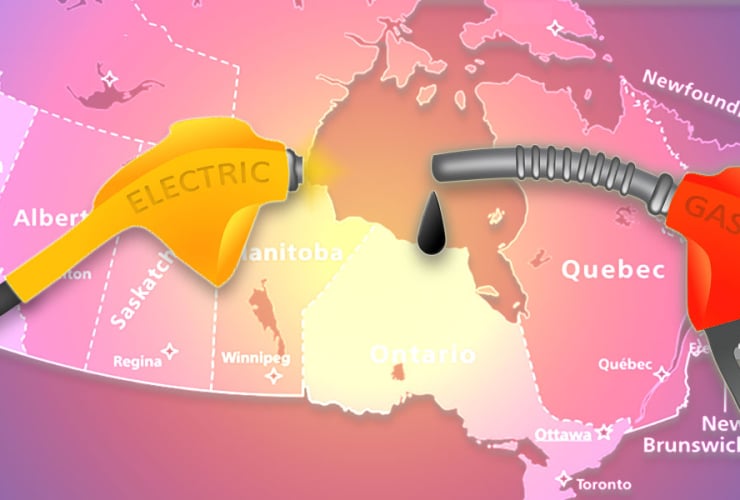
- While Harper dithers, provincial CO2 imbalance problem burns : When it comes to doing something about the climate crisis, Canada has developed an unstable split personality while Stephen Harper dithers.

- Tar sands vs. entire nations : Which is larger: potential tar sands emissions or all the past emissions from China? From India? From 150 nations combined? New chart says...
- Enbridge oilsands pipeline's economic damage could exceed $100 billion : Enbridge’s proposed BC pipeline would unleash billion of tonnes of CO2 into our destabilizing climate. Resulting economic damages from the climate pollution could be hundreds of billions of dollars.
- All the oil pumped down Enbridge's North B.C. pipeline will be spilled : Every gallon of tar sands crude that Enbridge wants to pump down its proposed BC pipeline will be effectively spilled -- into the atmosphere