Skip to Content

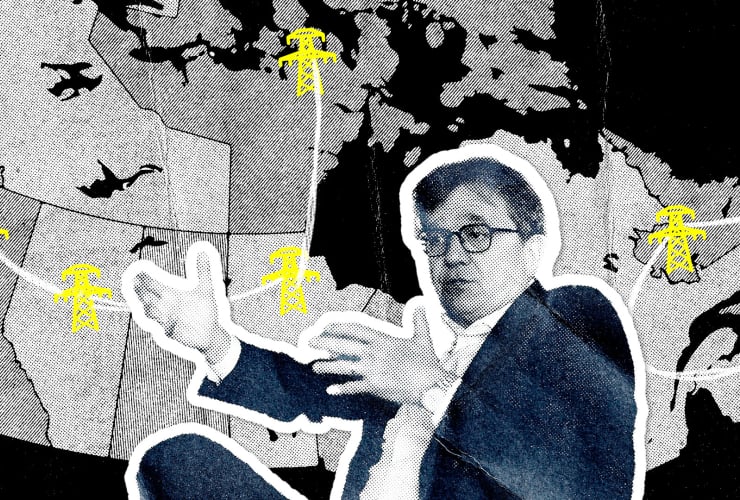
Inside Stephen Harper's political theatre

Read More:

There’s theatre in an actual theatre.

And then there’s theatre out in the “real world”.

In both cases, the operative principle for all involved is the well-known “suspension of disbelief”. Everyone acts as if things are “normal”, even though everyone knows that it ain’t so.

I just passed through a strange, disconcerting theatrical experience of the latter sort, in Kelowna.

On January 28th, I had my chance to speak before the Enbridge Northern Gateway Joint Review Panel.

The experience was most definitely one of political theatre of the most tightly scripted kind. No improv here, no muddling of lines. This was one serious play, written by one serious playwright – Prime Minister Stephen Harper, aided and abetted by his production team in Ottawa and, no doubt, corporate sponsors in distant capitals around the world.

As I looked around the room on that day, and watched the various players slipping into position – the audiovisual people, the clerks, the panellists, the two prominently situated Enbridge representatives, and of course the 25 or 30 presenters and their guests (one only per presenter) in the block I was part of – I had this overwhelming impression that we were all acting on a stage.

The day’s proceedings were so strictly blocked out that I almost felt like I had stumbled into some sort of secular monastery (co-ed, mind you!) in which every act of the day was organized according to a rigid ritualistic plan.

It was not exactly pleasant. But it was fascinating.

At times, it was eerie.

Take, for example, the response to presentations. My presentation looked at the structural issues that have produced the wholly unsatisfactory process the Panel hearings represent. When I was done….dead silence.

Not normal.

I was followed by eloquent remarks from Michael Jessen, a distinguished environmentalist with a track record stretching back 40 years – a founder of the Recycling Council of BC, president of the Society Promoting Environmental Conservation for 8 years, and recycling coordinator for the Regional District of the North Kootenays for a decade. He finished his remarks, and…..dead silence.

Definitely not normal.

His presentation was followed by a spirited and thoroughly entertaining as well as challenging commentary by Neil Cadger, a theatre professor from UBC-Okanagan. He was full of humour, thought-provoking throw-away lines, and some serious moral injunctions. He ended….and once again, dead silence.

I was told afterwards by a friend that one of the waiting presenters, carried away by a surge of normal sentiments, began to clap after one of the presentations. He clapped his hands together 3 or 4 times, and then paused, realizing he was the only one in the room making any noise. He received an admonishing look from one of the staffers…and then he stopped, embarrassed by his eruption of spontaneous feeling.

The ritual moved on.
Another touch: I was the first presenter in the room to speak on that day (two were piped in via a very skookum audio relay first – it was eerie how clear voices arose from invisible speakers). I was invited to do begin by the panel chair, biologist Sheila Leggett, with the faintest of frosty smiles. When I finished – in dead silence – Michael Jessen was invited by the panel member to Ms. Leggett’s left, geologist Hans Matthews, as a result of some pre-arranged signal – again with that same fleeting smile. And when Michael was done and duly thanked, the panel member to Ms. Leggett’s right, lawyer Ken Bateman – again, without a glance to right or left – asked Neil Cadger to present.

It was a tightly choreographed dance. Everyone was right on their marks, speaking on cue, responding in careful, precise movements and words – the way it’s done in  professional theatre companies. After the first three speakers were done, we were instructed to stand down, and the names of the next three were called out, and they were invited to come to the three seats we had  vacated. While that was happening, I, Michael and Neil shook hands, almost in relief – a gesture of humanity in this very cold, very contained setting. Staffers buzzed around. One young woman took a picture. It seemed close to the way people really are.

I left the hearing room shortly afterwards. There were several members of the media – TV, radio (public and private) and newspaper – waiting in the hall outside, eager to evaporate the pall of the hearing and have us come alive in real human dialogue.

I recall my conversations with the various journalists – most of whom seemed to be under 40, and so very concerned about these hearings – seemed like a breath of fresh air, an opportunity to talk in real ways, to real people who answered – and in some cases commented themselves. It was stark contrast to the stultifying and artificial atmosphere in the hearing chamber.

Even before we had gone into that  room, both I and my “guest” – retired McGill biologist Hugh Tyson – had been briefed twice over on what to do and how to behave. We were enjoined to be polite, calm and avoid strong language or any semblance of an outburst. The on-line instructions reiterated the same mantra: “If a presenter or his/her guest disrupts the hearing, both will be asked to leave and the presenter will forfeit the opportunity to present their oral statement.”

It was clear that under the veneer of control, the panel and their support staff were very anxious. Undoubtedly they were shell-shocked by the proceedings in earlier venues. Subjected to loud and persistent protests, they had retreated into a protective shell, surrounded by security personnel (there were a couple of burly gents sitting in the hearing room with looks of studied nonchalance).

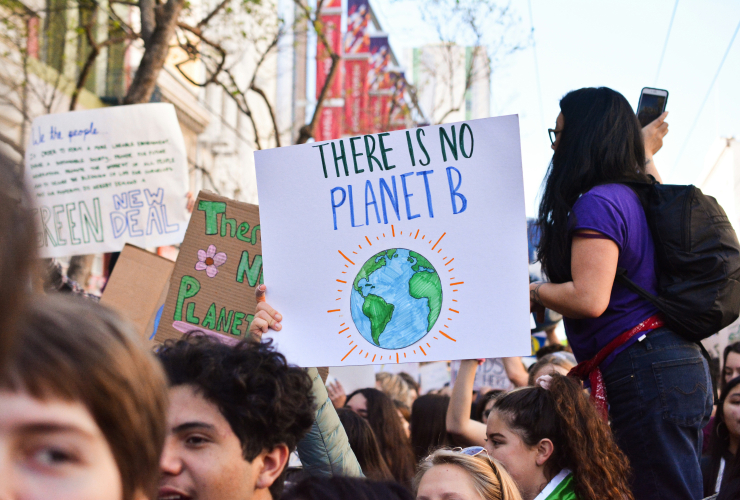
But security wasn’t tight just in the hearing room. There were further efforts in place to keep activism at bay. The room where anyone – beside presenters and their one allowed guest – could hear a live audio replay of presentations was located over a kilometre from the site itself. And a group of 60-70 enthusiastic protesters – First Nations drummers, local environmental activists, and ordinary citizens – were kept 100 metres from the door into the hotel, under the watchful but benign eyes of several RCMP officers.

So what has generated this tight-lipped display of political theatre, with every move pre-planned, and every action deliberately designed to bring out that most Canadian of qualities, politeness?

I believe the forces that have led to this highly constrained display are indicative of the frustration many Canadians, and many, many British Columbians feel with the process.
Like a dam holding water that has carelessly been allowed to fill up to dangerously high levels, producing intense pressure on the structure itself, the political scene surrounding the Enbridge hearings are a focal point for high pressure – and the outcome of poor attitudes, and poor management practices.   

Stephen Harper has set new records for spending on public relations ($200 million and counting; next highest Jean Chrétien at $70 million) – but he famously avoids relations with the public.

His government’s pronouncements are not officially from the “federal government”, but from “the government of Stephen Harper”.  But as a person, he is more inaccessible than any other Prime Minister in Canada's history.

His announcements are peppered with phrases like “economic prosperity” and “jobs for ordinary Canadians” – yet his most extensive interaction appears to be not with those same ordinary Canadians, but with an endless stream of well-heeled lobbyists from the oil and gas industry and other corporate players.

Stephen Harper and his cabinet are constantly referring to “what Canadians want” – and yet it’s not clear if he understand what this is, because surveys show that his personal popularity among Canadians is low.

Even people close to him are wont to say that he's hard to get to know – his famous persona of calm, carefully modulated tones and behaviour in the public domain is so often scripted, and his colleagues in cabinet often repeat precisely the same phrases as he does.

All in all, there is a sense across Canada that our current government is inaccessible, and marching to its own drummer, come what may. Idle No More, that sudden outbreak of resistance among First Nations, supported by several million non-aboriginal Canadians who share their frustration, is an inevitable response to Harper's government.  So are the protests that have dogged the Enbridge pipeline hearings.

Is it a problem of content – unpopular policies, leading to consequences (increased global warming, an uncertain future for the next generation)? Or is it Harper's style – a tight-lipped way of governing, in which political allies and corporate supporters speak from the same script, while the scientific community and independent bodies are either silenced or stripped of their financial underpinnings?

The policies of this government – towards ecological concerns, towards immigrants, about cluster bombs, towards the Palestinian people, towards people accused of crimes, towards those who cannot earn enough to be self-sufficient, towards First Nations – are hard-line, dismissive and sometimes downright cruel. As one book on North American evangelical Christianity calls approaches like Harper's, “Faith, Hope and no Charity”.

The way Harper prefers to govern – by secretive decisions, behind-closed-doors planning, possible questionable election practices, harsh condemnation of political opponents, and repetition ad nauseam of slogans and catch phrases – does not sit well with a population that is stepping out of its cage of complacency and into the bright light of self-determination and responsibility. Stephen Harper’s style, as many have observed, is more suitable to a century ago or to a banana republic today.

The process of the Enbridge Northern Gateway hearings is like a distillation of all the foregoing. Policy and style of this government have led inexorably to this flash point of contention, an interface where sparks inevitably fly, as the weight of the people meets the power of the government system, wielded in large part by one man.

I don’t think we’re at an end of this saga – there are more chapters to be written. But the political theatre of the Enbridge hearings is a sign of the dysfunction that is breeding more protest, more resistance, and ultimately a new dynamism in the gently woven – but increasingly brightly coloured – social fabric of Canada.

(6) Comments

Ruth McVeigh February 11th 2013 | 1:13 PM

http://www.vancouverobserver.com/comment/reply/14367

From my observations over the past seven years, this article presents a frighteningly accurate picture of the country we now live in.  Not only does the PM stick to a script but all his ministers do as well.  On Power & Politics, it is more than Evan can do to knock them off their implanted scripts and actually express an original thought.  They are like automatons.  And if we sit quietly and just listen to the 'script' - we will all become robots.

Relayer76 February 11th 2013 | 4:16 PM

This sentence says it all: The policies of this government – towards ecological concerns, towards immigrants, about cluster bombs, towards the Palestinian people, towards people accused of crimes, towards those who cannot earn enough to be self-sufficient, towards First Nations – are hard-line, dismissive and sometimes downright cruel."  I must say, Harper is a great concensus builder for his opponents.  We are all victims but too many are swallowing the propaganda and fail to realize it.

osmia February 12th 2013 | 3:15 PM

I think using the word "dysfunctional" sums up Harper's government in a nutshell.  

luc February 12th 2013 | 5:17 PM

Someone got it right! Victims, a common theme among all who oppose NGP and our duly elected Government. Harper was ELECTED, in a democratic prosses. We all have equal oppotunity when born in Canada. If we choose to waste our life, that's not the P.M.'s fault. If we make unfortunate choices, we need to take personal responsibility for that. No one in this Country is responsible for anyone else being poor.We are born into free education, government handouts and an education system that is easy to access. A victim mentality and negative outlook is what you all project to the world. That is why the frosty welcome from the hearings in Kelowna. People who are given every advantage, and still complain, deserve a frosty welcome.

Forward Thinker 2 February 12th 2013 | 6:18 PM

Luc, I think you are dead wrong. We do not deserve what we are getting. I believe Harper got control of government through cheating but the people at elections Canada I has not the courage to do the job they were hired to do. Next election will be different. 

luc February 15th 2013 | 9:21 PM

Our P.M. will go down in history as the man who saved Canada. We are the masters of our own destiny, and to blame someone else for what we "get" or "deserve" is the true mark of a victim. We have become a society of victims looking for a free handout. A good man once said "Ask not what your Country can do for you, rather, ask what you can do for your country" Our P.M. was voted into power, in a democratic process, in a democratic Country. The majority of Canadians support the P.M. and also support the NGP. In this Country, the silent majority rules, NOT the vocal minority. It's amazing to me that you can see the result of the next election. Do you own that crystal ball, or just rent it? Do me solid and give me the results of next years superbowl?