Anne Giardini: Be as intelligent as you are
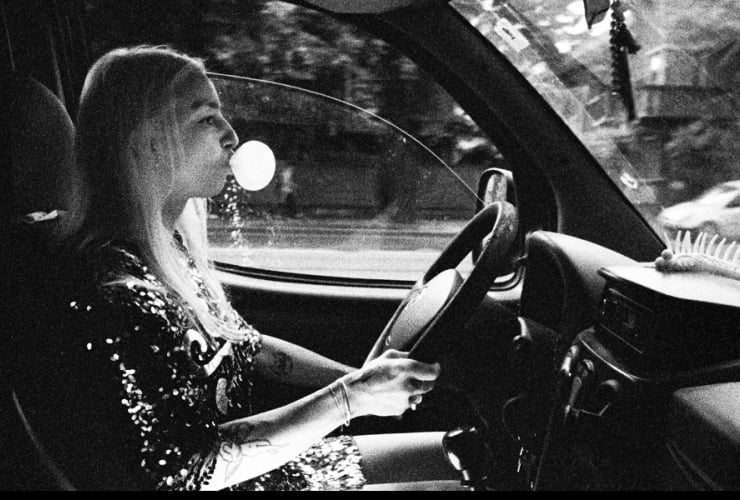
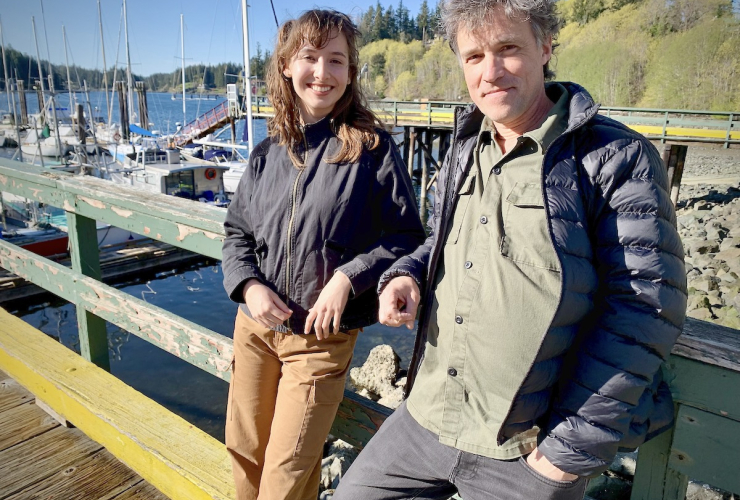
Anne Giardini, author of Advice for Italian Boys, The Sad Truth About Happiness, and the president of Weyerhauser Corporation, talks with Linda Solomon about conceiving a work, bravery, completion, and her life as a kitchen counter writer. Ms. Giardini is the daughter of the novelist, Carol Shields. With photographs by Yukiko Onley.
Linda: I read that you wrote your last book at the kitchen counter.
Anne: Wherever I have time to write for a few minutes, I take them. My kids are older now so it is easier for me to get sustained amounts of time so I take it when I can. In the evening on the couch or at the kitchen counter. I tend to move my laptop around the house or where I feel most comfortable at the time. I’ve written a number of chapters in hockey arenas or you can sit in the car at a soccer game and write.
Linda: How do you keep the flow going when you have interruptions?
Anne: I start with a framework and then I adhere to it.
Linda: Do you outline?
Anne: I have a picture of the completed book in my brain and so I work with that.
Linda: You’re able to conceptualize the outline and hold it in your brain?
Anne: Well, I often think writing is like making a quilt. Women that who make beautiful quilts start with the quilt in their brain but it’s made piece by piece over time. I start out with the image of the complete quilt and then everything I do fits into that framework.
Linda: I can conceive great works in my mind, but I often find that what comes out on the page as I write falls short of the brilliance I envisioned.
Anne: A novel is only perfect before you put down a single world. I just emailed Miranda Hill, the writer, that I’m starting this third novel of mine and it’s still perfect.
Linda: Because it’s in your head.
Anne: Yes, and it’s still absolutely shining and perfect.
Linda: After you get the first draft done, what then?
Anne: I work with my editors. Harper Collins is a wonderful publishing house and they’ve provided me with superb editors who are very collaborative. It’s good to get someone with a bit of distance to have a look.
Linda: How does Vancouver figure into your life as a writer?
Anne: I set my first novel here very happily. I think Vancouver is a great setting for a book about happiness and unhappiness because of the weather.
Linda: Are you implying there is something inherently unhappy about the weather here? Whatever can you mean?
Anne: It has its moods, don’t you think?
Linda: How about your next book? Will it be set here, too?
Anne: Yes, my third book will be set on the west coast.
Linda: What interests you as a novelist about Vancouver?
Anne: There’s a lot of history here that hasn’t been written about. My second book, Advice for Italian Boys, was set in a suburb north of Toronto and in Italy.
Linda: Did you draw on your family when you wrote that?
Anne: Of course I did: my husband’s Italian Canadian family.
Linda: How do they like it?
Anne: Nobody’s sued me yet and they’re all speaking to me. I’ve loved this Italian Canadian family culture that I’ve married into. It’s wonderful. I’m grateful to them for taking me in.
Linda: What was the best advice you ever got from your mother-in-law?
Anne: She’s very family oriented and she’s old fashioned and she came from a part of Italy where they were very poor A constant refrain from her is, ‘Have you eaten?’ which is a hallmark of societies who have gone through hardship. I thought of this thirteen years ago when I did a sweat lodge in Kamloops.
Linda: What happened in the sweat lodge?
Anne: It was an intense experience, physically difficult, comparable to childbirth, and you are meant to have a reaction to it – healing or an epiphany. I realized in it that nourishing my children was important and shouldn’t be neglected.
This is tied to my mother in law’s advice. You need to feed yourself and your family in many ways. From both of those experiences, I think I’ve taken something very much to heart. The things you need to give yourself and your family and I think you should extend to your friends, you should be intentional about it and pause and think about it.
If you think about how I’ve chosen to live my life, work is essential to me. I need to work and I need to do demanding work and I feed myself by the writing I do and by the reading. But I think you can get stuck into old ways of doing things because you think of yourself as a certain kind of person but I think you should ask yourself every day, have you fed your family, have you eaten?
And the broader question is, have you fed your community? Has your community eaten? That’s important. I’m engaged in a lot of volunteer activities. I get more out of them than what I put into them.
Linda: Is that a guiding principle for you?
Anne: A fundamental one.
Linda: Did that come from your mother?
Anne: Not so much this, although she had a great number of things she would remind us of. One of the things was always be as intelligent as you are.
Linda: That is so beautiful. I want to write that down and put it on my refrigerator. You are so lucky to have had a mother who taught you that.
Anne: She knew a number of women in particular who didn’t chose to exercise their intelligence.
Linda: What else?
Anne: Completion. There’s joy in completion. I think she had a reminder of this on her fridge for a time. It’s so easy to pick up a number of projects and never complete them. The joy is in getting something done.

Linda How many kids were in your family?
Anne: I was the second of five, one older brother and there were four girls.
Linda: Your mother a beloved Canadian novelist. She raised five kids and wrote how many books?
Anne: I think ten or twelve, and she didn’t start until she was forty.
Anne: She wrote two books while she was dying of breast cancer and started another one that she didn’t get a chance to finish.
Linda: Creative people can be very narcissistic, but it sounds like your mother wasn’t.
Anne: She was the opposite. She encouraged many writers and playwrights. She never had the feeling that many writers have that it’s a zero sum game. She felt very keenly that the achievement of one was the achievement of all.
Linda: Did you grow up around a lot of writers?
Anne: Storytellers and artists. My mother attracted friends. She had good and loyal friends. I’ve inherited some of them. It’s one of her best legacies. She was a luminous person, full of grace.
Linda: Is your father still alive?
Anne: My father will be 75 soon.

Linda: What did he do while you were growing up?
Anne: He was Dean of Engineering at University of Manitoba.

Linda: You grew up around universities?
Anne: Yes, which were great places.
Linda: Where did you go to university?
Anne: I finished a degree in economics at SFU and my law degree at UBC and a graduate law degree at Cambridge.
Linda: Your mother must have been really proud of you.
Anne: I think she was proud of all of us. And we were proud of her. It was a very loving family. I was very lucky. And she herself was raised in Oak Park, Illinois from a very white, middle class, constrictive, supportive family. She always knew there was a bigger world out there and then she got a chance to find it.
Linda: You have one daughter yourself.
Anne: Yes, Sofia.
Linda: What have you tried to impart to her?
Anne: She was born confident. And opinionated. and I didn’t feel as if I have had to impart much to her. These kids just come out with these personalities, and she’ll listen to me with some forbearance. I hope that will last.
Linda: Who is your husband?
Anne: Tony Girardini. He works for a mining company here in town and he’s been the mentor in my professional and personal life. He’s been enormously encouraging and full of good advice. He’s been a super resource and remains one, and also my best friends.
Linda: What does he think of Advice For Italian Boys?"
Anne: He had fun with it. He read it as I wrote it. He’s been happy with it. He feels more ownership of this one than my first one which was more female focused.
Linda: When you think of yourself, do you think of yourself more as a lawyer or a writer?
Anne: I don’t think of myself as being compartmentalized. I see it all as a whole. I think of myself as having ideas that I want to carry out and see through to the end. That applies to whatever I do.
Linda: Clearly, in your life, you’ve not held back. What would you say to other women about this?
Anne: There’s a good book by Linda Austen called What’s Holding You Back and it’s about what holds women back and I thought she did a very good job about identifying barriers and impediments, some of which are internal and some external.
I know my mother learned as she got older that you have to be braver, and if you’re willing to make mistakes and pick yourself up again, which you have to be, I think you’re going to accomplish a lot more. The reality is nobody is as focused on your mistakes as you are. I think some of what is holding us back can be addressed internally. If we can address the internal barriers and set them aside, I think that next we are better able to tackle the external ones.
I think, too, it’s important to look around and see who you want to emulate, whether male or female. It may be an amalgam of people. Sit down and ask them how did they achieve this and what suggestions or advice do they have for you.
Linda: Would your best piece of advice be?
Anne: Be brave. Trust your instincts. Read up on what you don’t know. Be confident. There’s a saying that your greatest strengths are often your greatest weaknesses, too. But I like to turn it around and say your greatest weakness may be in fact your greatest strength.
Linda: What else?
Anne: Have confidence that you do have something to offer. Every one of us does.
Anne Giardini, the author of Advice for Italian Boys and The Sad Truth About Happiness, is an executive, a lawyer, a novelist, a journalist, and a mother. Giardini became president of Weyerhaeuser Co. Ltd. last year. 
Photo by Yukiki Onley
More in People
(2) Comments
- quote
- quote