Supersized casino story
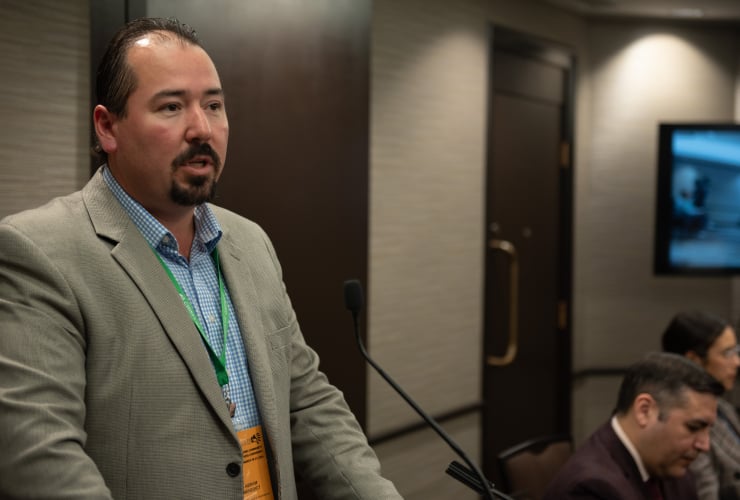
"Abnormal in the extreme," is how Doug McArthur, SFU professor of public policy describes the length of time it took PavCo to select Paragon Gaming. MLA Spencer Chandra Herbert says, "The sequence of the events was exceptionally fast for government." Both say a secretive, flawed process has resulted in the provincial government and a Nevada-based gaming company gaining a chance to expand gambling in Vancouver three times over. And some city officials say they aren't at all convinced that this is what the people of Vancouver need and want.
In March 2009, the BC Pavillion Corporation (PavCo) sent out a call for proposals to develop the land west of BC Place. Sixteen weeks later, PavCo selected a proposal from the Nevada-based Paragon Gaming, Inc. for an ultramodern, mega-casino. This proposal now sits in City Hall waiting for city council to vote on a development permit. But evidence suggests that PavCo, which owns the stadium land, employed a process that allowed an unusually speedy selection of Paragon Gaming as developers.
"The sequence of the events was exceptionally fast for government," Spencer Chandra Herbert, NDP opposition critic of Tourism, Culture and the Arts, told VO in an interview last Thursday.
"Normally a process like this takes over a year because of the need to determine that this is the best thing for the tax payers and to make sure that the bidder is on the up and up," he said.
The BC Place project took place over 16 weeks from start to finish, Howard Crosley, General Manager of BC Place, operated by PavCo, said.
An unusual, secretive and flawed process?
Before the casino deal was inked, PavCo had to seek approval from council for a land development project at BC Place. This process began officially in 2008, when a report from the City's Director of Planning recommended amending the False Creek North Official Development Plan (FCN ODP), to include the possibility of sub-area zoning for a casino. It is the same report that recommends that PavCo, the Crown Corporation that manages BC Place, be authorized to undertake renovations on BC Place.
But by calling their project a land development, the government may have avoided the regular, lengthy and complicated process of evaluating proposals from different bidders, said Doug McArthur, SFU professor of public policy.
"It could have been a public-private partnership [also known as a P3], but that office would have insisted on competitive bids. So the government put it out as a land development project, but does not seem to have followed the standard required competitive process for land development projects," McArthur said.
Competitive bidding is essential if the government wants to maximize its return and protect against the perception and reality of favouring a private party with government assets, he said. "Normally for a land deal it would be done by putting the land on the market and asking bidders to set out uses, bid price, and terms and conditions."
Transcripts from the BC Legislature afternoon sitting on March 23 2010 reveal that there were only two expressions of interest in the lands at BC Place.
S. Herbert [NDP critic of Tourism, Culture and the Arts]: I'm curious. With the RFP [Request for Proposal] that was given for that chunk of land, how many, I guess, statements of interest or how many actual proposals came through for that site? If it's possible…. I don't know if you're able to share the names of those companies, but if not, just the number of proposals that were given that were credible options.
Hon. K. Krueger [Minister of Tourism, Culture and the Arts]: There were only two respondents to the RFP, and I can't name the unsuccessful company.
Spencer Chandra Herbert
The details of the evaluation process, including the name of the other bidder, have not been released to the public.
"They’re private. You’re dealing with a private developer who doesn’t want that information released," Crosley said.
But according to Chandra Herbert, policy dictates that this information is be made available on the BC Bid website. "This is supposed to increase transparency so that there’s no favouritism," he said. The documents for the BC Place proposals were never posted on that website.
Chandra Herbert said he had written letters to PavCo and tried contacting the ministry but has been unable to receive this information. He initially tried contacting PavCo, who referred him to the Minister, he said, who then referred him back to PavCo, who referred him to the Minister again. Finally, PavCo told him that he should proceed with a Freedom of Information (FOI) request.
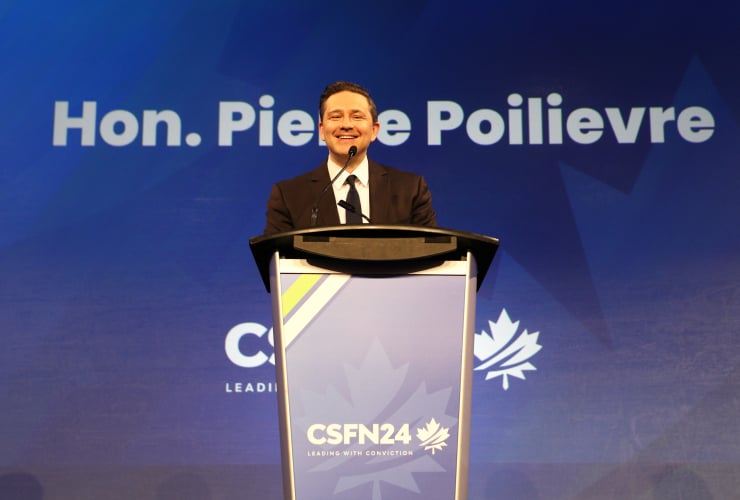
"This is a complete stall tactic. A delay tactic. There’s no reason for them to do this. I don’t know if they are trying to hide something, given that the deadline is looming. I’ve been asking for this information since last spring," he said.
"I need to see the RFEI [request for expression of interest] and the RFQ [request for quotation], because they might have written them in such a way that there could only be one bidder," Chandra Herbert said.
Minister Krueger, who is now Minister of Social Development, did not respond to VO's request for comments by publication time.
The evaluation process
In the spring of 2010, PavCo announced a 70-year lease agreement with Paragon Development Ltd. for two acres of BC Place west side lands. However, the gaming company was notified of its selection as a preferred proponent on June 29, 2009.
The selection of Paragon Gaming and an entertainment resort, including the casino and two hotels, was based on who submitted the best proposal for the property, one that would best suit the stadium, Crosley said.
“[This means] anything that would add to the area, that would create a synergistic effect to the stadium and would help the stadium and its business.”
In a standard land deal, the government starts the process by putting the land on the market and asking bidders to set out uses, bid price, and terms and conditions, said SFU professor McArthur. "In the tender call, the government would set out any terms and conditions it expects to be met."
"Abnormal in the extreme," is how McArthur describes the length of time it took PavCo to select Paragon Gaming.
The three-step process involving the preparation of tender documents, followed by the public announcement of calls for proposals and finally the return of proposals by bidders can take up to one year, he said. "It would not be unusual."
The BC Place project took 16 weeks, Crosley said.
The selection process for a bidder for the RCMP E Division Headquarters Relocation, a P3 project, lasted over two years. On February 6, 2008 advance vendor notification was issued and on April 22, 2010 the project agreement was signed.
"The average length of a procurement process [for a public-private partnership], from the release of the request for qualifications (RFQ) to financial close (signing of the project agreement with the Preferred Proponent) is 14 - 18 months," Katie White, Senior Communications Consultant for Partnerships BC, a government-owned company that oversees public-private partnerships in the province, wrote in an e-mail to VO.
A necessary move
Paragon Gaming, the BC Place casino developers, own the Edgewater Casino at Plaza of Nations, but their lease expires in 2013. Had they not received the 70-year lease agreement for the land at BC Place, Paragon would have had to find another home for Edgewater, renew their lease, or the casino would have had to cease operations.
"This casino relocation is necessary because Edgewater Casino's lease with the City of Vancouver at its current location ends in 2013," wrote a senior public affairs officer from the Ministry of Public Safety and Solicitor General, the ministry responsible for gaming, in a e-mail to VO.
Solicitor General Rich Coleman declined an interview with VO.
At the time PavCo was receiving proposals, everybody knew that Paragon would need to move the casino, Chandra Herbert said. There’s only one casino license available in the city, he pointed out. "This seems to suggest to me that there’s a strong likelihood that PavCo knew they would apply."
When asked if Paragon would have moved to another location without the BC Place development, Tamara Hicks, Director of Corporate Affairs and Communications for Paragon, said, "Paragon is not the owner of the Edgewater lands and is subject to a lease that expires in 2013."
Fairness advisers
If the casino development had been a public-private partnership, it likely would have been subjected to a very different evaluation process. The selection of a preferred proponent for the expansion of Surrey Memorial Hospital involved a competitive selection process overseen by a fairness adviser.
This is standard practice for Partnerships BC, said Dave Ingram, Executive Director of Public-Private Partnerships for Fraser Health Authority.
"We also had fairness advisers for our outpatient care and surgery centre projects." Partnerships BC says that this is part of their best practice. It is a common process and it a part of a good process," said Ingram.
"It gives higher-ups comfort in the knowledge that the process was fair and it also gives the losing proponents the knowledge that the winning bidder won fair and square," he said.
The report on the Surrey Memorial bidding process by Joan M. Young of Lang Michener LLP, is publicly avaliable on Partnership BC's website.
All public-private partnerships evaluated by Partnerships BC have fairness advisers, confirmed White.
PavCo did not have a fairness advisor when evaluating bids for the land development, Crosley, General Manager of BC Place, said.
"It’s a much simpler process. It was a [mainly] dollar-driven type decision. It was the best proposal based on everything that was put into the proposal for the development of the site at BC Place," Crosley said.
There was no requirement [for PavCo to have a fairness advisor] because they have their own board of directors and it would be up to them, said Bill Buholzer of Young Anderson Barristers & Solicitors.
"Clearly a public corporation like that could appoint somebody to watch a procedure like that and make investigations as to whether it was fair, if they perceive this to be a priority," Buholzer, an expert on land use and planning law and building regulation, said.
Although PavCo is owned by the government, since it is a corporation it is expected to follow business principles in pursuing the objectives of the government. "My guess is that because PavCo is a corporation set up to operate on a business model, the government wouldn’t attach the same kind of fairness as it would if it was doing it itself," said Buholzer.
When government parties such as municipalities or the province itself is going through this kind of a process, they have started to use fairness auditors, he said. "What happened with the BC Rail deal in BC is an example of the kind of situation of where the province might consider having some sort of a fairness auditor to make sure that after the fact [there are no questions]."
When asked by VO if PavCo sought to avoid a more extensive process, Crosley said, "By issuing the RFEI for the development of the West Side lands, (lands which are - and will continue to be - wholly owned by PavCo) PavCo sought to generate proposals offering the best commercial terms available."
The land development deal, the retractable roof and T. Richard Turner
The lack of publicly available information on the evaluation process is not the only thing that has critics asking questions about the casino deal.
The timing of PavCo's announcement of Paragon Gaming as the land developer and its decisions regarding the retractable roof at BC Place generated considerable public interest after it was revealed that T. Richard Turner, Chair of ICBC and former Chair of BCLC, had a longstanding business relationship with the Nevada-based gaming company.
In April, Public Eye learned that Turner was involved with Paragon Gaming Inc. casino development in Alberta while he was chair of BCLC's board of directors. At the time, the gaming company did not have operations in BC.
"I didn't even know Paragon wanted to look at B.C.," Mr. Turner told Public Eye. He said that he invested in a Paragon-developed casino with money from the sale of his air cargo facility business in 2003.
Mr. Turner resigned as chair of the lottery corporation on December 9, 2005. He joined the board of directors of the Paragon Gaming division that purchased Edgewater Casino at the Plaza of Nations just half a year later on September 1, 2006.

Public Eye revealed that Turner had called Tourism, Culture and the Arts Minister Kevin Kreuger to tell him the lack of a retractable roof was jeopardizing the casino deal.
When questioned by The Vancouver Sun's Jonathan Fowlie, Turner said that he wasn't attempting to "influence any decision."
"What I recall saying is...if the roof doesn't go ahead, that's fine, but we can't build what we said we'd build in the bid because we're counting on synergies between BC Place as renovated and the new development," he said.
Fowlie's original article is no longer available online.
Paragon Gaming spokesperson Naomi Strasser told Public Eye that Turner is a "minority investor" in Edgewater who is "not active" in the casino's "day to day operations."
This spring, NDP critic Chandra Herbert lodged a complaint with the Acting Registrar of Lobbyists over Turner's alleged impropriety.
"I was concerned that there was a potential conflict of interest," Chandra Herbert said. Turner was a member of the public service, so he cannot try to influence a decision that would benefit him personally, the critic explained.
In a letter to Herbert, Paul Fraser, acting Information and Privacy Commissioner and Registrar of Lobbyists, stated that he could not pursue the issue because he has no legal jurisdiction under the previous act to do so.
"People are definitely right when they question this and say something smells funny here," said Chandra Herbert. "I've had people suggest to me that this might have been a similar situation of a fixed deal [like BC Rail.]"
"When people are asking tough questions, the best thing to do is inundate them with all information that answers every question to assure them that the right course of action has been followed. But the government won't provide information," he said.
An election deadline
Former mayor Sam Sullivan, Wikipedia creative commons
In 2008, city council under Mayor Sam Sullivan gave their approval for redevelopment of Northeast False Creek, including the Plaza of Nations, the land around BC Place and GM Place, just before the municipal elections.
Up until this point, this land was considered not develop-able but then the province decided that they wanted to develop the area, Councillor Geoff Meggs told VO in an interview. Gordon Campbell's former deputy [Ken Dobell] was hired by the city and the province to study cultural infrastructure, said Meggs.
"The city responded with this hurry up plan and out of it came recommendations that went to council at the end of 2008 to approve in a general way how all of these places would be developed," Meggs said.
Since the province is the superior level of government, they actually have the right to do whatever they want, but they usually go through the re-zoning process as a courtesy and as a sign of respect for local government laws, said Meggs.
"I think, politically, the province decided on a number of fronts to charge ahead. If you recall that period...Gordon Campbell was acting as if he was still the mayor of Vancouver and making a number of arrangements on behalf of the city because of various tools he had at his disposal," he said.
Council decided not only to approve the development plan but also made the decision not to ask developers to contribute to improvements for the surrounding community.
The city always charges development cost levies, explained the councillor, but where extra density is considered for a site, the city can consider community amenity charges. "In return for the increased density and the assumed revenue the developer is going to get, the city takes back a share of that for public art, daycare, that kind of thing," he said.
Instead, council voted to count the retractable roof as the community amenity and gave up $14 million dollars for community amenities.
"If I had been there I might have agreed to both, but it was rushed and it was done without a lot of community oversight," said Meggs.
"To me it was a very worthwhile trade off for the city, to allow the amenity to be the roof," NPA Councillor Suzanne Anton told VO.
"I will just tell you, politicians who pretend that they’re angry with that decision, would have made exactly the same decision themselves if they had been in the majority. It was just more fun to say, 'Oh this is terrible, this is terrible.' I don’t think any politicians would want to be the one who presided over the demolition of that stadium," she said.
The stadium was in sore need of repair, the councillor pointed out. The best place for a stadium is right in the middle of a city, she said. "It was a very expensive project. So, how do you make it work?"
The last hurdle for developers
Before the first bricks are laid, city council must issue a development permit for the casino. Public hearings will be held before the vote in council. If the current design model is approved, the new casino will be the largest in the province. It will more than triple the number of slot machines in the city - from 493 at Edgewater to 1, 500 - and include an additional 85 table games.
In an interview with VO earlier this month, Councillor Ellen Woodsworth said that Senior City Planner Michael Gordon estimates that the hearings will not be held until mid-December or mid-January.
Councillor Ellen Woodsworth, Wikipedia creative commons
"From my understanding we have no ground on which not to issue the permit," said Woodsworth.
Woodsworth also suggested that that city councillors are feeling pressure from the province to give Paragon the green light. "They want things their way. We have to work with them to get housing that we need, we have to work with them to get infrastructure dollars," she said.
But other sources who declined to be named indicate that city approval of the casino "is not a done deal by any means."
When VO interviewed Councillor Meggs in September he said that public opposition had been less heated than expected.
"Four or five years ago, we were at the beginning of a major phase of expansion by a government that promised it wouldn’t do expansion. It may be that people feel that there’s no hope because there’s already a casino there. There haven't been the problems that people expected with either the track or the casino so perhaps that’s changed their minds."
But as the date of the public hearings moves closer, the battlelines are being drawn.
On October 14, the BC Association for Charitable Gaming, a coalition of approximately 1,000 non-profit community service, sports, cultural, and other organizations held a media conference at Vancouver City Hall to address the pending casino application.

“There are huge pressures on city council and on the city of Vancouver to get this thing signed, sealed and delivered so that Edgewater Casinos can break ground and get their mega-casino built in three years,” Susan Marsden, president of the British Columbia Association for Charitable Gaming, said.

The arts groups claim that the province has not fulfilled a 1999 Memorandum of Agreement that 33 per cent of gambling revenues would go to non-profit social service organizations serving the elderly, disabled, sports, cultural, environmental and other sectors. Today, charitable donations only make up 10 per cent, they said.
The city's share of revenues from the casino has not yet been determined and is subject to negotiations with the Province, according to City Hall's Communications Department.
The Department declined to comment further on the casino development because the report from Paragon Gaming has not yet been brought to council.
Paragon, which has a 70 year lease agreement with PavCo for the lands west of BC Place, said that if council did not issue a development permit, PavCo would determine the plan for these lands.
"PavCo controls the land that Paragon is currrently proposing to develop and as such any alternate development plans would be theirs," Hicks said.