Skip to Content

World

Industry and environmental groups sign document protecting forest twice the size of Germany

Press Release
May 18th, 2010


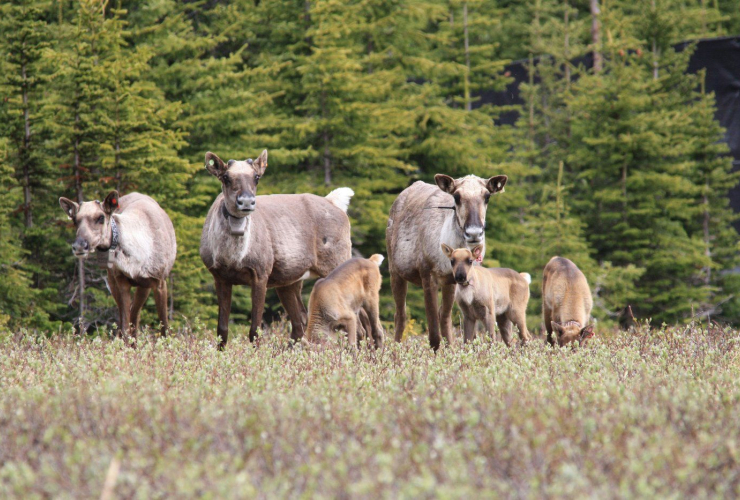
Today 21 member companies of the Forest Products Association of Canada (FPAC), and nine leading environmental organizations, unveiled an unprecedented agreement – the Canadian Boreal Forest Agreement – that applies to 72 million hectares of public forests licensed to FPAC members. The Agreement, when fully implemented, will conserve significant areas of Canada’s vast Boreal Forest, protect threatened woodland caribou and provide a competitive market edge for participating companies.

Airlines issue new anti-terror regulations, Gulf of Mexico and Rhode Island hit with environment woes

Avneet Bains
May 5th, 2010


New U.S. anti-terror measures in place after bomb scare

The Obama administration announced new rules for airliners Wednesday following Time Square's bomb scare on Saturday. Now, all airlines must examine their flight manifests for suspect passengers within two hours when they receive notice of a special threat by a particular individual. Previously, airlines have only had to check no-fly lists every 24 hours for matches with passengers. Currently, Faisal Shahzad, a 30-year-old naturalized U.S. citizen, is the only suspect in this case. Shahzad has admitted to investigators that he drove a 1993 Nissan Pathfinder into the heart of Times Square early Saturday evening and then abandoned the vehicle with explosives smouldered inside.


The World People's Conference on Climate Change ends with Declaration for the Rights of Mother Earth in Cochabamba, Bolivia

Kris Krug
May 5th, 2010

The World People's Conference on Climate Change and the Rights of Mother Earth  wrapped up its four days of non-stop working activism a little over a week ago. Located in the small Bolivian town of Tiquipaya, right on the outskirts of Cochabamba, the WPCCC was a collective effort to gather the voices of activists, indigenous people and the global community at large into a collective document.

Leak capped, Wall Street tumbles, Somalis hijack tanker and more world headlines

Daniel Carreira
May 5th, 2010

Gulf Oil Spill: First Leak Capped, says BP: BP has closed off the smallest of the three leaks, but about 800,000 litres of oil is still gushing into the Gulf of Mexico. As well, a controlled burn of the oil is expected to occur today.

Wall St. Stumbles as Europe's Debt Worries Linger: Traders are still concerned about a possible European banking disaster, even despite the rescue package being put forward by the EU and IMF to help ease Greece's monetary woes. Demonstrations against austerity measures in Greece continued, with three people dying when a bank in Athens was set on fire.

US., Other Big Powers to Refrain from Atomic Tests:  The U.S., Russia, China, Britain, and France have agreed to continue to refrain from conducting atomic tests and have called for all nations to ratify a treaty banning all nuclear explosions.

Hunting NYC's car bombers, nuclear weapons, BP oil, climate calamity

Katharina Steinhauser
May 3rd, 2010

Times Square in a photograph from the creative commons, compliments of Wikipedia

About that attempted car bombing in New York City, police are hunting down a middle-aged white man who was caught on a security camera near the car bomb on Saturday. President Obama vowed to track down the people responsible for the attack.


On to nuclear weapons... Iran's president denies possession of nuclear weapons at a nuclear non-proliferation conference in New York City, saying there was "not a single credible proof". The conference reviews the Nuclear Non-Proliferation Treaty at the UN.


Oil in the Gulf of Mexico continues to spew and  BP hasn't figured out how to plug the leak threatening a region. The oil catastrophe on the coast of Louisiana and other southern US states thickens.


World People's Conference on Climate: Energetic Activism on the Ground Level in Cochabamba, Bolivia

Kris Krug
Apr 28th, 2010

 This group of women, photographed by Kris Krug, are from the Quechua community which had a very strong presence at the conference.

World People's Conference on Climate Change and the Rights of  Mother Earth - Cochabamba, Bolivia

The World People's Conference on Climate Change and the Rights of Mother Earth is currently taking place in Cochabamba, Bolivia. This four day conference is a people's direct response to the lack of binding climate legislation that is lacking on a global level. This particular conference is different than other climate conferences for the fact that the end declaration document will be a summary of 17 different working groups, all which are fueled by the active voices of people from all over the world. 

World Headlines

Daniel Carreira
Apr 22nd, 2010

Deadly Blasts hit Bangkok Protest: A series of explosions hit the Thai capital where 3 people have been reported dead, and many more injured. Just recently, the unsettled atmosphere has been heightened with anti-government protesters clashing with pro-government demonstrators.

Obama to Wall Street: 'Join Us, Instead of Fighting Us': At a speaking engagement in New York, Obama challenged Wall Street banking titans to be a part of Financial reform rather than against it.  Among those in attendance were the top executives from some of the largest banking institutions, including Goldman Sachs, JP Morgan Chase, and Morgan Stanley.

World People's Conference on Climate Change and the Rights of Mother Earth

Kris Krug
Apr 20th, 2010
With the world moving at an ever-quickening pace, it is very important to document the change process as it is happening. Static Photography has had the opportunity to be at some of these world-changing events such as the United Nations Climate Change Conference that took place in Copenhagen, Denmark in December of 2009.

Another such event is taking place in Bolivia this week called the World People's Conference on Climate Change and the Rights of Mother Earth. This conference is more directed towards a people's movement for negotiating climate justice legislation on a global level.

First Nations leaders and Prime Minister Harper commemorate the 50th anniversary of the First Nations’ right to vote in Canada

Linda Solomon
Apr 1st, 2010

Prime Minister Stephen Harper and Chuck Strahl, Minister of Indian and Northern Affairs, met with Shawn Atleo, National Chief of the Assembly of First Nations; Betty Ann Lavallée, National Chief of the Congress of Aboriginal Peoples; Jeannette Corbiere-Lavell, President of the Native Women's Association of Canada; Clément Chartier, President of the Métis National Council; and Mary Simon, President of the Inuit Tapiriit Kanatami, to commemorate the 50th anniversary of the First Nations’ right to vote.

Prime Minister Stephen Harper and Chuck Strahl, Minister of Indian and Northern Affairs, met with Shawn Atleo, National Chief of the Assembly of First Nations; Betty Ann Lavallée, National Chief of the Congress of Aboriginal Peoples; Jeannette Corbiere-Lavell, President of the Native Women's Association of Canada; Clément Chartier, President of the Métis National Council; and Mary Simon, President of the Inuit Tapiriit Kanatami, to commemorate the 50th anniversary of the First Nations’ right to vote.

It's hard to believe that Canada's First Nation citizens were only granted voting rights in March of 1960 in Canada, nearly forty years after Native American won voting rights in the U.S.

Danielnpaul.com explains the history of First Nations exclusion to voting rights and eventual suffrage like this:

From French Riviera, a Variety of Reactions to Vancouver, Canada, and the 2010 Winter Games

Carol McCloskey
Mar 27th, 2010

Nice, in a photograph from creative commons

The French have a soft spot in their hearts for their "Canadian cousins".  They mean "Quebecois" and from "Montreal", but there’s also a sneaking sympathy for the Anglo-Canadians  (who they suspect have to put up with French grammar just as any right-thinking French citizen today has to get to grips with global English...)
“Canadians are kind people. Welcoming,” says Henriette, 72, and Gérard, 70, fit and active pensioners who’ve traveled over there in their younger days. “But too cold!” they shiver as well would any Mediterranean soul the minute the sun goes in. “The winters. So long!”

Gérard, a retired mechanic, has friends who emigrated to Montreal, found jobs, loved the people, but came back because the climate depressed him.

Syndicate content