Migration and immigration changing Vancouver into "city of strangers"
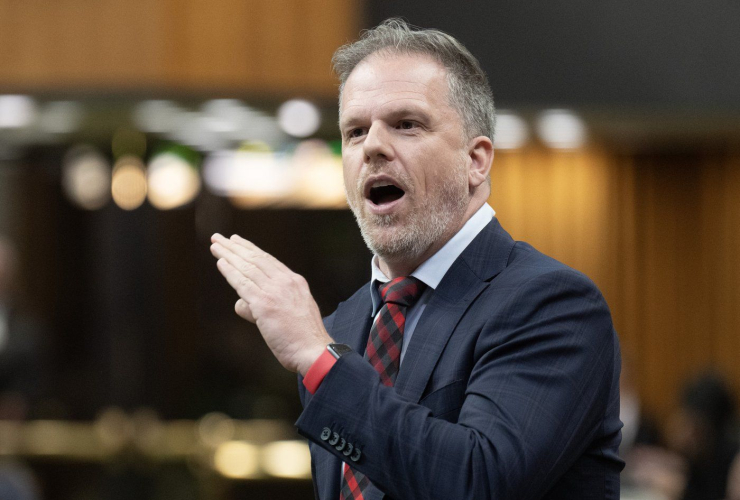
Vancouver is a city of immigrants and outsiders, and any political party that can't engage them will lose out, according to demographic studies by Andrew Yan, a researcher at the research and development division of Bing Thom Architects (BTA).
“We’re a city of strangers,” Yan said, adding that political parties will have to “learn to bridge, as opposed to bunkering themselves out of one particular neighborhood or one particular group.”
“Political parties need to think of themselves as lighthouses that shine on urban issues and concerned with how they will govern rather than clubhouses focused on their special interests and obsessed with how they will rule.”
The demographic research is telling. According BTA Works research, Vancouver has the lowest portion of local residents who were born within the province, compared to other major metropolitan areas in Canada. Vancouver's beauty and quality of life attracts migration from other parts of Canada, as well as immigration from around the world.
If you talk to people in Montreal, three out of four will have been born in the province of Quebec, he said. In Ottawa, tha figure is significantly lower, but still a majority at 60 per cent. In Toronto, that number drops to under half, with 46 per cent of Torontonians being born within Ontario – in Calgary, that figure falls to 44 per cent. In Metro Vancouver, just 41 per cent of residents were born in B.C.
In Vancouver, studies show that just one in three were born in the province of their residence.
Metropolitan Region | Born in Province of Residence | Total | % |
Metro Montreal | 2,676,965 | 3,588,520 | 75% |
Metro Ottawa | 669,250 | 1,117,125 | 60% |
Metro Toronto | 2,345,290 | 5,072,075 | 46% |
Metro Calgary | 472,085 | 1,070,295 | 44% |
Metro Vancouver | 858,815 | 2,097,960 | 41% |
|
|
|
|
Selected Metro Vancouver Cities | Born in Province of Residence | Total | % |
Richmond | 51,750 | 173,570 | 30% |
Vancouver | 188,740 | 571,600 | 33% |
Burnaby | 70,105 | 200,855 | 35% |
Coquitla | 49,450 | 113,560 | 44% |
Surrey | 175,135 | 392,450 | 45% |
Abbotsford | 62,590 | 122,175 | 51% |
Port Coquitlam | 27,310 | 52,230 | 52% |
Langley (Township) | 12,325 | 23,335 | 53% |
Source: Statistics Canada, 2006 Census of Population, Statistics Canada catalogue no. 97-557-XCB2006015 (Canada, Code01)
What do those statistics that mean? It means that the population is from everywhere else from Winnipeg to Ireland to Hong Kong and may not be fully aware of the histories of Vancouver or British Columbia and all trying to find their way here.
But according to Yan, it's not a new issue. It's a continuation of an old story, he said, noting that the City and the region has always been dependent on large money flows from somewhere else from Great Britain to Eastern Canada, and now it is moving in from Asia.
Take a wealthy neighbourhood like Shaughnessy: today, 37.2 per cent of the area is Chinese, according to a Vancouver Sun map based on Canada Census data.
While many are long-term residents with strong roots in Vancouver, others are relative newcomers. For many, that means that mentioning a big political name or a well-known political figure from 20 years ago isn't likely to ring a bell for many locals.
“When a person lacks a history and the economic, social, or cultural conditions of the City inhibits many people to develop deep roots in Vancouver, how do you build your City up?” Yan asked.
In some ways, Vision Vancouver has been able to better adapt to the structural changes in Vancouver compared to older parties such as the NPA or COPE, Yan said.
"Vancouver used to be a city of homeowners, and now it's 50-50 (homeowners and renters)," he said. "Rather than unicultural, Vancouver has become defined by its cultural plurality. While the majority of Vancouverites used to be from the province, the vast majority are now from outside the province."
- 1
- |
- 2
- next ›
- last page »

we are total 5 family member, including myself & my husband, we have three sons.ages 17, 15, 13 years.i am special education teacher having 10+ years relevant experience, & i am working as head mistress of high section.i can qualify the language standard.how can i qualify for any state or province of Canada.please advice me for legal & proper procedure.
thanks
Zahida Sohail
As underscored in the article, one of my first cultural lessons after moving here was:
B.C. stands for Bring Cash
we are total 5 family member, including myself & my husband, we have three sons.ages 17, 15, 13 years.i am special education teacher having 10+ years relevant experience, & i am working as head mistress of high section.i can qualify the language standard.how can i qualify for any state or province of Canada.please advice me for legal & proper procedure.
thanks
Zahida Sohail
What? I think you need to work on your English if you're trying to find work in Canada. I can't even understand what you're asking.
we are total 5 family member, including myself & my husband, we have three sons.ages 17, 15, 13 years.i am special education teacher having 10+ years relevant experience, & i am working as head mistress of high section.i can qualify the language standard.how can i qualify for any state or province of Canada.please advice me for legal & proper procedure.
thanks
Zahida Sohail
You definitly don't qualify for language...but I must admit I'm kinnd of inspired and troubled by the stats. I always look at the city's young people and am so heartened by how they are Asian, black, white, Indian and they are all just friends. You will not have that in a small town where everyone eats the same food and prays to the same God and remembers the same history. This is a city of new ideas. Yes, I am annoyed by the coldness and distance of Vancouver. But I prefer this to xenophobia. Great article.
There are a lot of people with worse English than the person who first commented who have found work here. Whether you'll be able to work in your field of expertise is another thing. Count on delivering pizzas or some other minimum wage crap job.