Skip to Content

Earth Matters

EarthMatters_600.jpg

Let Them Eat Cake? Feeding 9 Billion People

Amy Huva
Jan 10th, 2013

Image: NASA

Currently, 1 in 8 people globally lack access to food or are chronically malnourished. This alone is a large problem for world food systems, however with the population expected to increase to 9 billion by 2050 the problem just got even bigger. Our agricultural food systems are estimated to require doubling in order to feed all those extra people.

How will agricultural food systems have to change this century to provide global food security while also reducing the environmental impacts that agricultural practices have caused leading to increasing climate change?

Continue reading...

Australia's "catastrophic" fire risk is the new climate reality

Amy Huva
Jan 9th, 2013

Code red: Catastrophic fire risk (more information from the Country Fire Authority website)

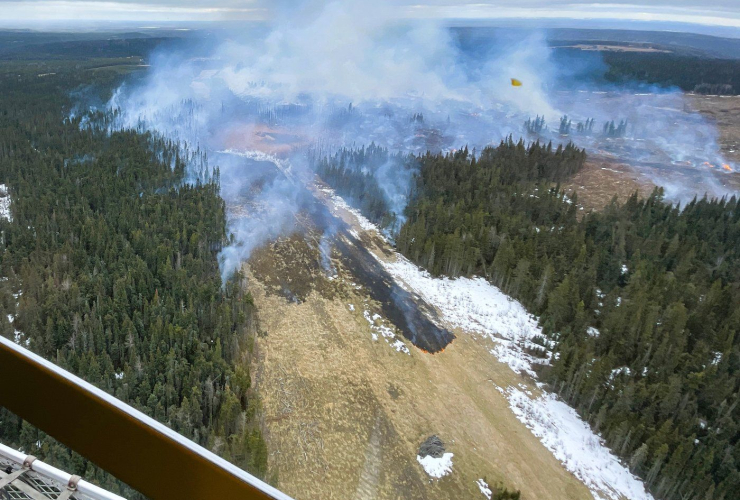
This week, my homeland of Australia is on fire. There are bushfires burning in five out of six states and residents are being warned of ‘catastrophic’ fire risk which is the new higher danger level that has been created for the nasty fires that are becoming more common in Australia. The perfect storm conditions of really dry, above 40oC and windy are becoming almost standard for January in Australia and the heat waves really pack a punch.

The Bureau of Meteorology had to create a new colour for their temperature maps this week, when forecasts were predicted to exceed 50oC on a chart that didn’t go above 50oC. Most Vancouverites probably don’t often know what 40oC or 50oC temperatures feel like (I love you Vancouver, but 25oC is NOT a heat wave) so it can be difficult to conceptualise, but I can tell you it’s not fun.

Climate ethics and the smoker’s excuse

Amy Huva
Jan 4th, 2013

photo: Carbon Arc (flickr)

When I was in high school and people were looking for an excuse other than ‘cause it makes me look cool’ to justify taking up smoking, they would often say ‘well you’ve got to die of something, right?’

The insanity of paying to give yourself cancer aside, this classic addict’s response is something I’m seeing increasingly in people trying to deny taking action to avoid the destruction that humanity is causing through climate change, which will kick into the rest of our planetary systems in the next decades.

It’s easy to see why – when you benefit from the fossil fuel status quo; when it makes you money, gives you a job, and pads your RRSP, it’s really comforting to wrap yourself in denial of the consequences of your actions and think of some magical technology or silver bullet that the next generation (not you) will create.

Don’t think about the climate crisis – just keep living the unsustainable dream! After all, we all have to die of something, right?

Well yes, but it’s not the deniers who will be dying from the consequences of climate inaction, which makes this a different moral dilemma.

Renewable reality: feasible and inexpensive

Amy Huva
Jan 3rd, 2013

Renewable power in the 99.9% model (from paper)

This research from the US is quite practical. The researchers looked at the electricity use from 1999 – 2002 in the ‘PJM Interconnection’ which is a power grid in the North Eastern USA that includes Delaware, New Jersey, Pennsylvania, Virginia, West Virginia, Ohio and parts of Indiana, Illinois and Michigan.

They wanted to know what a renewable power grid would look like, how much it would cost and how you could do it. Research excitement!

Continue reading...

How to tackle the zero-waste challenge during holiday season

Aaron Chan
Dec 27th, 2012

Imagine the garbage cans in your place, empty.

But it’s not garbage day. It’s every day. Sound impossible?

Not according to Marnie Newell and others who have taken on the zero waste challenge. Newell works part-time for SPEC, the Society Promoting Environmental Conservation, an organization based in Kitsilano which has been around in Vancouver for more than four decades, and was responsible for bringing recycling to the city.

SPEC promotes zero waste, something that is exceedingly difficult during the holiday season. 

“True zero waste to me is a goal of eventually creating nothing that natural systems can’t safely digest... thus zero waste is really the idea that one day humans could learn to live without causing any pollution”.

It’s more of a moral issue than simply an environmental issue, one that should be our duty as humans, she believes. Add to the fact that there’s a plethora of information out there on zero waste for people to read about and to get started.

Cheeky "Kinder Morgan Surprise" site offers daily critique of Trans Mountain pipeline expansion

Jenny Uechi
Dec 26th, 2012

The following is adapted from Kinder Morgan Surprise, a new site featuring a tongue-in-cheek "advent calendar" created by professor Erica Frank, MD, MPH, that gives daily information on the proposed Trans Mountain pipeline expansion project from an environmental safety point of view. 


December 23: What are the facts? 

Port Metro Vancouver criticized for "inadequate" response to challenges over coal export proposals

Jenny Uechi
Dec 20th, 2012

Photo of Silent Demonstration on Dec. 18 by Robert Semeniuk

The Vancouver Fraser Port Authority's response yesterday to the open letter from climate scientists and others delivered on November 27 got a scathing response from climate advocates, who called the response "evasive" an "inadequate". 

Voters Taking Action on Climate Change, a citizen's group, criticized the Port Authority for "narrowly defining its mandate as the demand-driven facilitation of trade" and "disavow[ing] any responsibility for the problems created by the export of coal."

"Global demand for coal is growing, but it is neither in British Columbia's nor Canada's long term interest to blindly service that demand," the group stated in a press release.

Cortes Island logging dispute moves to the market

Jenny Uechi
Dec 17th, 2012

Photo of Cortes Island logging protest

As the dispute between Cortes Island residents and Island Timberlands escalates, activists are moving the debate to where it will hurt: the market. 
 
Earlier this month, local residents' blockades of Island Timberlands' logging operations resulted in a withdrawal of the crew, but as Zoe Miles from the WildStands Alliance notes, the company has yet to meet Cortes Island homeowners or make any revision to the logging plans. As a result, residents against IT's industrial scale logging have tracked the raw logs Island Timberlands are exporting to mills in Washington State and to their retail customers and are sending letters to raise awareness about the dispute.
 
Below is an excerpt of the letter: 

Will the well run dry? Non-renewable water

Amy Huva
Dec 12th, 2012

Last month, 26 scientists all published a paper together on groundwater, which must have required either some massive Skype sessions, or people getting very sick of email chains where everyone hits ‘reply all’. As I’ve said before: science – it’s a collaborative thing.

What these researchers were trying to do was to work out exactly what we know about groundwater and how it will be affected by climate change and where the gaps are that we need to fill.

Continue reading...

Climate change: the Inuit now have a word for ‘robin’

Amy Huva
Dec 12th, 2012

Photo: Amy Huva 2011

Those of us who live around the 49th parallel don’t often think about it, but Canada is an Arctic country. The Arctic coastline is 67 per cent of Canada’s coast and is longer than both the Pacific and Atlantic coasts combined. But when you live in the city, other than watching polar bears on webcams, the Arctic seems a long way away.

But the Arctic is changing, rapidly. On Monday night at the Vancouver Aquarium, two researchers from the ArcticNet group reported on the changes they’ve seen and the research they’re doing to figure out the future of the Arctic.

Syndicate content