Happy 23rd anniversary, Exxon Valdez: thanks for schooling us on Enbridge!
Marine oil spills cannot be entirely cleaned up; oil persists in the substrate of the most biological active intertidal zones.
Just over 23 years ago, the Exxon Valdez ran aground. As BC contemplates a proposal that would end the 40-year moratorium on tanker traffic on the coast, the facts of the Exxon Valdez provide helpful contrast to the promises of Enbridge and its Northern Gateway oilsands pipeline.
What have we learned from experience?
We’ve learned that marine oil spills cannot be entirely cleaned up; that oil persists in the most biological active intertidal zones; that Enbridge’s estimates for the spread of bitumen contamination from a tanker spill are outside of the ball park of what happened in Prince William Sound; that Enbridge far exceeded its insurance coverage in the Kalamazoo bitumen spill and has not cleaned that area to its former condition; that the Exxon Valdez created suffering for which money provides no cure; and that ecosystems in Prince William Sound have not fully recovered 23 years after the Exxon Valdez oil spill.
Enbridge hugely underestimates the area potentially affected by an oil spill
An Enbridge study calculates that a spill of 36,000 cubic metres of bitumen would contaminate 240 kilometres of shoreline in 15 days. It could take four years for exposed rocky shores to recover, up to 12 years for sheltered shores.
When the Exxon Valdez spilled 48,500 cubic meters of oil, 2,000 kilometers of shoreline were impacted. Over 300 kilometers were heavily or moderately oiled. About 1,800 kilometers were lightly oiled.
Compared to the actual consequences of the Exxon Valdez spill, Enbridge’s estimates of possible shoreline contamination are extremely optimistic.
Enbridge estimates that a spill would contaminate 240 kilometers of shoreline while the Exxon Valdez itself, a spill only 25 per cent larger than the Enbridge estimate, contaminated over four times that amount of shoreline. In addition there’s no reason to assume that a supertanker bitumen spill would be smaller than the Exxon Valdez spill: the proposed supertankers carry almost eight times that amount.
Enbridge’s fanciful estimates don’t seem to account for the greatly increased difficultly in cleaning up bitumen rather than oil. Under normal circumstances, an oil spill clean-up typically captures only 10 to 15 per cent of the oil from a marine spill. Chemically diluted bitumen is both heavier and more toxic than Valdez oil, and harder to clean up. Reports of Enbridge’s clean up efforts after a pipeline broke near the Kalamazoo River state that, because bitumen sinks instead of floating like oil, skimmers and booms could not capture it.
Instead, bitumen entered the river sediments. It now covers about 200 acres of river bottom. Enbridge dumped sand so that clear waters run over an apparently clean river bed. But the oil remains just below the surface, as shown in a video with footage by a former Enbridge worker. In addition, volatile portions of the condensate contain toxic fumes like benzene and toluene. Residents near the Kalamazoo River fell ill from the fumes; some had seizures. Those fumes could kill marine wildlife.
On a map, the waters of Prince William Sound appear much more protected than the BC coast: several islands safeguard a south facing bay. The remote BC coast has the fourth-most dangerous seas in the world and it is not accessible during winter storms. The people of Haida Gwaii know this well.
April Churchill, Vice President of the Haida Nation, stated: “The waters here are treacherous. People get stuck here all the time. The ferries don’t run, the planes turn back. If there were a spill, they wouldn’t be able to get the boats out for rescue or clean up. It would be a mess.”
Oil contamination of Prince William Sound is persisting far longer than anticipated. The last study, completed in 2001 (fifteen years after the spill), revealed 20 acres of shoreline in the study area still contaminated with oil. Subsurface pits held an oil mixture similar to that found a few weeks after the spill: smelly and fluid. Subsurface oil was found at lower tide heights than expected, in the zone of biological production. As of 2010, an estimated 26,000 US gallons of Valdez crude oil remain in Alaska’s sand and soil. It has been found in the coastal substrate up to 450 miles away.
In sum, a damaged supertanker off the BC coast could create a larger, more toxic spill than the Exxon Valdez, and one that is much more difficult to clean up. Given the persistence of the Exxon Valdez oil along the coast of Alaska, it’s reasonable to expect that a large bitumen spill could contaminate the BC coast for half a century or more.
Experience suggests that Enbridge’s clean up funds are inadequate
Enbridge promises that there would be more than $1.4 billion available for clean up in the event of an oil spill. Sources for this funding include ship-owner's insurance, the Canada Ship Source Fund, the International Oil Pollution Fund and the Supplemental International Oil Pollution Fund, which Canada is expected to sign on to in the near future.
The Exxon Valdez clean-up cost far more than $1.4 billion. According to Exxon, it spent about $2.1 billion. The effort took more than four summers of clean up before it was called off. Some beaches remain oiled. At its peak, the clean-up effort involved 10,000 workers, 1,000 boats and about 100 helicopters and airplanes. Many believe that the winter storms did more to clean the beaches than the human effort, but that means that the oil remains in the ocean.
With the Kalamazoo spill, Enbridge exceeded their insured clean up coverage of $600 million last fall, and now estimates that the clean-up will cost more than $720 million. Compared to spills of heavy crude oil in the US, cleaning up the bitumen has cost over 10 times that much and counting.
Given the experience of the Exxon Valdez and the higher costs of cleaning up bitumen, its reasonable to view Enbridge’s clean up resources as woefully inadequate; they could cover less than half the cost of a clean-up, even to the inadequate level provided following the Exxon Valdez oil spill.
The social costs of the Exxon Valdez oil spill
The social costs of an oil spill cannot be monetized by Enbridge estimates. After the Exxon Valdez spill, Alaskan Natives experienced the worst impacts. Their communities were severely disrupted and many experienced high levels of depression. The trauma of seeing so many animals die, the stress of loss of subsistence livelihood from the sea, the influx of clean-up money and the way Exxon handled the spill all resulted in a variety of negative social impacts.
Clean up workers suffered lung damage, memory loss, cancer and other ailments. Two dozen sued Exxon. Some cases settled and others were dismissed by the court. During the clean up itself, nearly half the people had a respiratory illness known as the “Valdez crud” which many believe was due to the toxic fumes and clean-up chemicals.
In the fishing town of Cordova, Exxon clean up money seemed randomly distributed in a manner that jumbled social roles and divided the community. Some people overspent the “dirty money” and ended up bankrupt or died while waiting for the court case against Exxon to conclude. (That case ended in the US Supreme Court which ordered $500 million in damages. Exxon’s appeals of the original $5 billion judgment took twenty years.) Several residents, including a former mayor, committed suicide. More than 40 percent of the men had symptoms of severe depression six years after the spill. During that time, Cordova went from being the ninth leading port in the nation for commercial fish harvest to the 51st. Ten years after the spill between 50 and 65 percent of the fishermen told surveyors they had medical and emotional problems. Most people felt the town had not yet recovered from the spill. Gulf of Mexico residents are experiencing similar emotional impacts from BP’s Deepwater Horizon oil spill.
Steven Picou, a sociology professor at the University of South Alabama in Mobile studies and compares the fallout from natural vs. technological disasters. He has found that natural disasters arouse empathy and pull communities together, while man-made disasters rip communities apart.
Money can’t buy new ecosystems
No one knows how many animals died outright from the Exxon Valdez oil spill. The carcasses of more than 35,000 birds and 1,000 sea otters were found after the spill, but since most carcasses sink, this is considered to be a small fraction of the actual death toll. The best estimates are: 250,000 seabirds, 2,800 sea otters, 300 harbor seals, 250 bald eagles, up to 22 killer whales, and billions of salmon and herring eggs.
Pacific herring and pigeon guillemots species do not show signs of recovery twenty three years after the oil spill. Species that have not recovered after twenty three years but show substantive progress are clams, mussels, sea otters, killer whales (one pod that uses the area is recovering, the other one is not), harlequin ducks, black oystercatchers and Barrow’s goldeneye ducks. Species that have met recovery objectives are bald eagles, common loons, common murres, cormorants, Dolly Varden trout, harbor seals, pink and sockeye salmon and river otters. Not enough information exists to know if whether the Kittlitz’s and marbled murrelets are recovering.
Twenty-five years after the Exxon Valdez oil spill, nine species are not fully recovered and some species such as herring and pigeon guillemots may never recover. One of the two orca pods in the area is slowly dying out.
What do we do to protect our coast in BC?
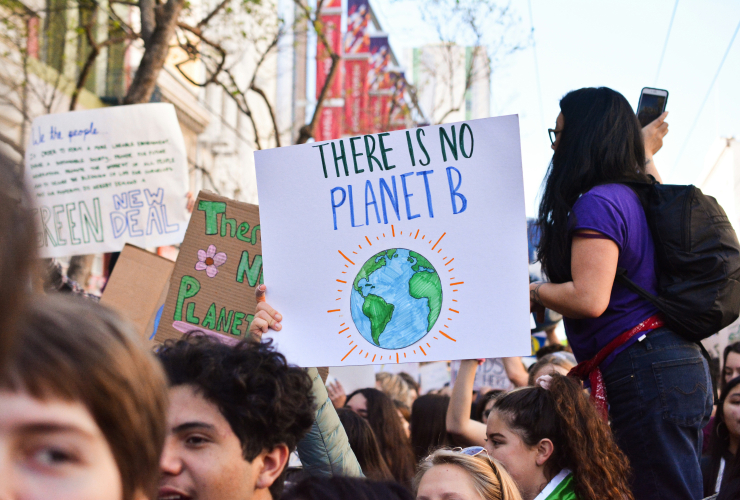
BC organizations are creating great events and a growing number of people are showing up to make clear that they really care about what happens to the BC coast, that they want it safe from tankers, that they support the First Nations who have both the strongest rights and the most to lose; and that they see protecting the coast as everyone’s responsibility. Sign a petition (easy!), storm Christy Clark’s riding, write a comment letter to the Northern Gateway JRP and sign up for notification of events to attend.