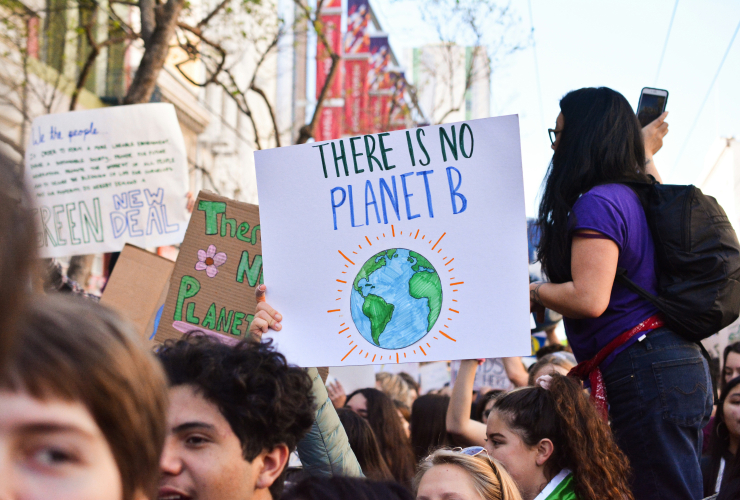
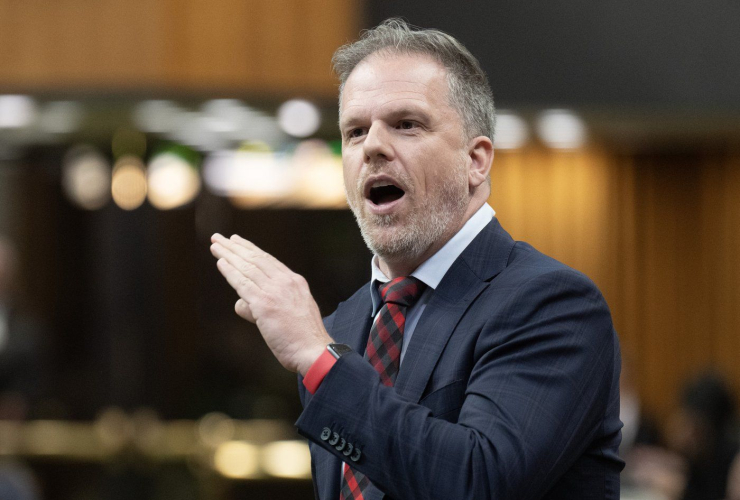
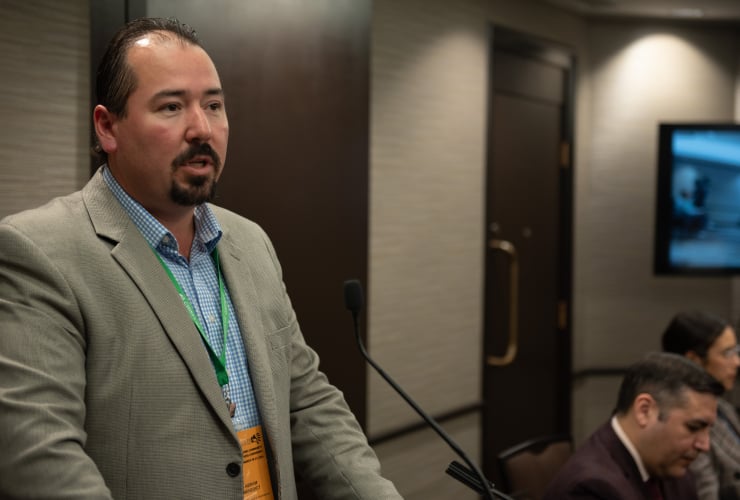
Author Bill McKibben speaks to Occupy and UBC students about climate change activism
"Last year, Exxon made the most money in the history of money. Corporations can't be allowed to run everything and rig every contest. They need to be subordinate to the other needs of society." Photo by Carrie Saxifrage.
Bill McKibben is the foremost climate change activist and author. He founded 350.org and was a key organizer of the civil disobedience at the White House in which over 1,200 people were willingly arrested in order to bring publicity to the impeding decision regarding the Keystone Pipeline. That pipeline would bring the tar sands across the US prairies to Texas refineries.
After U.S. President Barack Obama delayed that decision, McKibben headed out on a victory lap, using the momentum of the decision and the Occupy movement to underscore the tragic impact that a few oil companies are making on the planet as a whole, and B.C.'s crucial role in stopping them.
I heard McKibben speak in two venues: at Occupy Vancouver and for a group of students and professors at the UBC Terry Project. At Occupy Vancouver, hairy occupiers patiently presented resolutions regarding media, housekeeping and legal committees to a bundled up crowd who responded with their hands. At the Terry question-and-answer session, groomed UBC students received questions for McKibben only by tweets. Both audiences were dominated by 20 somethings who are grappling with the Earth they will inherit. The content of the two talks largely overlapped, and the following is an abbreviated paraphrase of them both.
The different look of the two audiences underscored McKibben's point that we all have different skills to bring to what truly is the effort to save the planet. As he put it, celebrities bring their dashing good looks, activists bring organizing skills, academics bring their credibility, artists bring the ability to reach hearts and minds that don't respond to charts and numbers, and alternative news sources bring an increasingly credible source of information as the mainstream media loses credibility by skewing itself into alignment with the big money. Everyone brings something to the crucial efforts now underway, he told both audiences, provided that we show up.
What was it like to learn about the State Department’s decision to delay a decision on the Keystone Pipeline?
The victory was particularly sweet because TransCanada was 100 per cent certain of victory. It had mowed the 1,700 miles of the pipeline route and left mountains of steel pipe in fields across the U.S. prairies that are now going to rust.
But there are no final victories in environmental struggles and this one might be incredibly temporary. If Mitt Romney won and the Koch brothers told him to frack Old Faithful, he would quickly do it.
We’re learning the tactics and approaches that remind people that, if these pipelines to go forward, we are party to massive climate change that hurts not only ourselves but vulnerable people all over the world. We’re learning to use our bodies as the ante to get into the game and then to fight like hell.
The Keystone pipe line decision puts a lot more pressure on B.C. because the oil companies are going to want to move the oil through the Enbridge pipeline to Kitimat or by expanding the Kinder Morgan pipeline that goes into the Burrard Inlet and fills the tankers that sit in English Bay.
If all these plans go forward, BC will be the jumping off point for a large portion of the world’s CO2. LEED certified buildings on the UBC campus are going to become like a sick joke in the greater context of climate damage coming out of B.C. Jim Hansen, the world’s leading climate scientist, says that if all the oil in Alberta could be burned over night, the world would increase in temperature by 11 degrees and we wouldn’t ever be able to get the climate system under control. There can be no starker, clearer warning. You would think that any policy maker would say, “let’s find something else to do, that is clearly not a good idea.”
We’re counting on Canada to live up to its heritage of solving, not causing, the world’s most serious problems. Canada is an educated, literate society with lots of opportunities to figure out other ways to make money. It’s a shame to let oil corrupt its politics over time. The Canadian government now operates as a subsidiary of the oil industry.
What should academics do? Academics are speaking truth to power but governments aren’t listening. Yet activism and academia make an uneasy fit.
The question is academic credibility. The worst thing that has ever happened in the world is currently happening. What are academics saving their credibility for? There’s not going to be anything left to do with it.
Academia is the repository of the history and values of civilization. Those values are being subverted by a small number of people and it is time for people to call them on that. It’s a perfectly good role for people whose job it is to think about who we are, where we come from, where we are going and what it all means, even when it means going to jail.
Academics need to magnify news like the International Energy Association’s statement that we have only five years to invest in the infrastructure that will turn around climate change before unstoppable changes lock in. Academics need to put out statements to the press, write op eds, tweet it, anything to make sure people are cognizant of what is going on. We have the slightly boring task of saying the same thing over and over. No corporation ever ran a commercial once. It only works if you do it one hundred times.
Artists need to put aside the deep pleasures of deep individuation within their work and produce art in the context of a larger campaign or project. I’ve certainly constrained myself as a writer to make my point. This isn’t what I’d be doing if I wasn’t committed to making change.
What do you think about Occupy Vancouver and the Occupy Movement generally?
I’m a big fan of Occupy. Obvious common sense and fairness have left our system. Climate is the greatest but not the only example. A small percent of 1 per cent are getting rich on fossil fuels while everyone else is facing enormous difficulties. Last year, Exxon made more money than any other entity has ever made in the history of money. The genie won’t get put back into the bottle: there is a dawning understanding that people are being had.
People don’t seem very willing to make do with less stuff so are there small steps that can be taken within consumer values? Or can society reduce energy consumption in a meaningful way through voluntary action?
In economic terms, everyone knows what the missing link is. CO2 is a commodity that is causing enormous damage that markets can’t address because there is no price attached to it. The fossil fuel industry has focused its political power and financial might on preventing this. To Exxon the atmosphere is an open sewer in which it can pour its garbage out for free.
If we start down the path of pricing carbon we will make more change in a faster time than people can imagine. But we can’t just take the industrial machine and toss out the engine and put in a windmill. We need to ask economists to address the utility of economic growth in more powerful ways. Past a certain point, increased consumption actually reduces connection and community.
UBC students are graduating during a time of diminished job prospects. What areas do you think would be worthwhile to pursue for future employment?
Look for work that actually needs to be done. Engineering financial derivatives doesn’t need to be done. Engineering financial tools to retrofit and weatherize older homes does. For the first time in 150 years, the number of farmers increased in the U.S. last year. People are realizing that farming requires intelligence and creativity and is more satisfying than trading bonds.
On the influence of corporations:
It’s a pernicious legal fiction that corporations are people. I’ll believe corporations are people when Texas executes one. Corporations are relentlessly linear: more, more, more. They can’t be allowed to run everything and rig every contest. They need to be subordinate to the other needs of society.
The climate crisis throws that into relief more than any other issue. Life on the planet is being held subordinate to the profits of a few corporations for a couple of decades.
When 1,200 people came to get arrested at the White House, we asked them to wear a neck tie or a dress to demonstrate that we are not the radicals. The radicals are the corporations that are willing to alter the chemical composition of the atmosphere and make the ocean 30 per cent more acidic. There is nothing more radical than that, by an order of magnitude. It’s ruinous. The rest of us who want the world in somewhat the same shape as when we were born and have residual ideas of fairness, we are the conservatives. Corporations are egregiously and abnormally out of step with human tradition.


This is hysterical, apocalyptic green end-timism.

"The worst thing in the history of the world"? Worse than the Black Death, the Holocaust, the Mongol invasions? The writer admits to skewing a message to serve a political cause. All "corporations [are] out of step with human tradition" (whatever the hell that means)?
I'm not quite ready for the clmate Rapture, thank you.
Read this for a dose of sanity: http://www.americanthinker.com/2011/11/scientists_in_revolt_against_glob...
Bill McKibben delivers the quality leadership needed to steer the world toward sustainability. Right now the 1% is telling us in no uncertain terms that they will do whatever they want to do. They work for us, not the other way around. Until every single person on this planet stands united against this tyrrany and slavery nothing will change. They are criminals and should be in prisons and given the needle. Every last one of them.