Skip to Content
EarthMatters_600.jpg

American energy experts advocate Cascadia supergrid for energy trading

Read More:

"Plan what you want to end up with," James Waldo told the 150 conference participants, "then build it in increments. This would have happened a long time ago for Cascadia, if it weren't for the international border."

Washington, Oregon and Idaho are struggling with an oversupply and wastage of wind power. The problem emerged from the utilities’ two opposing mandates: 1) to provide the cheapest possible electricity to rate payers; and 2) to meet state requirements for a percentage of power generated by renewable sources. With this in mind, energy markets experts convened in Vancouver this week to discuss the future of cross border markets for electricity. The International Trade Council of Canada and Clean Energy BC sponsored the morning conference and about 100 people attended.

Eliot Mainzer of the Bonneville Power Administration explained that the mandate for renewable power, known as Renewable Energy Portfolios or REPs, resulted in a six fold increased of wind generation over the last five years to a current capacity of 6,000 megawatts.

The oversupply happens when the wind is blowing, but demand is too low to use it all. Conversely, wind turbines cannot be brought online quickly to meet rapid upsurges in demand. The result is that Northwest wind turbines are turned off at night even when they could be creating power.

If they don’t sell power they lose their tax credits. Natural gas plants are kept spinning at night to ensure adequate power on short notice. The result is a mess of competing obligations that is headed toward litigation.

A price on carbon would solve much of the problem by closing the cost gap between wind and natural gas, allowing utilities to meet both their “cheapest power” mandate and their REP mandate simultaneously. The US Environmental Protection Agency or individual states may provide that, while the Obama administration slumbers. 

Meanwhile, another answer being explored is a geographically diverse market with a variety of power sources so that the surplus electricity can go to the areas that need it. The Northwestern states would naturally look to big, thirsty California as a trading partner. California pays a lot for renewable electricity, but California also uses its REP obligation as a jobs programme and so requires generation of most of its renewable power within the state.

That’s where BC comes in as a geographically sensible trading partner, a part of the “Cascadia” bio region. Among the obstacles to be overcome in bringing energy trading to fruition, three stand out: 1) the transmission lines are inadequate; 2) the BC regulations don’t encourage trade; and 3) its not clear what BC stands to gain.

1: NEW TRANSMISSION LINES

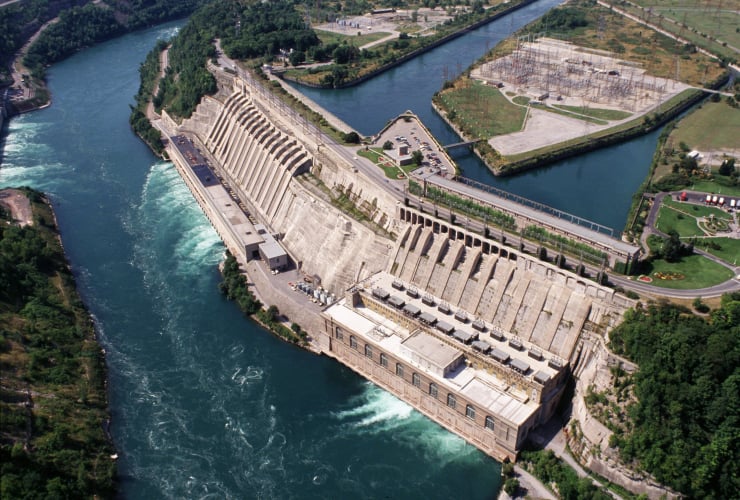
The transmission lines between the western provinces and the northwestern states have a nominal path rating that is twice that of most transmission lines, indicating that it is physically twice as difficult to move electricity through them.

New transmissions lines are planned, one between Lethbridge Alberta and Great Falls Montana, and an underground cable between Washington and BC. James Waldo, partner at a Tacoma Washington law firm, advises Sea Breeze Power Corporation on that planned cable, known as the Juan de Fuca Cable Project.

“First, imagine what a system should look like,” he suggested, “then fill it in.” He showed the European plan for a “super grid” that would connect North Africa, Norway and all points in between for the purpose of energy trading. The Juan de Fuca cable would connect the Olympic Peninsula to Vancouver Island creating a Cascadia loop that runs up either side of Puget Sound, up the Olympic Peninsula and underwater to Vancouver Island, across to the BC mainland and back down the I-5 corridor. The permits are in place and it would be physically possible to build in 3 years.

“If there were no border, this would have been done years ago,” Waldo stated. “It makes the entire area more energy resilient.”

2: NEW REGULATIONS

With a robust physical infrastructure for energy trading, “spot markets” can arise: power can be sold to where it is needed on short notice.   Murray Margolis, the Executive Director of Morgan Stanley’s Vancouver office, advocated three reforms that would encourage spot markets.

First, BC’s incremental cost of export is highest in the west and BC hydro proposes a 30% increase. This “denies practical access” for parties wanting to move electricity in and out of BC. Margolis suggested a reduction of this charge.  Second, he’d like to see private sector players help build enough buyers and sellers for a robust, efficient energy market. Third, BC producers of renewable power could pursue eligibility for REPs. This would make their power a more valuable commodity in the States.

3: BENEFITS FOR BC?

The third obstacle is the lack of clarity regarding what BC stands to gain. Waldo showed compelling graphs of the way wind power off Vancouver Island and wind power in the Columbia Gorge could complement each other. But BC hasn’t built its turbines and Washington has. Tellingly, the planned transmission towers all have greater capacity heading north than south suggesting BC and Alberta would increase their imports more than their exports. Mike MacDougall, the Director of Trade Policy for Powerex (a wholly owned subsidiary of BC Hydro) cautioned that energy trading may give Morgan Stanley more sales, but utilities are in a riskier position because if they sell part of their load, they can’t get it back and BC Hydro can be stuck making purchases for the load it is obligated to serve.

MacDougall saw an energy trading market full of unforeseeable consequences in the absence of the stability of carbon pricing. For example, with no meta-strategy or regional integration, REPs resulted in each state building surpluses of renewable energy that they can’t sell. Similarly, no one could foresee dropping natural gas prices, which have hurt the market for renewable energy, or the parity of the loonie with the dollar. Big utilities with rate payer obligations need predictable markets to benefit from energy trading. MacDougall agreed with the general proposition that diverse energy markets make for better use of existing capacity, but he seemed skeptical that the necessary conditions were in place yet.

IT’S ABOUT THE CARBON

From a climate standpoint, energy trading can have major benefits. With a large, shared grid, a greater percentage of renewable can be fed into it and find a matching demand. For example, Alberta generates over 80% of its electricity from coal. If it could buy electricity from renewable sources across the border instead of using coal and natural gas, it could reduce carbon emissions by up to 52 million tons per year. That is more than the emissions from the oil sands last year.

The policy initiatives that could facilitate such energy trading include first and foremost a price on carbon pollution. This would create a more rational and predictable market in which utilities aren’t forked between conflicting mandates. Making BC energy eligible for REPs would increase its market value in the states. And regional integration of infrastructure throughout Cascadia, with new and updated transmission lines, would remove physical barriers to efficient distribution of renewable energy. With physical access to renewable energy and an active market, Alberta could decrease its use of climate destabilizing coal.

The potential for a Cascadia energy trading market in which Canada becomes a net importer of renewable energy parallels Canada’s failure to move ahead with low carbon technologies in all sectors. While Europe, China and the US gear their economies toward a low carbon future, Canada sits on its hands, forgoing its rightful place as a center for investment and development of the technologies that will create the economic winners of the new century.

(2) Comments

claire hurley June 11th 2011 | 9:21 PM

Powerex made millions selling electricity to the US, particularly to CA during the late '90's when they were experiencing blackouts. System worked fine then. Powerex still sells power to the US--at night while we are sleeping. BC Hydro does not share these profits with consumers.

Craigcan June 14th 2011 | 8:20 PM

You are partly correct claire.  PowerEx sells to California during the day at premium rates, then at night when the U.S. has excess base generation PowerEx buys power from there at low rates and fills BC Hydro's reservoirs.  These sales help lower the cost of energy for the BC consumer.  It is a win for BC consumers and a win for Californians.