Skip to Content
EarthMatters_600.jpg

Will Christy Clark kill BC's climate-change policies?

Read More:

Reports by the Globe and Mail and the Vancouver Sun indicate that Premier Christy Clark’s cabinet is urging her to abandon B.C.’s climate leadership, an issue which brought her to victory in the race to become premier. 

Finance Minister Kevin Falcon, defeated on his reactionary position on climate change, appears determined to serve the interests of his high-emission industry supporters at the cost of the voters of B.C., who seek a climate-stable world that can offer opportunity and prosperity to their children. Education Minister George Abbott lost the leadership race when he ditched his environmental leadership by advocating an expensive referendum on the carbon tax, which is popular with voters but not high emitting industries. Energy and Mines Minister Rich Coleman has a link to the Canadian Association of Petroleum Producers, an industry advocacy group, on his ministry’s web page
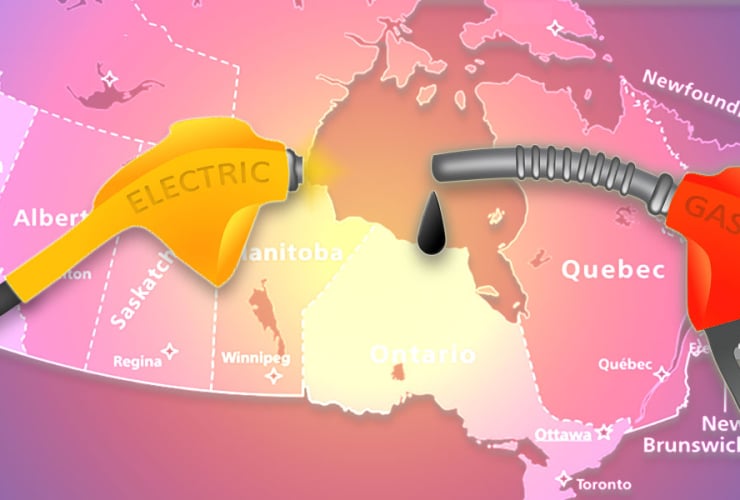

It appears that Big Oil has friends in cabinet.

Because all carbon-tax revenues by law must be returned to the citizens of B.C., voters experience no financial disadvantage. High-emitting industries do, in the short term. In the long term, the carbon tax encourages them to make capital changes that will serve their ability to compete in the burgeoning low-carbon world economy and keep them in business when governments take action to preserve the health and safety of their citizens through climate action, which they inevitably will. Informal reports indicate that the industry acknowledges this and includes a $40/tonne price on carbon in their forecasts -- far less than B.C.'s carbon tax price of $20/tonne or the legislated rise to $30/tonne in 2012.

Powerful high-emitting industries in BC include: cement manufacturers (the largest cement plant in the Pacific Northwest is located in Delta); natural gas (long considered a clean transition fossil fuel, a recent study found that fugitive emissions of methane from fracking make natural gas from shale as damaging as coal); coal (B.C. exports more carbon in this form than all of its citizens emit); and oil (B.C.’s largest source of GHGs). 

Perhaps more important to B.C.’s future economy, the carbon tax helps make clean energy an economically viable alternative. Clean energy contributed $15.3 billion to B.C.’s GDP (10.2 per cent of the total) and 166,000 jobs (7.2 per cent of the total) in 2008.

Equally important to B.C.’s long term prosperity is its membership in the Western Climate Initiative. Partnering with Ontario, Quebec and California (the world’s eighth largest economy) gives B.C. the opportunity to help set the rules in cap and trade in a manner that reflects B.C.’s interests. Acting early in North America will give B.C.’s economy a long-term competitive advantage because our industries won’t invest in soon-to-be obsolete facilities. Further, B.C.’s participation encourages other jurisdictions to participate, which increases our economic opportunities. The low-carbon economy is coming. If we are prepared, we will prosper.

(1) Comments

Gloria April 22nd 2011 | 5:17 PM

What low carbon economy? Harper has shoved the carbon bill from, the dirty Alberta tar sands, onto the backs of Canadian tax payers. Harper also gives those greedy corporations, billions of our tax dollars. You damned right, Harper stuck us with, the tar sands carbon bill.