Skip to Content
EarthMatters_600.jpg

McKibben tells Vancouverites: Help Close the Tar Sands

Read More:

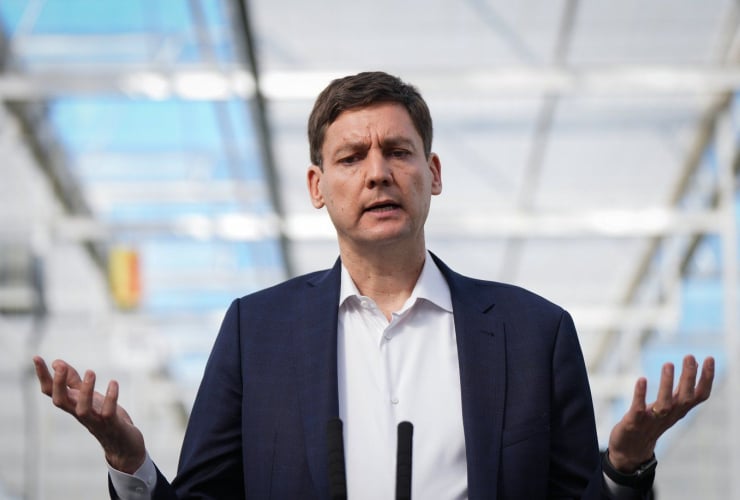
As part of a free public lecture series, The Vancouver Institute hosted Bill McKibben last weekend. McKibben has been called "the nation's leading environmentalist" by the Boston Globe and "the world's best green journalist" by Time Magazine. and over four hundred people of all ages packed into the auditorium at UBC to hear him.

McKibben is a tan, short haired athletic looking man at fifty who has written about climate change for over 20 years. Everything he and others hypothesized would happen with global warming is happening, except for the pace. Twenty years ago, he said, no one imagined how fast climate change and its effects would occur.

McKibben’s most recent book, Eaarth,  describes the planet on which we live. Earth is a thing of the past. Eaarth has conditions unlike any that have occurred during the presence of primates on the planet. “If an alien were to view human activity from afar and take a guess at what we were trying to do with the planet,” McKibben told his audience, “creating the perfect conditions for a worldwide mosquito ranch would be a viable hypothesis.”

Hot and wet are the order of the day. In 2010, 19 nations set new national heat records. Moscow reached over 38 degrees Celsius for the first time ever, and maintained that temperature for eight days. The heat destroyed the Russian grain crop so stopped all exports, and world grain prices jumped 70%. Citizens in the wealthiest (and most GHG polluting countries) may not have noticed the radical price increase, but in other parts of the world it meant that record numbers are going hungry.

Hot means air holds more moisture and there is four and a half times more moisture in the air. “In Star Trek, Spock had a meter to tell him the moisture level in a planet’s atmosphere because one of the first thing he’d want to know is how the die were loaded for deluge and flood.” Eaarth’s die are very loaded. Pakistan, which usually has 3 feet of rainfall each year, received 12 feet in one week in 2010. The homes of one quarter of the population were underwater, and a quarter million remain homeless. Such deluges result from the one degree increase in temperature worldwide. Because it takes awhile for the atmosphere to fully express heat, another one degree is in pipeline. McKibben put the situation bluntly: “We need to get our act together quickly.”
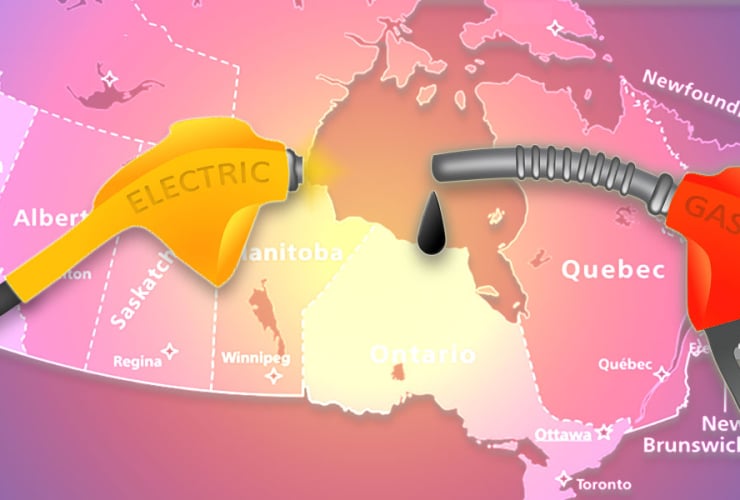

McKibben had a message for Canada in particular, “speaking fondly as someone who is leaving town the next day.” Although he lived in Toronto as a child and has a deep fondness for Canadian culture, he believes that without a change of direction deadly carbon emissions will be Canada’s largest legacy to the world. There is no way to balance the books until Canada stops the tar sands. The natural gas fracking in BC that fuels the tar sands which produce oil that gets shipped to Asia is, by itself, one of the primary sources of global warming in the world. Enormous coal reserves from Montana and Wyoming, as well as BC, come through BC to be shipped to Asia. “Canada has become the drug dealer for a very addictive substance with very little discussion,” McKibben said. “Don’t worry about the Middle East. If you guys take care of Alberta, others can take care of the rest.”

To Vancouver residents he said, “The City and UBC campus are already showcases. Don’t spend all your time gilding the lily. You can have the best local agriculture in the world but if there’s no rain for 30 days, or only rain for 30 days, it will mean nothing.” In McKibben’s view, it’s vastly more important to engage on climate change nationally and internationally.

 McKibben thinks two of the three elements we need for change are functioning effectively. The scientific method, that dialectic of reproducible results, has reduced immense data into a working consensus. The engineering method has come up with solutions and created the necessary technology in a timely way. It’s the political method that has failed for twenty years and continues to fail now.

Governments around the world have spent the last 20 years doing essentially nothing. BC’s carbon tax, feeble as it is, is one of the brightest stars. In the US, the House of Representatives just defeated a resolution by a vote of 240 to 178 stating that global warming is real and a problem. “Apparently the US government thinks it can amend the laws of nature,” McKibben observed. The question now, he said, is how to make transformational change in the time frame that physics and chemistry will allow.  

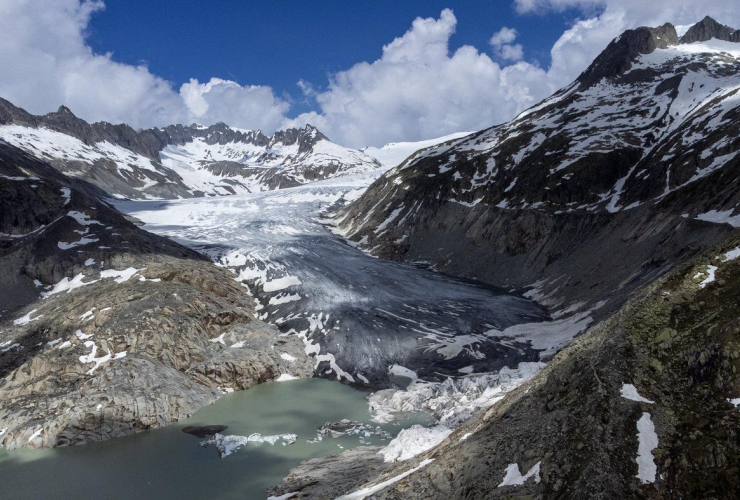
McKibben’s moment of political transformation occurred in Bangladesh, a country of 140 million that, until the very recent past, fed itself. Now, the Bay of Bengal is rising. The glaciers that fed the primary rivers are receding. Dengue fever increased by 200% in the last decade. Like hundreds of thousands of others, he caught it. In a hospital ward crammed with cots and suffering people lying on the floor, his second thought (after “I feel terrible”) was “Boy, this is not fair.” In Bangladesh, the main mode of transportation is the bicycle rickshaw. Most people live off the grid. The patients in that ward were suffering from a problem they did not cause.

McKibben felt morally compelled to act. Back in Vermont, he organized a demonstration that began at poet icon Robert Frost’s home and, after five days, reached the steps of the state capital in Burlington. Over 1,000 people met the marchers there and all the candidates running in the upcoming election, Republicans and Democrats alike, signed a pledge to reduce greenhouse gasses 80% by 2050. The experience fostered McKibben’s belief in the political power of people showing up.

In McKibben’s view, the push for climate stability already has a superstructure: Al Gore and numerous policy analysts point the way we need to go. Solutions exist.  But there’s no citizen movement. People haven’t been activated to show up in person and insist on governmental action.

In the summer of 2007, accelerated melting of the Arctic became obvious. Panicked scientists called McKibben in the middle of the night. The old target of 2050 was out of date. The new target had to be 2020: not one lightbulb at a time or one nation at a time but one planet at a time.

In 2008, James Hansen and other scientists wrote that they knew enough, with data on the Arctic melt and records of paleoclimatology, to know that life on Earth is not compatible with more than 350 million parts per million of CO2 in the atmosphere.  

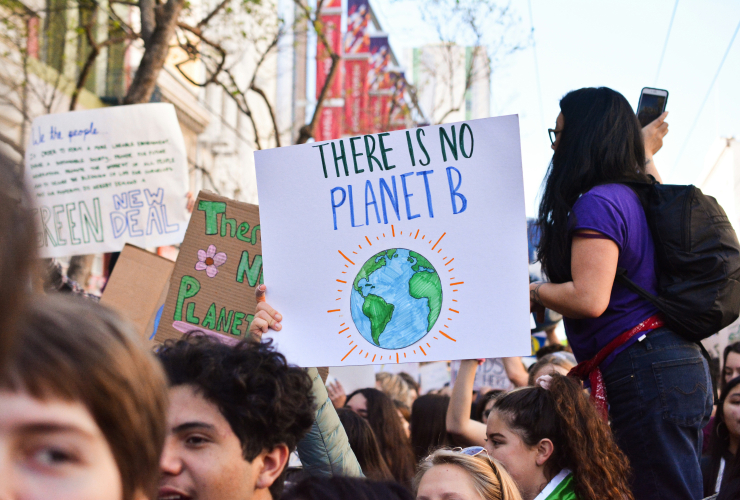
McKibben took 350 as a rallying cry. “One wouldn’t usually choose a wonky data point,” he said. “It’s not as rousing as ‘I have a dream’.”  But numbers are close to a universal language and climate change requires a worldwide movement. With a staff of seven grads from Middlebury College, where McKibben is a scholar in residence, he launched 350.org. 

Each grad took responsibility for a continent. The one who got Antarctica also got the internet. They found that lots of young people who work on public health, food security, social justice, war and peace and women’s issues realize that their goals will never be met without climate stability. They held camps for these “kids” who then returned home to work.

The first day of global action was October 24, 2009.Two days before, 18 girls in Ethiopa called in tears – the government had taken away their permit for action on the 24th. They had to do it a day early and worried about ruining it for everyone. McKibben reassured them and on October 23, 15,000 people marched and chanted in the streets of Addis Ababa. There were 5,100 actions in 180 countries, most of them, in McKibben’s view, “putting lie to the old canard that only rich white people are environmentalists.” The climate summit in Copenhagen was 6 weeks later. One hundred and seventy nations adopted 350 ppm as their nation’s target – but the nations that are richest and most addicted to oil refused.

McKibben and his staff declined to collapse in despair. Instead, in 2010, they organized a day of climate action, with 7,400 work parties in 189 countries (all nations but North Korea). “It was grand,” said McKibben, “but nowhere near enough.”

350.org plans it’s next day of climate action for September 24, 2011, with the theme of motion. McKibben expects bikes will play a big role. Bikes are a favoured vehicle of both poor and rich. The 350.org website will serve as a clearing house for people to find actions in their areas. Actions get planned by local people who choose an action and post it on the website. McKibben has found that people very much want to be a part of climate action but only if they have the assurance that other people are doing something at the same time so that it has enough "oomph" to matter. 

Consensus on climate solutions center around raising the price on carbon in a way that protects the poor. But this won't happen unless we build a movement that matches the power of the fossil fuel industry within governments. McKibben sees Copenhagen and the failure to legislate cap and trade in the US as the death knell of government responsibility. They are too deeply involved in the monetary benefits of dealing a toxic, addictive substance to see the deadly consequences. "If a foreign government was doing the same thing to the atmosphere secretely," McKibben said, "we'd bomb the hell out of them." He finds hope in the determination shown in the Arab world to topple mighty dictatorships that serve the few. He wishes there was another way. But there isn't.   

(3) Comments

Meme Mine April 13th 2011 | 2:02 AM

The response from the thousands of consensus climate change scientists to Obama not even mentioning the climate crisis in his State of the Union Address was utter silence. And the scientist’s silence was on display when Republicans cut off American funding to their central research body, the UN’s IPCC. Now we see why the thousands of consensus scientists have vastly out numbered the protestors of 25 years of “the scientists all agree“ headlines. Finally, the world economy has lowered our contributions of CO2 emissions for several years yet global CO2 levels keep rising? Avoiding serious climate hell should be a good thing. Maybe fear wasn’t sustainable as George Bush Jr. found out. We need system change, not climate change as continued support of the climate change mistake is hurting the planet, science and progressivism.

Now there is serious talk of the tea party Republicans charging those in Academia and leading news editors with TREASON for leading us to another Bush-like false war based on false evidence.

If Climate Change were a real emergency and scientific consensus was real, the scientists would be acting like it, not cashing the remaining grant checks. The scientists if the emergency were real would be all over the media in person, warning us of the urgency of CO2 mitigation action.

Now the media makes up it’s own climate change stories in place of the silence from the mysterious army of consensus scientists.

And don’t forget that scientists also produced cruise missiles, cancer causing chemicals, land mine technology, nuclear weapons, germ warfare, cluster bombs, strip mining technology, Y2K, Y2Kyoto, deep sea drilling technology and now climate control. Scientific consensus was not real and these mystery saints of goodness were not saints. It was all a media illusion. Scientists made environmental protection necessary in the first place when they supposedly polluted the planet with their chemicals and cancer causing pesticides. How ironic is that, considering we bowed like fools to our Gods of science for 25 years of “unstoppable warming”.

To condemn billions of children to a CO2 death just to get them to turn the lights out more often was unforgivable and history is watching.

Meme Mine April 13th 2011 | 2:02 AM

The response from the thousands of consensus climate change scientists to Obama not even mentioning the climate crisis in his State of the Union Address was utter silence. And the scientist’s silence was on display when Republicans cut off American funding to their central research body, the UN’s IPCC. Now we see why the thousands of consensus scientists have vastly out numbered the protestors of 25 years of “the scientists all agree“ headlines. Finally, the world economy has lowered our contributions of CO2 emissions for several years yet global CO2 levels keep rising? Avoiding serious climate hell should be a good thing. Maybe fear wasn’t sustainable as George Bush Jr. found out. We need system change, not climate change as continued support of the climate change mistake is hurting the planet, science and progressivism.

Now there is serious talk of the tea party Republicans charging those in Academia and leading news editors with TREASON for leading us to another Bush-like false war based on false evidence.

If Climate Change were a real emergency and scientific consensus was real, the scientists would be acting like it, not cashing the remaining grant checks. The scientists if the emergency were real would be all over the media in person, warning us of the urgency of CO2 mitigation action.

Now the media makes up it’s own climate change stories in place of the silence from the mysterious army of consensus scientists.

And don’t forget that scientists also produced cruise missiles, cancer causing chemicals, land mine technology, nuclear weapons, germ warfare, cluster bombs, strip mining technology, Y2K, Y2Kyoto, deep sea drilling technology and now climate control. Scientific consensus was not real and these mystery saints of goodness were not saints. It was all a media illusion. Scientists made environmental protection necessary in the first place when they supposedly polluted the planet with their chemicals and cancer causing pesticides. How ironic is that, considering we bowed like fools to our Gods of science for 25 years of “unstoppable warming”.

To condemn billions of children to a CO2 death just to get them to turn the lights out more often was unforgivable and history is watching.

jeremy giels April 13th 2011 | 3:15 PM

In response to meme mine, the news media has failed, or simply has been bought.  Dr. James Hansen, the leading scientist that is speaking out about Global Warming, has largely been ignored. He even has written a book, "Storms of My Grandchildren, to explain the science the best way he could. As a matter of fact, his peers from the American Association of Physics Teachers awarded him the 2011 Klopsteg Memorial Award. He has recieved others from other groups. Also Dr. Peter Ward wrote a very compelling book, "Under a Green Sky", that explains the Earth's past and the carbon levels. Unfortunately, people have to actual seek these out and do research for themselves. Perhaps reading misleading headlines and news quotes about a doubts is enough for them. As for the politicians, money has corrupted the system, enough said.