Assessing the United Nations COP15 Copenhagen Climate Change Talks
Millions of people worldwide rooted for the success of the 2009 U.N. Climate Change talks in Copehagen (COP15), which ended yesterday. Did the forum finish with a fizzle? Did anything positive come from COP15, an historic effort at forging a global agreement to ensure our species’ survival? Let’s take an outsider’s yardstick and measure what’s going on here.
Utilizing the scale in “Places to Intervene in a System,” (Whole Earth, Winter 1997) Donella H. Meadows (1941 – 2001), lead author of The Limits to Growth might rank a completed and binding planetary agreement on global emissions targets at greater than 60% quality level out of 100%.
Starting at ‘nine’, like a David Letterman top-ten list, with “Numbers (subsidies, taxes, standards),” she lists ten distinct systems change interventions to create positive change. As she counts down the list, the leverage on the system increases in power.
‘Four’ on her scale is, “the rules of the system (incentives, punishments, constraints).” Arguably, the emission targets world leaders struggled to agree on at COP15 would fall here at ‘four’. The COP15 representatives didn’t quite make it and they also didn’t entirely quit. Best case scenario, UN Climate Change talks will resume in 2010. In a worst case scenario, world leadership will drift.
When one realizes we could be back at ‘nine’ on Meadows’ list, things don’t look as grim. Social science research pioneered by Dr. Clare W. Graves says we (the humanity we) are moving forward in a bumpy sort of an evolutionary spiral. Whether and how we will continue is the question.
Based on decades of observation, behavioral scientists have come to agree natural and human systems profoundly affect behavior, often more so than volition. For example, think of peoples’ behaviors based on position in their respective system, in orthodox religious sects or the welfare system (both sides of the counter). This fundamental premise is the starting point for Donella Meadows’ list of most effective ways to transform human systems.
The symptoms of human over-population and over-consumption, such as human-induced climate change are complex and inextricably intertwined with natural systems. In the face of potential global environmental collapse, we humans need systems thinking methods more than ever!
Systems thinking offers a way to see the big picture and may help us evolve new behaviors. Human systems interventions can also provide strategic frameworks for technology and engineered answers to the dilemmas, like global warming, arising out of human over-population and over-consumption.
Meadow’ list of the top ten ways to intervene in a system, set in large type, still leaves lots of white space on a single page. Metaphorically, space [ ] allows fresh insights and new solutions to emerge.
As anyone who has ever been lost knows, the best courses of action start with calmness and perspective; and only then bold moves. Bold moves are metaphors for technological solutions – like fire – useful or dangerous depending on the context. Think of calmness and perspective as the gold nuggets behavioral scientists prize. Simplistically, behavioral scientists are people who attempt to make an artful science out of observation, common sense and the human condition.
‘Three’ is “the power of self-organization.” Good thing we’re seeing more of that lately, if not so stunningly at COP15, then in many other places. Increasingly, individuals, cities and provinces move forward on climate change independently of national governments.
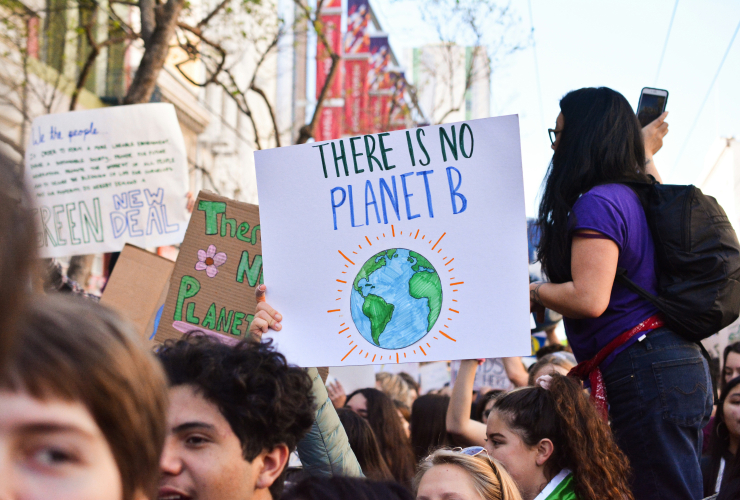
14,753,771 global citizens, as of this writing, have e-signed an Avaaz.org petition calling on world leaders to take binding action to avoid human-induced global two-degree temperature increases. Our province British Columbia has already instituted a Carbon Tax. We’re seeing the rise of incentives for bicycle transit in cities worldwide, including Vancouver.
Perhaps, as we forge ahead with self-organizing activities at all levels (‘three’) we’ll begin to see greater shifts at national and international levels towards curbing the root causes of climate change.
‘Two’ is “the goals of the system.” Here is where the mass local and global confusion sits at the moment. What are the real goals beyond primal survival of the fittest? There seems to be a vacuum here. If you like, take some space [ ] and look…
When the Sudanese leaders cry, “Suicide!” to their counterparts at the United Nations Climate Change Talks (COP15), it’s, sadly, not exaggeration, given past history and current predictions. Our global choices have already seriously compromised the health of the planet and taken many lives in Africa and the developing world.
But if one stands back and notices that ‘two’ on the list of places to intervene in a system is a pretty honorable place to be struggling, it kind of puts some of the disappointment with COP15 in perspective. Maybe struggling with goals is actually making major progress… Our friend space [ ] expands.
Frances Moore Lappe, Hazel Henderson, Ken Wilbur and many others have called on humanity collectively for decades to change the way we view the world and the assumptions we make about security, stability and human survival.
Expanding belief systems, mindsets and paradigms, allows space [ ] for solutions to appear. On Donella’s scale, the #1 way to change a system is, “The mindset or paradigm out of which the goals, rules [and] feedback structures arise.”
At this juncture, in the pause between COP15, further negotiations and beyond, let’s also continue to wrestle with the big ‘one’ (global paradigms) and ‘two’ (fundamental goals) questions like these:
What is the basis for a new economy?
How can we return to a balance with nature and create a world of dignity, prosperity and life for all our planet’s inhabitants?
How do enduring, non-materialistic paradigms (like the Buddhist doctrine of interdependence of all form) inspire the creation of new paradigms (like the morphogenetic field) to help us navigate the new millennium?
Could we adopt a belief system (‘one’) promoting the interdependence of all life and all humanity, which also fosters the riches of national, cultural, corporate and individual identity? What goals (‘two’) would we then create? How would we implement them?
David Suzuki suggests putting the ‘eco’ back in economics.What would happen if nations and the world accepted the concept of Nature as the actual, tangible basis of our existence and of our economy, rather than money?
What kinds of paradigms, goals and grassroots organizing would incentivize human population control and the reigning in of human consumption?
What would world leaders have to experience to behave more effectively next time around? What other places need to morph and adapt for global paradigms to shift and our long term survival odds to improve? Mass Media? Trade Unions? Corporate Entities? Families? Neighborhoods? Systems of governance? My own ego?
As we continue to move forward with all the steps on Donella’s list – as we continue to take individual, municipal, corporate and provincial actions – as we answer the questions and challenges of this new millennium – more space [ ] and more possibilities may open for great progress at future global climate change talks.
And, Yes!, there is a zero (0) on Donella Meadows’ list. It’s not on the first page with the run from ‘nine’ to ‘one’. She places it at after the explanations of all the previous steps, at the end of the article. Donella H. Meadows suggests ‘zero’ is transcendent and goes beyond paradigms.
Here’s my beginner’s attempt at a question to ask at ‘zero’.... What would happen if we all agreed to leave a living legacy to our children’s children one thousand generations from now?
[
]
Zero. Take a break. Just breathe. A little meditation on emptiness allows unbelievable creativity and solutions to emerge. To survive and thrive, we could transcend ourselves. Or not. No one really knows. The point is, the more one reframes to the positive side of potentials, with tools like Donella Meadows’ ranked scale of ways to intervene in a system, the more one generates options in the face of apparent failure. In fact, mistakes, disasters and failure can be made into opportunities or so say the Buddhists, the behavioral scientists and my mom.
* * * *
Olivia Fermi, M.A. A.B.S., ConRes Cert is a writer, photographer and social science professional. She is currently working on a number of projects including a series of books in a series entitled Space to See.
Please post critiques, kudos and creativity here as comments to Earth Matters articles. It's easy to create a user account with Vancouver Observer to make comments, subscribe to our newsletter (optional, supports our efforts) and to post local Vancouver area events.

(2) Comments
- quote
- quote