Skip to Content

Climate Snapshot

vo-banner.jpg

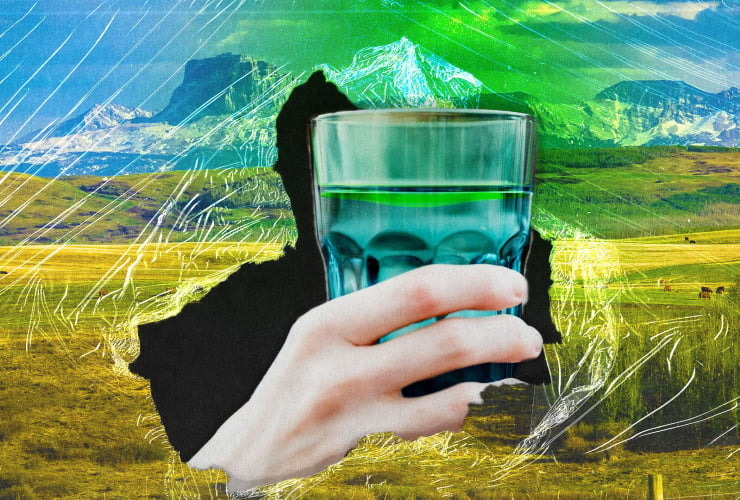
Global warming tragedy: Fraser River salmon dying as climate change heats up waters

Barry Saxifrage
Jun 26th, 2012

Global warming has already significantly changed our Fraser River. Its waters are warming and its flows are shifting to earlier in the year. By summer when the legendary salmon runs surge into the river to spawn, the river is more often becoming too warm and low for their survival. Already more and more salmon are dying en route to the spawning grounds. Fishing quotas are being cut back to make up for it.

Experts predict far more "dramatic changes" lie ahead unless humans switch away from climate polluting energy sources. They say our salmon will be hard pressed to survive and thrive in the new overheated Fraser River we are creating.

Alberta's oilsands pipelines promise massive non-stop brand-Canada carbon spills

Barry Saxifrage
Jun 21st, 2012

Each proposed tar sands pipeline, like Enbridge's Northern Gateway, requires a massive new climate pollution spill to go with it. The size of any one of these new CO2 spills far exceeds all of BC's current emissions.  These pipelines literally can't function without these CO2 spills starting and continuing for decades. They are part of the deal. And those deals are starting to lock Canadians into a lose-lose future.

Corporations like Enbridge, Kinder Morgan and TransCanada know that they are proposing projects that demand massive CO2 spills -- that can't be stopped -- for them to make their money back and to profit from it. The scale of the CO2 pollution required for these projects dwarfs anything else in Canada's economy. Yet despite locking us in to huge risks, neither our governments nor the corporations are even talking about it.

Climate change results in rainier Vancouver spring

Barry Saxifrage
Jun 17th, 2012

A basic rule of thumb is that climate change will make rainy areas grow ever rainier and dry areas grow ever drier. Sure enough, Vancouver's rainy climate is getting significantly wetter in the spring months.

According to my calculations using Environment Canada weather records, Vancouver's rainy climate is already:

  • 49 percent rainier in April
  • 35 percent rainier in May
  • 27 percent rainier in June

Good news for the umbrella industry, I guess.

This soggy increase has happened with global warming of less than 1 degree C so far. Both the International Energy Agency (IEA) and the Massachusetts Institute of Technology (MIT) have recently said we are on track for five times more warming this century. The IEA says we are heading for a "catastrophe". MIT, meanwhile, says there is "no way the world can or should take these risks."

While Harper dithers, provincial CO2 imbalance problem burns

Barry Saxifrage
Jun 11th, 2012

When it comes to doing something about the climate crisis, Canada has developed an unstable split personality.

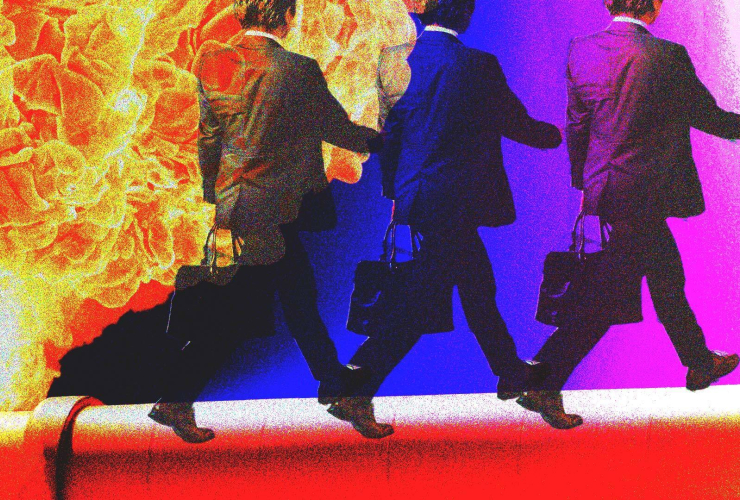
One group of Canadians is cutting emissions. Another group is piling them on. The Harper Government can't seem to decide what to do. They promise to lead Canada to lower emissions. They also push for the rapid expansion of the dirtiest industries which are driving up Canada's emissions. While Harper's government dithers, Canada's carbon divide is growing into a chasm. This growing divide is already causing conflict in everything from our national policies to our international reputation. Far worse it threatens our economically stability as the climate continues to grow more extreme. Something is going to break.
Climate change stunner: USA leads world in CO2 cuts since 2006

Barry Saxifrage
Jun 4th, 2012

The Americans? Really?

Every year the International Energy Agency (IEA) calculates humanity's CO2 pollution from burning fossil fuels. And once again, the overall story line is one of ever-increasing emissions:

"Global carbon-dioxide emissions from fossil-fuel combustion reached a record high of 31.6 gigatonnes in 2011."

The world has yet to figure out how to stop the relentless increase in climate pollution. But mixed in with all the bad news there was one shining ray of hope. One of the biggest obstacles to climate action may be shifting. As the IEA highlighted:
"US emissions have now fallen by 430 Mt (7.7%) since 2006, the largest reduction of all countries or regions. This development has arisen from lower oil use in the transport sector … and a substantial shift from coal to gas in the power sector."

Climate change giving birth to new cohort of carbon victims: "Generation Hot"

Barry Saxifrage
May 24th, 2012

The year 1976. That was the last year our Earth was cooler than the 20th century average according to NASA. Gerald Ford was US President, Montreal hosted the Summer Olympics, the Bee Gee’s "You Should be Dancing" topped the USA singles charts, the CN Tower opened, and 60 percent of people today weren't even born yet.

In fact the last time even one month was cooler than average was February 1985. Nearly half of people alive today were born after that … during an eye-popping 326 consecutive months warmer than what used to be called "normal". Generation Hot. If you are under twenty-seven, you're one of them.

Global warming increasing by 400,000 atomic bombs every day

Barry Saxifrage
May 15th, 2012

On August 6, 1945, the bomb doors on the Enola Gay opened above the Japanese city of Hiroshima. An atomic bomb packed with 60 kilos of uranium fell for less than a minute before exploding with the energy of thirteen thousand tons of TNT. The radius of "total destruction" extended a mile in every direction. The force of the blast killed an estimated 70,000 people instantly.
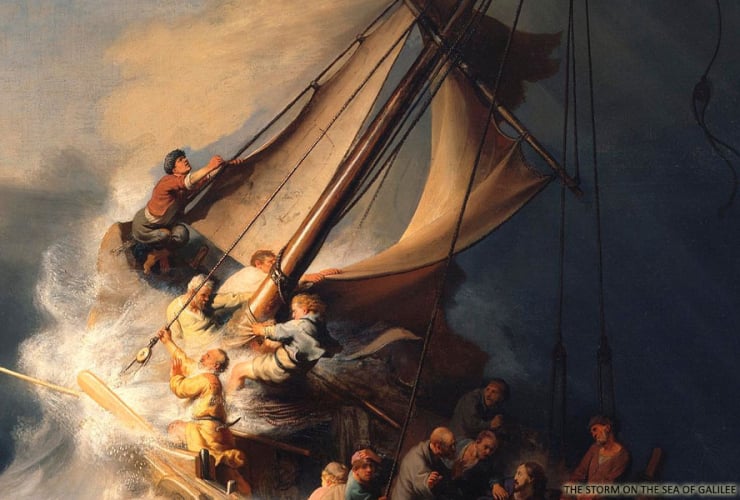
 

Unnoticed by the world at the time, the Enola Gay was also releasing a much more subtle threat to humanity: an invisible, odourless and tasteless gas called carbon dioxide. Even today, a third of Enola Gay’s CO2 from that mission is still up in our atmosphere and around a sixth will be there for millennia. Most of the CO2 that does leave the atmosphere dissolves into our oceans, acidifying them.

Earth Day no deterrent to Canada’s drive for more dirty fossil fuels

Barry Saxifrage
Apr 20th, 2012

The first Earth Day, on April 22, 1970, exploded onto the scene as millions of college students held environmental teach-ins. Since then, Earth Day has become an annual and worldwide event.

I’m sure many great things have come from those 42 years of Earth Days. I’ve enjoyed many of them. But when it comes to moving society toward effective action on climate change and its evil twin ocean acidification, these Earth Days have become the equivalent of butterflies splattered on the windshields of our accelerating dirty energy party wagon.
More carbon, not less, since beginning Earth Days

In 1970, the average Canadian was busy was dumping 15.7 tonnes of CO2 every year into the atmosphere and oceans. Today, with the benefit of forty two Earth Days under our belts, we have managed to cut our climate pollution down to 16 tonnes each.  Oh wait … that is more climate pollution, not less. Splat.

Metro Vancouver has dirtier transportation than France

Barry Saxifrage
Apr 18th, 2012

One common excuse I hear for why the transportation in BC and Canada is so much dirtier than in Europe is that Canada is a much bigger and more spread out. It is certainly true that denser populations usually use less gasoline per person.
But the reason for the huge gulf in gasoline burning between Europe and Canada is more complicated than just the relative size of our countries and populations would suggest. For one, Canada is actually a very urban nation. Second, Europeans pay 80 cents more per litre for gasoline, and lastly, Europeans drive much more efficient vehicles.

The result of lower gas prices and less efficient vehicles is that even within our densest and greenest cities, like Vancouver, we struggle to get down to the national averages for European nations like France, Germany and UK.

England's "expensive gas" saves money

Barry Saxifrage
Apr 13th, 2012

All taxes on carbon fuels work as carbon taxes. When any tax raises the price of a carbon fuel, like gasoline, the marketplace will soon find ways to use less of it.

Recently, I read about how the British government raised gas taxes in the 1990s in a partial attempt to reduce carbon pollution. It got me wondering how other gas taxes compare to BC's official carbon tax. So I did the math, and the results surprised me.

As my chart above shows, gas taxes in Britain, Germany and France are equal to an unofficial carbon tax of $500 per tonne of CO2. None of their gas taxes are formally called carbon taxes, but they act as such.

Indeed, the British, Germans and French emit three times less CO2 per person from their transportation. That’s a gigantic difference in climate pollution levels.

Syndicate content