Skip to Content

Rethinking our relationship with brands

Read More:

Do we have the power to influence big corporations into doing good? Branding Consultant Bruce Philp says so, in his latest book. 

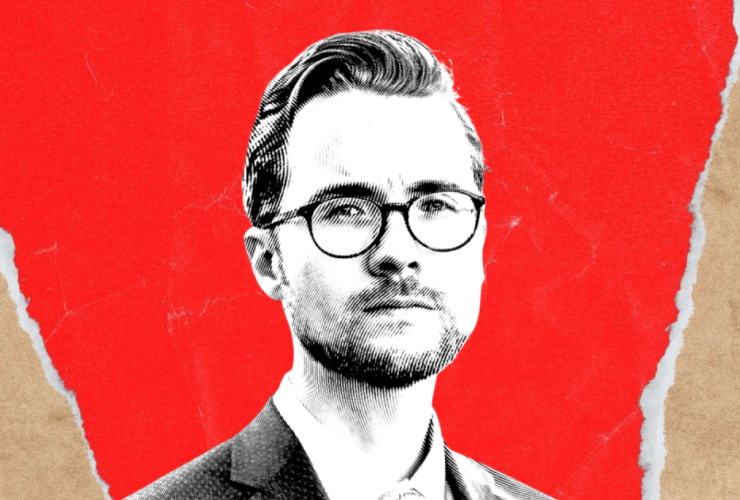
Do you feel helpless amidst the battle of the brands? In the recently released Consumer Republic, author and branding consultant Bruce Philp pushes readers to reconsider the relationship between consumers and corporations.

Philp writes, “I ask you to think about the corporation not as an omnipotent, evil psychopath, but as a primitive, single-minded organism. A cow. A beast, ploddingly bent on profit, and simply blind and deaf to everything that isn’t an enabler or an obstacle.”

By dropping the belief that consumers are, or ever were, manipulated by evil geniuses on Madison Avenue, Consumer Republic explains that “today’s disillusioned consumer is tomorrow’s lost business,” showcasing the leverage consumers hold when companies rely on brand reputation. 


Philp’s writing is clever, often funny, and perceptive of contemporary marketing, making Consumer Republic an engaging and topical read. A fan of twitter himself, Philp is plugged into the various ways in which social media can transform the reputation of brands, citing examples of how corporations have scrambled to regain ground after a thread has left their reputation to run amok.

During an interview, I asked the soft-spoken author what motivated him to write Consumer Republic.

“Ever since No Logo, in a way, I felt like we were in some danger of tossing the baby out with the bath water. And, being a life-long marketer, I had some sense of what it was really like on the other side.

What triggered the decision was the beginning of the recession that we were coming out of. For the first time in my memory, consumers were asking themselves questions -- real questions about how this happened, how it can happen again, and collective culpability. It became a real teachable moment,” Philp said.

Naomi Klein’s No Logo became a cultural manifesto after its induction into popular culture in early 2000, critiquing brand bullies for stifling free market competition. Klein promoted a rejection of corporate capitalism by showcasing various grassroots movements of rebellion.  

Consumer Republic pokes fun at Klein’s position from the “gloomy left,” saying No Logo “came up short in terms of offering an alternative vision for how we ought to live.”

Asked if his book is a more nuanced response to branding than No Logo, Philip responds that both books agree on two out of three basic principles: 

“She (Klein) rather brilliantly observes that we don’t have an industrial economy anymore, we have a branding economy. That industrial economy has gone somewhere else. The companies that sell us things are much more busy with their social meaning now than they are with their physical manufacturing.

"The second thing she did was identify that brands are the soft underbelly of corporations and have this vulnerability.

"Where we come apart is that she promoted a kind of insurrection against the system and a disengagement from branded marketing, and to me that’s a bit like taking to the street with guns and revolting. To me, the right way to make positive change is to stay engaged in the system and use your vote, and brands give that to us,” Philp said.

His blog, BRANDCOWBOY, has a header that reads: “Come on, admit it. You like brands. A world without brands sounds a lot like communism. And we all know how that worked out.”

Consumer Republic astutely observes that most of us don’t want to live in a world without brands. Evidence of this abounds in our local neighbourhoods; try kicking a stone in Vancouver without hitting a crowded Starbucks.

As somewhat of a sceptic, however, I wasn’t quite sold on the idea that the elimination of brands would result in a North Korea-like state of deprivation. Looking for further elaboration, I asked Philp to explain the book’s warning, “abandon brands and we’ll surrender the marketplace to scoundrels.”

“This is an idea that people tend to resist immediately, but then not for long. The idea is that the more famous a brand is, the more the corporation behind it is accountable because the fame is a part of its value. Everything it does is profit.

There is some research I got a hold of from a company in Switzerland that tracks the ethical behaviour of corporations. One of the things you’ll notice is that the more the familiar the brand is, the more likely they’ll be at the top of the list of ethical companies.

The companies at the bottom of the list are likely to be people that dig stuff out of the ground, make chemicals, and exist in the shadows. If you have a reputation at stake, it forces you to not take chances... If I know the brand, I know who to call if I’m unhappy with the product,” Philp said.

Consumer Republic argues that the collective angst against consumerism is partially based on an assumption that no longer holds true: social hierarchy. “Both of us probably believe on some level that we could be rich if we really put our minds to it, and there are a lot more ways to make that happen. We’re less inclined to see ourselves as helpless about our economic destinies,” Philp writes.

But income inequality is increasing in Canada, and Emmanuel Saez’s study at Berkeley suggests that income inequality in the U.S. is at an all-time high, surpassing levels seen during the Great Depression. The limitation of Consumer Republic is that it rarely questions the tacit assumption that capitalism is the right system. 

The book is devoted to how consumers can push corporations into becoming more ethical and accountable for product quality and customer service. Outside of pleasing the consumer, though, the book rarely acknowledges ethics and accountability in terms of poor labour practices within North America and abroad. I asked Philp if he could speak to this issue.  

“It’s a fair question -- if you don’t like their ethics, don’t shop there. That ethical choice might only cost you a few dollars at the end of the day. Not only is that inherently good, but it’s also a signal to corporations. So, I think the same laws apply.

What’s important is the way that I’ve gone at this. This is a self professed, quote unquote, reasonable argument. We can do our best. We can do it a few times, but we can’t always. A simple act of trying will be a signal to the corporate community of what is good behaviour or bad behaviour. What I am saying is at least to try,” Philp said.  

Beyond pushing for corporate accountability, he challenges consumers to rethink their own values when they hit the mall. Drawing attention to the tragic death of a trampled Walmart employee during Black Friday in 2008, Philp demonstrates how cheapness makes fools of us all.  

“A lot of what you see in that kind of frenzied behaviour over Cabbage Patch Kids or Play Station 2 is what social scientists call loss aversion,” Philp said. “We have become crazed by the fear that the guy next door is going to buy something we don’t have, or he’s going to get a better deal than we got. The blinders go on and we say there is no way that I’m going to let anybody do better than I’m doing, and it makes us competitive. It turns consumerism into a form of social competition.

When you turn to your motivation for buying and say does this have meaning for me, it’s amazing how much less you do it," Philp said.

As our conversation came to a close, I asked Philp what he wanted readers to take away from Consumer Republic.

“I want us to reinvent consumerism," he explained. "I want us to consume less, but mostly I want people to interrogate what it means for them to actually change the social meaning of buying things. We have this lull where I think we can hit reset on what consuming is in popular culture and go, I’m going to consume so that I can express myself, instead of consuming to impress people. If we do that we invest ourselves more personally in the things that we buy, and if we do that we change the system. We have way more power than we realize.” 

Comments