Remembering the late Celebrity Chef Anthony Sedlak's life in the kitchen
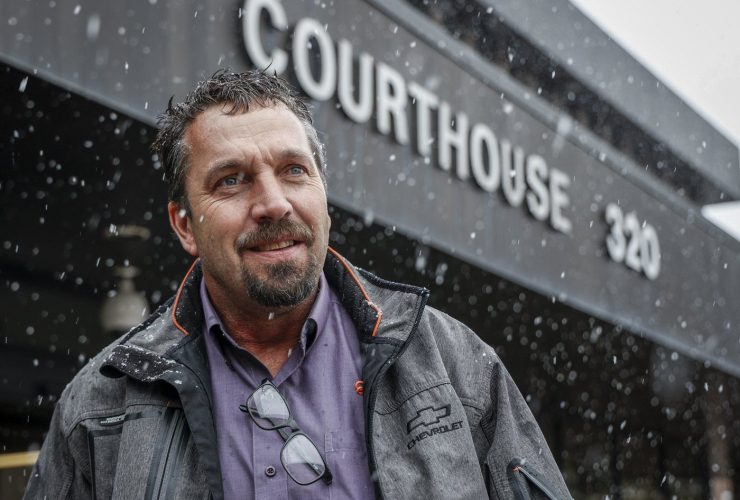
Photo above of Anthony Sedlak, the late celebrity chef, by Steve Venegas
Anthony Sedlak had been riding high in the last few years when Steve Venegas, then a writer for the Vancouver Observer, met him. After winning the second year of the reality Show Super Star Chef Challenge, Sedlak had landed his own cooking show, The Main, on Food Network Canada. Now that the first season was behind him, and a cookbook was set to release within days, Anthony was settling back into his life in Vancouver. And Venegas arrived to do a profile on the rising star.



Today, Sedlak has died at the age of 29, and Venegas is an associate producer for CBC Radio 3. But when they met in the summer of 2008, they were both just getting going.
"Right now I have a gig making lunches for two business men in the area," Anthony said while warming the stove. He had invited in to his Yaletown apartment to observe what he did best: cook. "It's just for the time being before I start on as the Executive Chef at Bin."
Sedlak's apartment was by no means a palatial estate. Situated in one of the newer condo towers in the chic downtown neighborhood, the pad was what you would expect for a couple in their mid-20s, Venegas thought. It was small, smartly furnished with hip digs and had a great view. Sedlak lived with his longtime girlfriend Sophie, a jewelry designer, and their dog Charlie, a Boston terrier/pug cross.
"So basically they want two different dishes everyday. One of them is a picky eater and he doesn't like carbs or fish, so it's kind of a challenge. For one of the guys I'm going to make cannelloni, which I fill with a Bolognese and top with two different sauces. A tomato and bechamel sauce," Sedlak told Venegas.
Garlic cooked on the stove top in butter and the smell made Venegas's mouth water. He tells me that he likes to keep most of his recipes close to the Mediterranean style of cuisine. So his tomato sauce is quite different from the usual North American fare that can be bogged down with superfluous ingredients and filler. The aromas are rich and comforting, like my mother's spaghetti.
"If you go to Italy you'll find that it's very simple. Tomatos, garlic, which you fry in olive oil. This releases the essential oils of the garlic, that'll infuse the olive oil, and then you usually fry a little tomato in there."
Seklak took a large wooden pepper grinder and cranked out a course grind into the pan. Watching him move about his kitchen, it was easy to see that Sedlak was in his element. The counters were spotless and everything was within arms reach. Glass jars filled with staples, like rice and pasta, and baskets of vegetables are all strategically placed for maximum efficiency. It was hard to believe that he got his start in cooking just so he could get cheap snowboarding passes. But that's what he told Venegas.
Anthony Sedlak's early life
Sedlak started his life in food when he was 13 and had a job at the Grouse Mountain Ski resort. He worked as a bus boy and became employee of the month. One of the perks was a free gift certificate to the restaurants at Grouse. Of the three restaurants on the mountain, one is a formal dining room.
"I went to this dining room and I had never had food like that before," Sedlak says. "My family wasn't particularly wealthy. We had never really gone out to eat all that much and I had never seen all of the different new types of things that you could do with food. I thought this was pretty cool. So over the course of the next three years, I worked my way up through the different restaurants."
"You see how the garlic is golden brown?" he says breaking from his reminiscing to get back to the task at hand. "You should never let it get past that, or it becomes really bitter."
By the time he was 17, he was working in the fine dining room and decided to leave his high school of Hansworth Secondary and go to Carson Grahams secondary, which offers culinary programs.
"Instead of academics, you cook. When I was 18, I started an apprenticeship to get my red seal. You can go to school where you have to pay 30 thousand dollars a years or something like that, or you can apprentice," Sedlak says. "After I got my red seal, I worked in London for a year and a half."
After returning to Canada, he went back to Grouse Mountain and took over as head chef of the dining room. Then along with a few others, he represented Canada at the World Junior Culinary Championships in Aukland, New Zealand, and won 3rd place.
THE MAIN
"When I got back, the Food Network contacted me and asked if I would do a reality series with them," he says. "It was called Superstar Chef Challenge. The premise was that they take seven chefs from across Canada and put them through the culinary wringer."
Sedlak takes a cup of Bolognese sauce from the fridge and puts it in the microwave. He tells me that it took seven hours to make and that now, all he has to do with it, is warm it up.
"The last chef standing doesn't get a TV deal but gets the opportunity to sit down with the people from Food Network and talk about the possibility of getting a series. I won the second season of the show. The first season winner didn't get a show, and the third season winner also didn't get a show."
The show was called The Main. It aired twice a week on Food Network Canada, but starting in September of 2008 it would air 18 times a week. The premise of the show was that Sedlak took one main ingredient, something that people commonly keep in their kitchens and he built great meals around it.
"Everyday stuff like green beans, tomatoes, potatoes, or cream," he says, as he pointed at the ingredients he had out in his kitchen. "We don't use anything over the top, because the idea is let the viewers use things they already have in the home. We like to give the kind of professional chef tips that regular people might not already know. Like to fry your garlic golden brown to give it that sort of nutty, aromatic flavour."
Moving onto the white sauce, Sedlak told Venegas of the history of the sauce. A lot of Italian food is based on poverty, he said, and making due with what you already have. So when people couldn't afford to use cream to make sauce, they would cheat and make roux by adding flour to milk. Flour thickens sauces because it can absorb up to 20 times it's weight in liquids.
He showed Venegas the pan and folded the thick beshamel sauce with a wooden spoon. The roux was still a little clumpy, so he added more cream.
"We have four seasons of the show shot. Each season is 13 episodes, so we have 52 episodes already," Sedlak said. "I always used to talk about having my own show. I've always talked about food while I cooked it and I loved to show people in the kitchen what I was making, how it worked or why it worked, so this has sort of been a dream come true for me."
Sedlak turned to the topic of some of his favourite TV Chefs.
"Mario Batali is great. I love Gordon Ramsey. A lot of people think he plays it up for TV, but he's like that in real life. That's how a real head chef acts in real life," he says, his kitchen pedigree showing though. "What I love about the Food Network is that there’s something for everyone. Ramsey appeals to the professional chef. Then there's someone like the Barefoot Contessa that appeals to the stay at home mom kind of lady, and then there's Giada DeLauretes who appeals to dudes, because she's really good looking. "
He kept a photo taken of him with Gordon Ramsey on his Facebook page.
THE BOOK
He then showed Venegas a Xeroxed manuscript. The black and white broadsheet pages were peppered with notes in red ink. Large, appetizing images showcase some of the ingredients featured in the recipes. The almonds looked perfect, the avocados tender and meaty. Venegas could practically smell them.
"The book is called The Main. It's based on the show. With the show we've done over 140 dishes and I selected my favourite recipes," he said. "The book has incredible photographs. With each show we take great photos of the main ingredients. I give directions on what to look for when buying ingredients, how the store them, my own experience, and then the recipe."
"Visually it's a very beautiful book," hey said.
"In the intro I say that I'd never believe that I'd have my own cook book when I started off on this road when I was 13," he says while breaking up eaves of romain lettuce l for a salad. "My audience is mainly younger people. People our age who go out to eat a lot. You know the type. They go to trendy restaurants with the glowing lit-bar and they don't really know what they're eating. I try to get them inspired to cook at home. Cooking is so much easier than people think. All you need to know is a couple of tricks of the trade."
He took out a container of olives for the salad.
"Like, buying olives with the pit in. It's like buying an apricot with the pit in. You’d never buy a pitted apricot. Having the pit in the olive will keep it juicier. They taste better."
After finishing up the meals, Venegas and Sedlak took the elevator down to the lobby of his building to deliver them to an assistant. Sedlak gave a quick run down of the meals, the ingredients, and so on and then they started back up to his apartment.
In the elevator, a young woman in trendy yoga clothes, toting an orange rolled-up mat, smiled.
"Are from The Main?"
"Yes I am," Sedklak said.
"I love your show! I think you're great." She practically skipped with happiness out of the elevator when it reached her floor.
Venegas asked ask him if he got that a lot.
"A couple times a week," Sedlak said. "It's pretty cool."
Editor's note: This story is based on Steve Venegas's original profile of Anthony Sedlak.


pitty please the ones who serve, they only get what they deserve. Food is meant to suport life, not be the purpose of living, Building a life on a hollow foundation is dangerous, it tends to cave in.